Follow Us on Google

•Nigerians fear unmetered consumers would be forced to pay more, want DisCos sanctioned over estimated billing •Urge FG to deduct states/LGs’ subsidy shares at source
By Enyeribe Ejiogu, Scholastica Hir (Makurdi), Ighomuaye Lucky (Benin), Okey Sampson (Umuahia) and Laide Raheem (Abeokuta)
Nigerians from all walks of life have angrily reacted to the statement credited to the Director General of the National Budget Office, Tanimu Yakubu, which said the Federal Government would henceforth share the burden of electricity supply subsidy between itself and the state and local governments.
Already burdened by hardship, occasioned by the removal of petroleum products subsidy in 2023, ordinary Nigerians stridently rejected the proposed change, stating in clear terms that it would amount to a backdoor way of imposing more difficulties on them and cause the cost of living to further skyrocket.
They wondered how state governments that had not been faithful in paying salaries would suddenly become faithful in paying electricity subsidies to the DisCos in their areas out of the increased statutory allocations from the Federation Account.

In an interview, a Nigerian (name withheld) who resides in Houston, Texas, United States, but currently in the country to execute a power project for his community, opined that the proposal of the government is like a pie in the sky. He maintained that going by the antecedents of the state governments, they would not pay any share of the subsidy passed to them. In such a scenario, he said that when the state and local governments fail to pay the subsidies, the DisCos would naturally seek to cover the shortfall in revenue by increasing the electricity tariff paid by consumers under their jurisdictions.
Ugochukwu Ibezim, a journalist and indigene of Imo State who lives in Lagos, expressed frustration that apart from Eko Electricity Distribution Company (Eko DisCo) and Ikeja Electricity Distribution Company (Ikeja DisCo), most of the other electricity distribution companies revel in slamming huge estimated bills on consumers rather than giving them prepaid meters.
His words: “In Owerri, the capital of Imo State, you can only see prepaid meters in very few places. Even in the Band A area like Tetlow Road, a major road that is like the state’s version of Computer Village in Lagos, you can hardly see buildings that have prepaid meters.
“This clearly contrasts with Lagos, where Eko DisCo and Ikeja DisCo have been engaged in aggressive rollout of prepaid meters to customers. Residents in Owerri get very high estimated bills. Honestly, from the way things are going people will get to the point where they will just tell the DisCos to disconnect them completely instead of continuing to pay outrageous estimated bills without power supply. It is like paying for darkness. It is already happening. People are disconnecting their homes from supply poles. My family house in Owerri has been disconnected for this very reason. I foresee that one day, Nigerians will rise up and demand mass disconnection from power supply by the bad regional DisCos. When that day arrives people will take up this slogan “No Prepaid Meter, No supply” in their protest against the DisCos, just like the Boston Tea Party, where the slogan “No taxation without representation” set off the American war of Independence.
In the report below, correspondents give more details of situation in some states.
BENUE
In Makurdi, capital of Benue State, a financial expert and public analyst, Ortamen Manz Denga, said the country could not afford to bungle another reform initiative as important as electricity supply.
With Nigerians still contending with the hardship unleashed by the withdrawal of petrol subsidy in 2023, Denga said the proposal by the Federal Government regarding electricity “raises serious concerns about equity, capacity, and the likelihood that ordinary Nigerians will once again shoulder the cost of reform failures.”
He explained further: “Electricity in Nigeria is not merely a utility; it is a lifeline. For millions of households and small businesses, public power is unreliable, alternatives are expensive, and incomes are already stretched thin. Any reform touching electricity pricing must therefore be approached with extreme caution.
“The first concern is whether this policy represents a subtle transfer of cost to consumers. While government insists subsidy is not being removed, the reality is that most state and local governments lack the fiscal strength to assume new obligations. Many struggle to pay salaries, pensions, and basic services.
“Expecting these same governments to consistently pay electricity subsidies to Distribution Companies (DisCos) is, at best, optimistic. When states and LGs default, as experience suggests many will, the burden will not disappear. It will simply re-emerge as higher tariffs, aggressive estimated billing, or poorer service delivery. In effect, citizens pay more while government claims reform success.
“Nigeria’s electricity crisis is not only about money; it is about governance capacity. Subsidy management requires discipline, transparency, and enforcement. These qualities have historically been weak across all tiers of government.
“If a state government cannot guarantee monthly salaries, it is difficult to believe it can guarantee timely subsidy payments to DisCos, private entities driven by profit, not patience. The likely result is accumulated arrears, disputes, and ultimately pressure to increase tariffs. Consumers will pay – one way or another. Electricity DisCos operate within a commercial framework. If subsidy inflows become uncertain, they will naturally seek to recover costs elsewhere.
“In Nigeria, that “elsewhere” has often been the unmetered consumer, subjected to outrageous estimated bills for power never consumed. Should Nigerians pay more for electricity that remains unreliable, unmetered, and unfairly billed,” he queried
In apparent agreement with Ibezim, he said: “The contrast between Lagos and many other parts of the country is instructive. Ikeja and Eko DisCos, under sustained pressure, have expanded prepaid metering significantly. Elsewhere, estimated billing remains the norm, effectively turning consumers into captives of arbitrary charges.
“Before any electricity subsidy restructuring is implemented nationwide, consumers, especially in under-served regions, must demand universal prepaid metering as a precondition, a firm national deadline for ending estimated billing and transparent service-based tariffs.”
He argued that they must also demand enforceable consumer protection mechanisms saying without these, subsidy reform becomes punishment for poverty and geography.
He said DisCos that deliberately frustrate meter deployment or exploit estimated billing should face real sanctions such as financial penalties, license suspensions, or management changes saying anything less encourages impunity.
“If government proceeds without fixing metering, regulation, and accountability, this policy risks becoming another chapter in a familiar story; government saves money, private operators protect profits, and citizens quietly suffer.
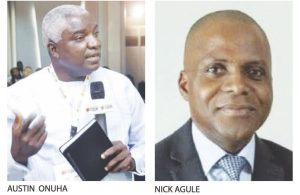
Another public analyst, Austin Onuoha, said subsidy is a political and economic tool used to make public goods accessible and affordable and to ensure that the quality of public goods is not reduced.
He also noted that subsidy supports manufacturers and service providers saying “But in Nigeria, what has been the experience? We have crude oil but we refine abroad and import finished products, which is allegedly subsidized. The government removed subsidy on petroleum products and this was to raise revenue and deliver better services. Are we seeing the benefits?
“Now to electricity, every responsible government subsidizes energy globally to ensure energy security. An average home in Nigeria has generator and solar energy. The public power supply is the standby. It is assumed that subsidy will leave more money in the hands of government for improved service delivery, but we are yet to see that.”
An energy expert, Nick Agule, on his part, said states must not assume federal electricity subsidy liabilities. Rather, they must reject any attempt to transfer electricity subsidy liabilities to them
His reasons were that the obligations are the direct consequence of federal policy decisions and structural failures within the national electricity market.
Giving a background to the Federal responsibility for the subsidy burden, Mr Agule stressed that the current electricity subsidy and debt overhang are products of the flawed 2013 privatisation exercise undertaken under the administration of President Goodluck Jonathan. That process, he noted, entrenched systemic inefficiencies across the value chain and created the conditions for persistent liquidity shortfalls.
He said: “Rather than transferring the financial consequences of these failures to states, the FG must revisit and correct the structural defects of the privatisation framework.
“By this policy, it will be a first line charge on the Federation account. The government seems to be solving the symptoms by dealing with the accumulated debts in the electricity sector over time rather than attacking the cause
“Nigerians are strangulated to pay bills and for the states, they cannot afford it because it’s not part of their budgetary provisions. They didn’t expect that this type of bill will be landing on their table. So the federal government should fix the privatisation flaws so that subsidy will not arise.”
While noting the electricity consumers are not responsible for the liquidity crisis, Agule said Nigerians consistently demonstrate willingness to pay for reliable power, as evidenced by widespread reliance on expensive generators and solar alternatives, “The real problem lies in inefficiencies across the generation, transmission, and distribution chain.”
To illustrate the systemic losses, the energy expert stated that while 5,000 is generated, 1,500MW is stranded due to transmission constraints, yet still paid for under the take or pay contracts (technical losses). He argued that out of the 3,500MW that is injected into the grid, 1,000MW is lost to obsolete infrastructure; only 2,500MW reaches the market amounting to technical losses.
He further explained: “Of the 2,500MW offered to DisCos, 750MW is rejected by the DisCos due to inadequate distribution capacity (technical losses). The claim that DisCos reject power due to low demand is entirely misleading. Every household or business that has resorted to generators or solar systems represents unmet demand for public electricity, demand that DisCos have failed to serve.
Other News
“Public grid power remains significantly cheaper than self-generation, yet consumers are forced into costly alternatives because the distribution companies cannot deliver reliable supply.
“Of the 1,750MW accepted by the Discos, only 1,250MW is billed; 500MW is lost to theft or lack of metering. Of the 1,250 that is billed, only 800MW is paid for while 450MW are customers who fail to pay their bills.
“Despite only 800MW being monetised, NBET is obligated to pay for the full 5,000MW. This is the root of the multi-trillion naira debt now being shifted to states. States do not even have verified information on actual generation levels. Meanwhile, there is no independent confirmation that the so called 5,000MW was truly generated, raising legitimate concerns that these figures may be inflated or manipulated just to claim the subsidies, similar to past rent seeking practices seen in the petrol subsidy regime.”
Agule also noted federal failures in licensing and infrastructure saying the Transmission Company of Nigeria (TCN) has remained wholly federal-owned despite lacking the capital required for grid modernisation. “With a national budget of roughly $40 billion, the FG cannot fund the multi-billion-dollar upgrades required. Retaining exclusive federal control over transmission is therefore unjustifiable,” he said.
States, LGs shouldn’t suffer for FG’s policy failure
He stated that the 11 Distribution Companies (DisCos) were licensed without adequate financial, technical and managerial capacity adding that their inability to invest in network expansion, metering, and loss reduction is the primary driver of commercial and collection losses insisting that states cannot be held liable for the consequences of federal licensing decisions. He observed that clearing accumulated debts without addressing structural inefficiencies will only perpetuate the cycle of losses as subsidy obligations will continue to grow unless the underlying market design is corrected.
He also recommended an end to the practice of transferring federal liabilities to states urging the states to rather accelerate the establishment of state electricity markets under the Electricity Act 2023 and to also develop independent state level generation, transmission, and distribution frameworks to reduce reliance on the national grid.
Mr Faith Osaruyi, who spoke with Saturday Sun, lampooned the Federal Government proposed transfer of subsidy burden to states without caring about how it would affect the common man. He said the states would ultimately offload the burden on ordinary people who are already caught in the suffocating vice grip of hardship.
Osaruyi expressed fears that the burden of the unpaid subsidies by states and the LGs would be ultimately passed to electricity consumers by way of very high tariffs. He urged Nigerians to resist such moves until estimated billing is completely stopped in the country. He, therefore, urged the Federal Government to apply sanctions against DisCos sabotaging the prepaid meter amnesty saying it is a deliberate act to milk the ordinary citizens.
Dr Mike Obulu, a medical practitioner, disagrees with the notion that state governments would not be able to pay their share of electricity subsidies. Obulu’s position is based on the fact that state governments are receiving huge amounts from the Federation Account under the President Bola Tinubu administration, arguing that the key problem is the lack of political will to do the needful. Some business owners in Makurdi town like Mr Emmanuel Ugwoke, Jude Akajime and Mrs Rita Terna expressed some reservation over the policy expressing fears that what happened with the fuel subsidy would happen again.
Mr Ugwuoke who highlighted their plight in doing business said they hardly receive public power supply but are made to pay the bills or get disconnected. He said Nigerians were suffering already with the economic situation and if anything goes wrong with the new go They called on the federal government to ensure adequate power generation, equitable distribution and billing with a human face for the survival of their businesses.
EDO
Like Nigerians in other parts of the country, the people in Edo State have been suffering in the hand of their DisCo. Comrade Osazee Edigin, a human rights activist, lamented that removing subsidy from electricity through the backdoor would be devastating as most states wouldn’t want their monthly allocation tampered with. He said the burden would still fall consumers as increased tariffs.
Mr. Shedrach Udugbai described as “sad and shameful” the penchant of the Federal Government to pull back every conceivable welfare package granted to the people by previous administration, ranging from fuel, education and now, electricity. “Tinubu is only interested in taking money from the people. He has no plan to support businesses or citizens,” Udugbai said. He called on Nigerians to resist anti-people policies, saying, “Nigerians are challenged on different levels. Many of them are on survival mode, merely existing. If protesting will draw the attention of these irresponsible government officials to order, we shouldn’t hesitate to act.”
ABIA
In Abia, two different firms take charge of power supply in the state. While the Aba Power Limited, APL, owned by Geometric Power supplies power to Aba and its environs, the Enugu Electricity Distribution Company (EEDC) oversees the provision of electricity in Umuahia and the adjoining local government areas.
This set up means that there is no uniformity in electricity tariff rate regime in the state. Being an independent power company APL does not receive subsidy from the Federal Government, and therefore sets its tariff. On the other hand, EEDC as a DisCo receives subsidy.
APL has engaged in aggressive rollout of free prepaid meters to its customers in Aba and environs. Saturday Sun gathered from an official that over 75 percent of her customers have been metered.
Despite the fact that APL does not enjoy Federal Government subsidy, residents of Aba have already started complaining about increased electricity tariff. A resident of the city, Uche Sunday, complained about recent tariff increase by the electricity service provider in the city.
He said, “In July, 2023, when they were giving us estimated bill, the tariff was N60.35. Then, when the company provided us prepaid meter, as at September, 2024, the tariff rate was N87.63, and by January, 2025, it was increased to N180.56. As we speak presently, the tariff rate is N219.44.
Sunday was afraid that if the federal government succeeds in what it is planning to do, the tariff rate would be even higher.
Mrs. Nnenna Kalu, who also resides in Aba, said any further hike in electricity tariff would amount to disconnecting the poor masses from enjoying electricity. She said: “Before prepaid meter was given to us, they had estimated accumulated bill of N431000. After we got the prepaid meter, anytime we recharge like N20,000, they will take more than half of the money to service our old debt.
“With this development, even when there is light, we stay in the dark. We cannot iron our clothes or even put on our TV to conserve energy. They should help us because electricity bill is now higher than house rent and any further attempt to increase electricity tariff will bring untold hardship to the poor masses.”
Mrs. Kalu advised the Federal Government to deduct the state and local government shares of the subsidy at source, from the Federation Account, arguing that state and local governments would not pay to the DisCos if the money is released to them.
While majority of residents of Aba have prepaid meters and could regulate or manage energy provided for them, the case is different in Umuahia where the estimated billing system is still much in vogue.
Some of the residents fear that should the federal government shift part of the subsidy it is paying on electricity to states and local governments and they are unable to cope, the burden would fall on them.
Hear Chidiebere Okoro, a resident, “Unless the Federal Government is going to deduct from source any subsidy money due for states and local governments from the federation allocation account, it is the masses that are going to suffer through increased electricity tariff.
“This will be disastrous because we are choked under the present tariff regime and what will happen if the federal government goes ahead to implement that decision, is what no one can imagine.”
Mrs. Ola Eke called for caution, stressing that what people need from the Federal Government measures that will cushion the present hardship in the country and not to aggravate the sufferings.
OGUN
National President of the National Association of Ogun State Students (NAOSS), Olubodun Olalekan, speaking on behalf of students who are equally affected by electricity supply challenges and the attendant tariffs, said: “Yes, there is a real risk. When subsidy responsibility is fragmented across FG, states, and LGs without clear safeguards the weakest link usually snaps. History shows that when governments fail to meet their obligations, costs are quietly transferred to consumers through higher tariffs, poorer service, or both but this is totally avoidable if the FG puts proper monitoring initiatives that will ensure the consumers will not be at the receiving end in place,” he stated.
Olubodun expressed doubt that states and local governments would be faithful in paying electricity subsidies to the DisCos in their areas.
“That is doubtful. Many states already owe workers and pensioners. Expecting these same governments to consistently fund electricity subsidies, especially without ring fenced funds and transparency is unrealistic. We understand that all states have increased allocations from the Federation Account since the removal of fuel subsidy but just few of these states have anything to show for the increase in their allocations in their respective states. So, what this implies is that while some states will gracefully carry out this new obligation, some states will still struggle with compliance. So I can only advise that the FG gives a level playing ground to all states and strictly ensures compliance,” he added.
He, however, raised the alarm that the burden of the unpaid subsidies by states and LGs will be ultimately passed to electricity consumers. DisCos are commercial entities and certainly won’t run at consistent loss. If states and LGs default, DisCos will either lobby for tariff increases or intensify estimated billing to recover losses. In practice, consumers pay directly or indirectly.
Olubodun tasked other regional DisCos to embrace the strategy used by Eko DisCo and Ikeja Electric to enable their prepaid meter rollout succeed saying: “They combine better financing access, partnerships with Meter Asset Providers (MAPs), stricter regulatory pressure, and strong consumer pushback. Lagos consumers are known to be vocal, organised, and legally assertive and these prompts DisCos to act. He posited that consumers in the under-served regions should demand universal metering as a non-negotiable condition among others from the FG before the proposed policy is implemented across the country.
“Before any subsidy restructuring, consumers should demand universal metering as a non-negotiable condition; clear timelines and penalties for DisCos; independent monitoring by NERC and consumer groups and end to estimated billing nationwide.
“Without these, subsidy removal might deepen injustice, especially in poorer regions.
On whether the FG should apply sanctions against DisCos sabotaging the prepaid meters amnesty, the NAOSS National President said that sanctions should include heavy fines, license review, and leadership consequences.
He added that “a policy without enforcement is merely advice and Nigerians have suffered enough from that. So, moving forward the FG should roll out strict sanctions against institutions trying to frustrate the efforts of the Renewed Hope Agenda to make life easier for Nigerians”.
Olubodun declared his support for common citizens to oppose electricity subsidy withdrawal without stoppage of estimated billing. He remarked: “Peaceful opposition is legitimate. Removing subsidies while retaining estimated billing is unjust and provocative. Fair pricing must start with fair measurement. Anything else is exploitation, not reform and I know our President, Senator Bola Ahmed Tinubu is a father who wants ease for all Nigerians especially taking constructive views of all citizens.
“Electricity reform must be pro-people, not pro-paper. Without metering, transparency, and accountability, shifting subsidy burdens will only multiply hardship on students, workers, and low-income households will pay the price first. So it is even advisable that the FG invite private players and investors who are ready to invest heavily in the sector to come on-board,” Olubodun concluded.