Follow Us on Google
Insists opportunity missed to fix electoral system, increase credibility
____________________________________________________
From Fred Ezeh, Abuja
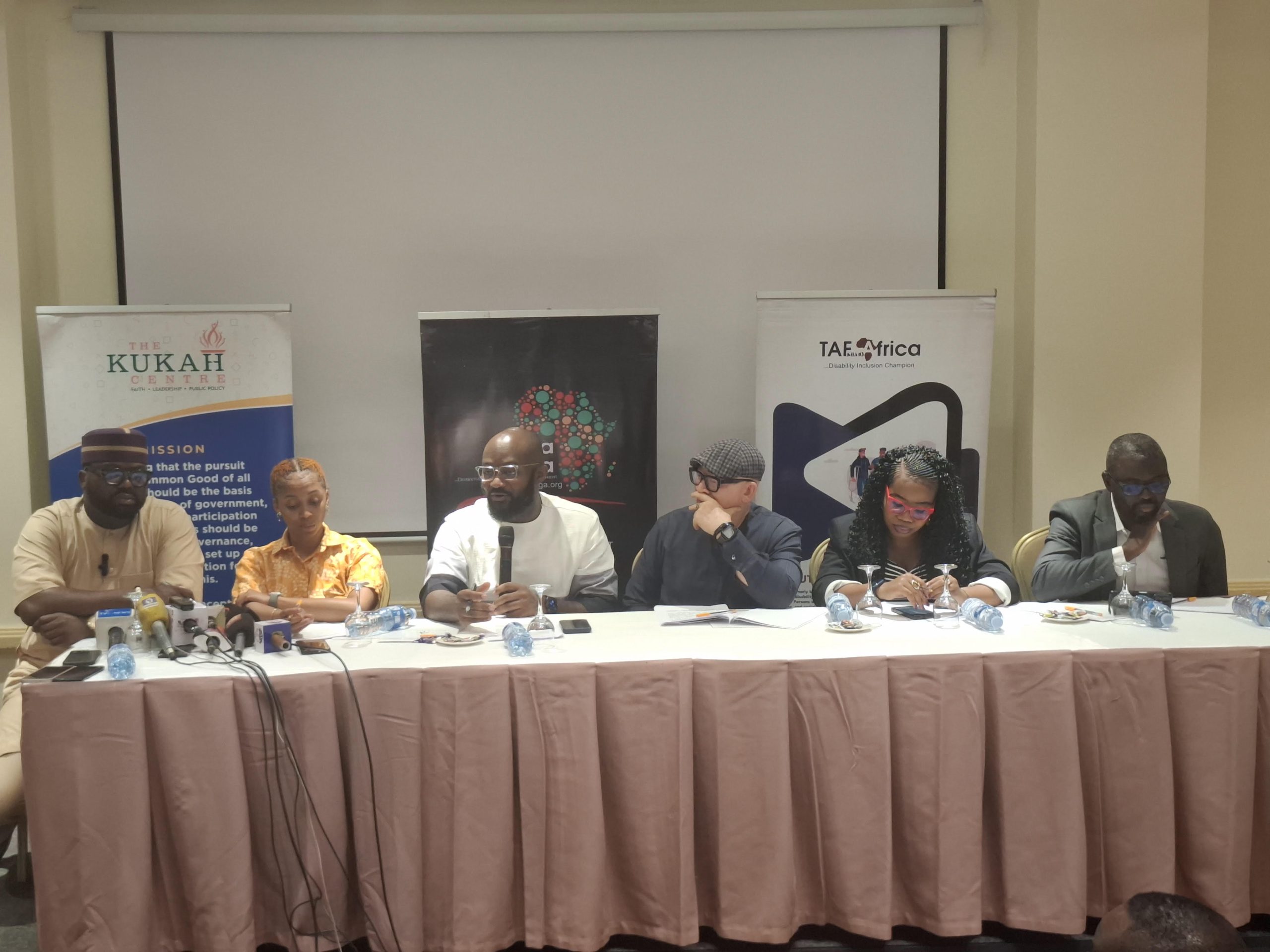
A coalition of civil society organisations (CSOs), notably Yiaga Africa, Centre for Media and Society (CEMESO), The Kukah Centre, International Press Centre (IPC), ElectHer, Nigerian Women Trust Fund, and TAF Africa, has expressed disappointment with the final outcome of the 2026 Electoral Act, which was recently signed into law by President Bola Ahmed Tinubu.
The CSOs said the content of the new electoral law was not what Nigerians wanted, as demonstrated in their public statements and participation in the entire process, as well as the recent peaceful protests, hence a disappointment to the CSOs, millions of Nigerians, and several other individuals who participated and worked tirelessly to ensure an electoral law that would herald an improved electoral process.
The CSOs highlighted that the new electoral law failed in the areas of real-time electronic transmission of election results; compressed timelines for key electoral activities; restricting the filing of reports to INEC officials to activate the review of election results; a N50 million administrative fee (non-refundable) for new political party registration; and the mode of party primaries, which restricts parties to only two options for candidate nomination – direct primaries or consensus.
At a press conference in Abuja on Thursday, Jake Epelle, the Chief Executive Officer of TAF Africa, told journalists that the CSOs are deeply concerned by the recent development regarding the 2026 Electoral Law and the outcome of the 2027 elections.
He said: “Wednesday was the darkest day for Nigeria’s democracy. The 2026 Electoral Act is simply a missed opportunity for the transformative electoral reform that Nigeria requires, and that Nigerians deserve.
“At a time when public confidence in elections remains fragile, this electoral law should have decisively strengthened transparency, eliminated ambiguities, and deepened safeguards against manipulation. Instead, it created more vulnerabilities in the electoral process.
“Throughout the legislative process, we engaged constructively with the National Assembly, submitted detailed citizens’ memoranda, participated in public hearings, and engaged publicly and privately for specific amendments that would have strengthened the integrity, inclusiveness, and accountability of Nigeria’s electoral framework.
“Sadly, the Electoral Act left dangerous loopholes unaddressed, and introduced new barriers to political participation.”
The leader of the CSOs also faulted the President’s speedy assent to the bill without attending to the concerns and reactions of Nigerians. “The decision of the Presidency to grant assent without addressing the substantive legal, technical, and democratic concerns raised by civil society, professional bodies, and even some members of the National Assembly signals a troubling prioritisation of political expediency over electoral integrity.
“Electoral reform should be guided by broad consultation and consensus, not compressed timelines and executive finality. This sets a dangerous precedent that foundational democratic laws may be enacted despite credible warnings from stakeholders charged with safeguarding electoral transparency.
“Such an approach risks eroding public trust at a time when confidence in the electoral system remains fragile, and must be deliberately strengthened, not casually tested,” he suggested.
Other News
He insisted that the 2026 Electoral Law contains significant flaws that will undermine electoral integrity, entrench incumbency advantage, and exclude millions of Nigerians from meaningful political participation. “Civil society raised each of these issues with evidence-based recommendations during the legislative process. The failure to address them represents a failure of political will.”
The CSOs, however, recognised some innovations in the new Electoral Law, particularly section 18, which allows for downloadable voter cards from INEC’s website. “This will increase voter participation and reduce disenfranchisement often associated with missing or unissued voter cards.
“Another one is section 9. For the first time in Nigeria’s electoral history, the voter register is required to be disaggregated by disability type. This is a significant advance in line with Nigeria’s obligations under the UN Convention on the Rights of Persons with Disabilities (CRPD).”
He called on INEC to work closely with the National Commission for Persons with Disabilities (NCPWD) and disability inclusion organisations to ensure this provision is operationalised with dignity and accuracy.
“There’s also sections 62, 71 which prescribed enhanced penalties for result falsification. The section noted that Returning Officers who deliberately falsify results now face a mandatory minimum of 10 years’ imprisonment without option of fine.
“Similarly, Presiding Officers who fail to sign result sheets may also face mandatory 3-year imprisonment. These are among the strongest anti-fraud sanctions in Nigeria’s legislative history, and represent a commitment to accountability that we strongly support,” he noted.
The Executive Director, Yiaga Africa, Mr Samson Itodo, in his remarks queried the speed with which the document was signed by the President despite the sustained concerns raised by Nigerians.
He highlighted that electoral law is the architecture of democratic competition, adding that its legitimacy depends not only on its content but on the openness and credibility of the process through which it is enacted.
“When reforms are rushed, consolidated without scrutiny, and adopted without full disclosure, public confidence inevitably erodes. This approach does not reflect deliberative lawmaking. It reflects a troubling departure from the transparency and accountability that electoral reform demands.
“In the period between the National Assembly’s passage of the Bill and the granting of Presidential assent, civil society organizations convened multiple protests and public engagements calling for critical safeguards to be preserved including real-time electronic transmission of results, downloadable voter cards, and the retention of established electoral timelines. These were not partisan demands; they were grounded in legal precedent, technical feasibility, and the imperative to protect electoral credibility ahead of 2027.
Director of Programmes, Yiaga Africa, Cynthia Mbamalu, in her contribution also expressed disappointment in the development, but challenged Nigerians and key stakeholders to “mount a guard” and ensure that no form of corrupt/malpractices is condoned during the electoral exercise.
Similarly, the spokesman of the House of Representatives, Honourable Akin Rotimi, appreciated the CSOs for the sustained push for a more credible and accountable electoral process.
He appealed to Nigerians to accept the new electoral law despite the gaps that were identified. “Democracy is a work in progress. We may not have all we wanted now, but what we have in the new Electoral Law is an improved version of what we had in 2022.”