Follow Us on Google
From Kenneth Udeh, Abuja
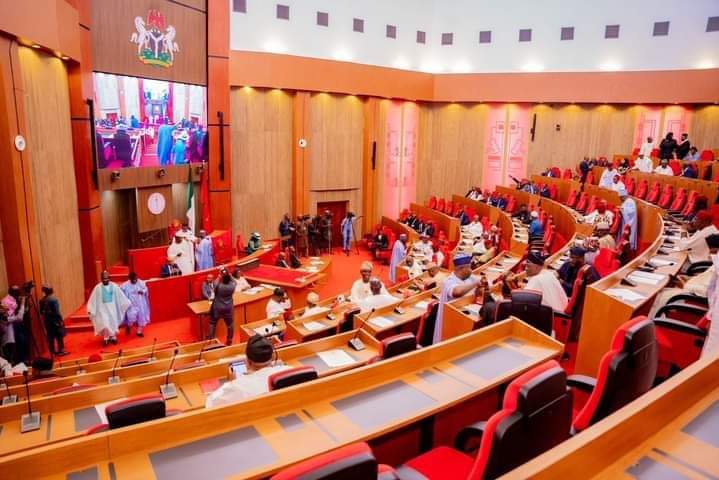
The much-anticipated harmonisation meeting of the Conference Committee on the Electoral Act (Repeal and Re-enactment) Bill, 2026, could not be held yesterday, as members failed to formally sit or reach any conclusion ahead of today’s crucial plenary session.
The Sun exclusively gathered that despite being scheduled for 11am at the Senate President’s Conference Room 3.01, the meeting did not hold as planned due to the absence of key members, particularly from the House of Representatives.
A highly placed member of the committee told The Sun bluntly: “How can there be a conclusion when the meeting failed to hold?”
The lawmaker declined further comments before walking away.
Our correspondent observed that some Senators arrived at the venue at the scheduled time of 11am and waited.
However, both Chairmen of the Electoral Committees, Senator Simon Bako Lalong for the Senate and Adebayo Balogun for the House of Representatives were initially absent. No House member was present at the venue at that time.
After waiting for several minutes, the senators moved to Lalong’s office. About 20 minutes later, they reconvened and agreed to reschedule the meeting to 3pm.
By 3:30pm, some senators, including Jibrin Isah, Abba Moro and Tahir Monguno, were seated, but once again, no house of representatives members was present.
At about 4pm, Lalong arrived, and later, Balogun joined him, but still without there was no other House committee member.
The two leaders briefly entered into a closed-door discussion, which lasted for about 10 minutes before dispersing, effectively ending the day without any harmonised position.
Other News
Sources hinted that a nocturnal meeting may be convened later yesterday night outside the National Assembly complex in a last-minute effort to align positions before today’s plenary.
According to the final harmonisation matrix exclusively obtained by The Sun, the committee is expected to reconcile differences on 20 clauses, as well as the explanatory memorandum and the long title of the bill.
The most contentious remains Clause 60(3), which addresses electronic transmission of election results.
The House of Representatives had earlier passed a version mandating real-time electronic transmission of results directly from polling units to the Independent National Electoral Commission’s (INEC) IReV portal.
However, on February 4, 2026, the Senate amended the clause by removing the words ‘real-time’ and opting instead for a flexible framework that retains electronic transmission but allows discretion in implementation.
The Senate’s position has sparked widespread protests, including the #OccupyNASS demonstration in Abuja, and warnings from the Nigeria Labour Congress (NLC) of possible nationwide industrial action if real-time uploads were not entrenched in the final law.
Chairman of the Senate Committee on Media and Public Affairs, Yemi Adaramodu, had earlier defended the chamber’s position, stating:
“We don’t do something that we just wake up, on impulse. You have to be very thorough. It must be so painstakingly done that the flaws don’t repudiate whatever trust Nigerians have in our system.”
To resolve the differences, both chambers constituted 12-member Conference Committees, a constitutional requirement before the final passage and transmission to President Bola Tinubu for assent.
The Senate delegation, appointed by Senate President Godswill Akpabio, is chaired by Lalong and includes Orji Uzor Kalu, Adamu Aliero, Asuquo Ekpenyong, Aminu Iya Abbas, Tokunbo Abiru, Niyi Adegbonmire, Ipalibo Banigo and Onyekachi Nwebonyi, among others.
The House of Representatives counterpart, chaired by Balogun, includes Fred Agbedi, Sada Soli, Ahmadu Jaha, Iduma Igariwey Enwo, Saidu Musa Abdullahi and Dr. Zainab Gimba.