Follow Us on Google
By Adesuwa Tsan
The National Assembly has again set out on a familiar but formidable voyage: to remake Nigeria’s electoral laws and deliver a framework capable of producing elections that citizens can trust. The review of the Electoral Act has grown into a bid to enforce a sweeping overhaul, one that aims to tighten procedures, expand inclusion, and force accountability on the Independent National Electoral Commission (INEC).
History of reform and recurring frustration
Daily Sun recalls that it is not the first time lawmakers have promised such transformation. Nearly every Assembly since 1999 has entered the reform waters, only for political interests, weak implementation, or judicial uncertainty to blurr the effort. Yet, the current initiative, with its central proposal to strengthen the electoral system, is shaping up as the most ambitious in 15 years, one that could redefine how elections are run, contested and perceived ahead of the 2027 general elections.
Daily Sun investigations revealed that Nigeria’s search for credible elections did not begin with the 10th Assembly. The first major post-1999 reform drive came under the late President Umaru Musa Yar’Adua, who publicly admitted in 2007 that the polls that brought him to power were flawed. His acknowledgment led to the establishment of the Justice Mohammed Uwais Electoral Reform Committee in 2008, the first comprehensive, expert-led review of Nigeria’s electoral system since independence.
The Uwais Committee recommended far-reaching changes including the removal of presidential control over INEC appointments; creation of an Electoral Offences Commission; clearer timelines for dispute resolution and greater independence in INEC’s funding. While the government did not implement all its suggestions, the work of that committee laid the foundation for the Electoral Act 2010, enacted during Yar’Adua’s tenure and consolidated under President Goodluck Jonathan.
That Act introduced some of Nigeria’s most enduring electoral innovations, including legally defined time limits for filing and determining petitions, clearer rules for accreditation and collation and provisions guaranteeing INEC’s financial autonomy. It also set the stage for the adoption of the Smart Card Reader in 2015 and later, the BVAS in 2023.
But Yar’Adua’s reforms were only partially realised. The crucial proposal to insulate INEC appointments from executive influence was rejected; the Electoral Offences Commission never saw the light of the day and loopholes result collation and judicial interpretation persisted. Each subsequent amendment in 2015 under Jonathan and in 2022 under Muhammadu Buhari, tried to fix those gaps, with mixed results.
The 2015 Amendments llkk
The 2015 amendment refined internal party democracy rules and clarified voting procedures, while the 2022 Act, passed into law after President Buhari withheld assent five times, was celebrated for finally giving statutory recognition to electronic transmission of results and digital accreditation through BVAS. Yet, as seen in the 2023 elections, technical hitches, funding delays and contested interpretations again eroded public trust.
The 10th Senate and Proposed Changes
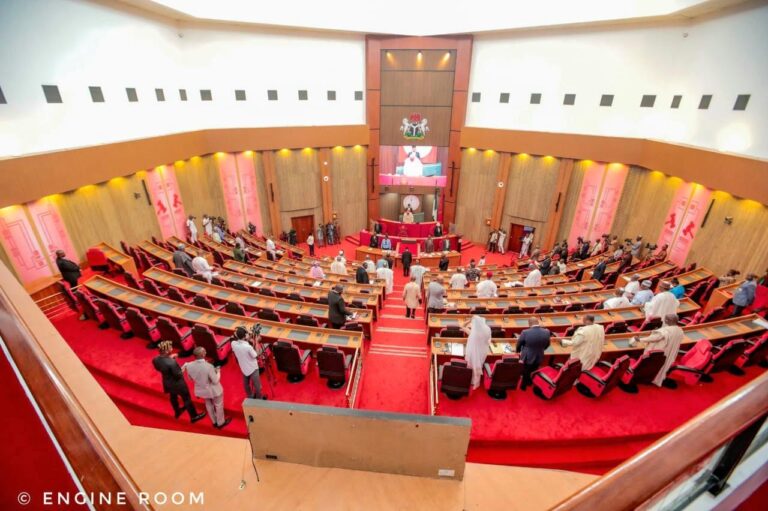
Now, under the 10th National Assembly led by Senate President Godswill Akpabio, lawmakers are once more rewriting the script convinced that credible elections remain the missing cornerstone of Nigeria’s democracy.
The draft Electoral Bill 2025 seeks to consolidate the lessons and frustrations of previous electoral cycles. It proposes major structural and procedural changes designed to make INEC more transparent, strengthen party primaries and widen voter participation.
At its core is the proposal to transfer the evidential burden in election petitions to INEC. In plenary, Senate President Akpabio argued that since the Commission controls election materials, logistics, and the collation process, it should bear the duty of proving that its conduct and results are lawful. Lawmakers across party lines have echoed that sentiment, describing it as a way to correct the current “near-impossible” burden placed on candidates contesting flawed results.
Other key reforms include mandatory electronic transmission of results from polling units to collation centres, with stricter technical definitions to prevent the ambiguity that plagued the 2023 elections.
Early release and audit of INEC funds, requiring statutory disbursement at least one year before polling and audited financial reports within six months of every financial year.
Expanded voting rights, including diaspora and prisoner voting, with INEC mandated to create modalities for Nigerians abroad and inmates awaiting trial to participate.
Same-day elections, a proposal to conduct presidential, National Assembly and governorship polls on the same day to reduce cost, violence and logistical fatigue.
Harsher penalties for electoral offences, introducing mandatory jail terms and multimillion-naira fines for vote buying, result falsification, and intimidation.
Stronger party regulation, requiring digital membership registers and uniform delegate structures for primaries, to curb manipulation and ghost delegates.
Each of these measures carries enormous implications for election management, political participation, and public confidence.
Why the burden of proof debate matters
For decades, election petitions in Nigeria have revolved around the ability of aggrieved candidates to produce documentary and oral evidence proving manipulation, a task often impossible without access to INEC’s materials. Courts have repeatedly ruled that the burden rests on the petitioner, not the Commission.
If the new amendment succeeds, that standard could change dramatically. INEC would have to prove that it conducted elections in accordance with the law, preserving chain-of-custody records and digital data to demonstrate integrity.
Proponents believe this shift will make INEC more careful and accountable, while critics warn that it could swamp the Commission in litigation or create procedural confusion if poorly drafted.
Other News
Either way, it would mark a profound legal and cultural departure in Nigeria’s electoral jurisprudence and how petitions are approached after 2027.
Expanding access and inclusivity – from prisoners to the diaspora
The bill’s recognition of prisoner voting rights reflects a growing international norm that imprisonment should not automatically mean disenfranchisement. INEC has already conducted limited inmate registration pilots in a few states; the amendment seeks to give that practice a firm legal basis.
More ambitiously, the proposal for diaspora voting resurrects a long-running demand among Nigerians abroad, whose remittances exceed $20 billion annually. Enabling them to vote, however, requires constitutional changes and logistical innovations including secure digital verification, embassy-based polling, or mail-in ballots, and innovations which Nigeria’s electoral system has yet to master. Still, lawmakers view it as a step toward inclusivity and modernisation.
Strengthening technology and transparency
Building on the 2022 Act, the new bill doubles down on electronic transmission of results and digital voter identification. INEC would issue QR-coded voter cards and deploy improved versions of BVAS for simultaneous accreditation and upload of polling-unit results.
Supporters argue that this will cut down manual collation and late-night tampering, the twin engines of electoral fraud. But it also raises technical and cybersecurity challenges. Stakeholders including PLAC and other civil-society organisations caution that without clear definitions of “transmission” and firm infrastructure investments, Nigeria may again face the credibility crisis that shadowed the 2023 elections when real-time uploads failed.
Elections, confidence and apathy
At the heart of every electoral reform lies a simple question: will it make Nigerians believe their votes count? Voter turnout has fallen from 69 percent in 2003 to less than 27 percent in 2023, the lowest in West Africa. Analysts link this collapse in participation to serial disappointments from flawed logistics, perceived bias and endless post-election litigations.
If the 2025 reforms restore transparency, they could help rebuild civic confidence and draw millions back to the polls. Conversely, if they create new ambiguities or appear politically motivated, they may deepen cynicism and apathy.
Electoral violence, too, remains a stubborn threat. In 2023, over 700 incidents of violence were recorded nationwide. Proposals such as same-day elections and heavier penalties for offenders aim to compress exposure windows and deter thuggery. Yet, enforcement capacity remains a major question, as Nigeria still lacks a fully functional Electoral Offences Commission, the same institution recommended by the Uwais Committee 17 years ago.
Lawmakers’ positions
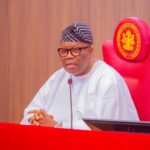
Senate President Godswill Akpabio has championed the idea that credible elections are impossible without holding INEC to higher standards of accountability. “If INEC conducts elections, stores the materials, and controls logistics, then it must be ready to prove that it acted according to law,” he said in plenary.
On his part, former Bayelsa governor, Senator Henry Seriake Dickson, described the bill as a “courageous recalibration” of Nigeria’s electoral structure, arguing that it would place responsibility where it belongs. Senator Adams Oshiomhole called for separate national and state election days to reduce violence and ease security deployment.
On the cautionary side, Senator Abdul Ningi and others have urged precision in drafting. “We must avoid creating legal bottlenecks that could paralyse INEC or overwhelm the courts,” one lawmaker warned during debate.
Civil-society actors, including PLAC and the Centre for Democracy and Development (CDD), have broadly supported the reforms but emphasised the need for “institutional realism” — ensuring that INEC, political parties, and security agencies have the capacity to implement the new provisions.
Political influence— can the bill scale through?
Experience suggests caution. President Buhari rejected versions of the 2022 Electoral Bill five times before finally signing, citing drafting errors and concerns about the cost of mandatory primaries. Earlier attempts in 2018 also collapsed due to political timing – bills passed too close to elections and mired in suspicion of manipulation.
The current political climate, however, looks more favourable. With more than two years before the 2027 polls, the timeline gives lawmakers room to negotiate contentious clauses and build consensus with INEC and the executive. Senate and House committees have already held joint retreats and public hearings, signalling a coordinated approach rarely seen in previous amendment cycles.
Still, the political calculus is delicate. Reforms that threaten entrenched advantages such as curbing the use of state machinery or strengthening internal party democracy often face quiet resistance. Whether the National Assembly can overcome those invisible veto points will determine the bill’s fate.
Lessons from previous years
Yar’Adua’s reform journey offers a useful mirror. His 2008 acknowledgment of electoral flaws and the courage to convene the Uwais Committee created the moral foundation for all subsequent reforms. Yet, the partial implementation of its recommendations also shows how political will can falter once reforms begin to bite. The failure of, or partial use of IReV also creates doubts over the implementation of the reforms.
The same tension hangs over the 2025 effort; a genuine desire for credibility weighed against the political instinct to retain control. The outcome will depend not just on legal drafting but on whether political elites are prepared to sacrifice short-term advantage for long-term legitimacy.
The Senate’s new voyage to amend the Electoral Act is both an act of institutional memory and a test of sincerity. It gathers the lessons of 2007, 2011, 2015 and 2023, years when electoral hope rose and then receded. It seeks to translate those lessons into enforceable law by shifting evidential burdens, digitising processes, widening participation and criminalising manipulation.
Yet, the measure of its success will not lie in clauses alone but in enforcement and political culture. If the National Assembly and INEC carry through with technical precision, bipartisan discipline, and early funding, Nigerians could approach 2027 with renewed confidence that ballots count and losers accept defeat. If not, the story may end where it began – another well-written law adrift in the gulf between promise and practice.