Follow Us on Google

By Chukwuma Umeorah
Nigerian equities could deliver a return of about 45.9 per cent in 2026, driven by improving macroeconomic stability, pre-election liquidity, expected monetary easing and major anticipated listings.
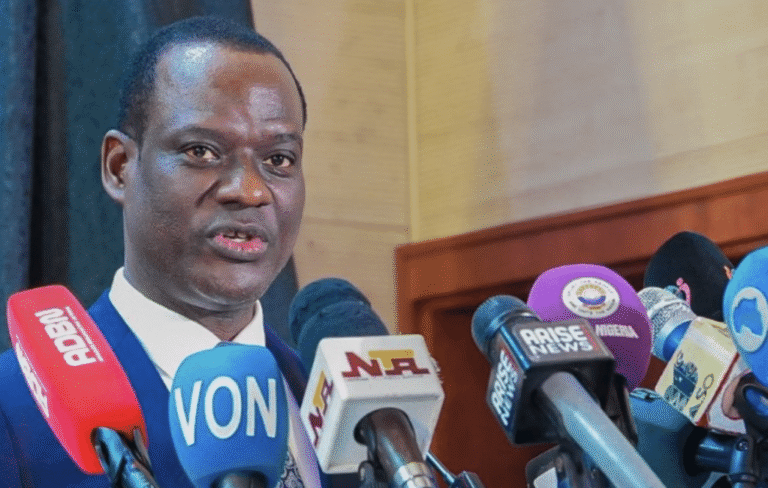
Former president, Chartered Institute of Stockbrokers (CIS), and Chief Executive Officer of Arthur Steven Asset Management (ASAM), Olatunde Amolegbe, made the projection at the Capital Market Correspondents Association of Nigeria (CAMCAN) 2025 Capital Market Review and Prognosis for 2026 held recently in Lagos, where he stated that the projection was based on a combination of earnings growth expectations, valuation re-rating, anticipated monetary easing and liquidity inflows ahead of the 2027 general elections.
“We expect the NGX to deliver a 45.9 per cent return in 2026 under our base-case scenario,” Amolegbe said. “Stable macro conditions, ample liquidity ahead of elections and renewed investor confidence continue to reinforce our bullish outlook.”
He said ASAM remains constructive on Nigerian equities, noting that price stability, relative calm in the foreign exchange market, modest interest rate cuts and active capital raising by institutional investors should support market performance in the year ahead.
According to him, anticipated large listings, particularly within the Dangote Group, could significantly improve market depth and sector representation on the Nigerian Exchange Limited (NGX), helping to broaden investor participation.
Amolegbe explained that under a more optimistic scenario, faster disinflation, aggressive monetary easing of between 400 and 900 basis points, stronger corporate earnings, higher foreign portfolio investment inflows and additional large-scale listings could push equity returns beyond the base-case projection.
However, he warned that downside risks remain, especially around capital gains tax sensitivity and possible delays in major listings, which could weigh on market momentum.
Highlighting key drivers for 2026, he pointed to elevated liquidity ahead of the 2027 general elections, largely from pre-election spending and fiscal expansion.
While this liquidity could support higher trading activity, Amolegbe cautioned that it may also increase volatility in both the equities and foreign exchange markets, prompting investors to adopt more tactical and shorter-term strategies.
On corporate actions, he said expected listings such as the Dangote Refinery and Dangote Fertiliser initial public offerings, alongside the planned separate listing of Airtel Money in the first half of 2026, are likely to improve market liquidity and attract a broader mix of domestic and foreign investors.
Amolegbe also identified foreign exchange (FX) stability as critical to sustaining foreign investor interest. He said as global interest rates begin to normalise, foreign portfolio investors are closely watching the durability of Nigeria’s FX reforms and the naira’s recent stability.
According to him, these factors continue to support carry trade opportunities in high-yield naira assets, helping to underpin inflows into the domestic financial market.
On fiscal policy, he noted that tax reforms scheduled to take effect from January 2026 will reshape cost structures across several sectors, particularly consumer goods and industrials.
He added that capital gains tax reforms could influence investor behaviour by encouraging longer holding periods and more cautious trading, especially as the country approaches the election cycle.
Turning to asset allocation, Amolegbe said Arthur Steven is maintaining the framework outlined in its second-half 2025 outlook, recommending a portfolio mix of 70 per cent equities, 20 per cent fixed income and 10 per cent cash.“We retain an overweight position in equities, reflecting strong market sentiment and the continuation of the bull cycle,” he said.
He noted that the NGX All-Share Index gained over 50 per cent in the previous year, supported by relative naira stability, improved earnings visibility and renewed foreign investor participation.
While fixed income instruments remain attractive, Amolegbe said their relative appeal may moderate as investor flows rotate towards risk assets amid improving macroeconomic conditions.
The cash allocation, he explained, is intended to preserve liquidity and provide flexibility to take advantage of market dislocations and tactical opportunities.
Amolegbe stressed that the combination of stabilising macroeconomic indicators, ongoing structural reforms and improving investor confidence positions Nigeria’s financial market for solid performance in 2026.