Follow Us on Google
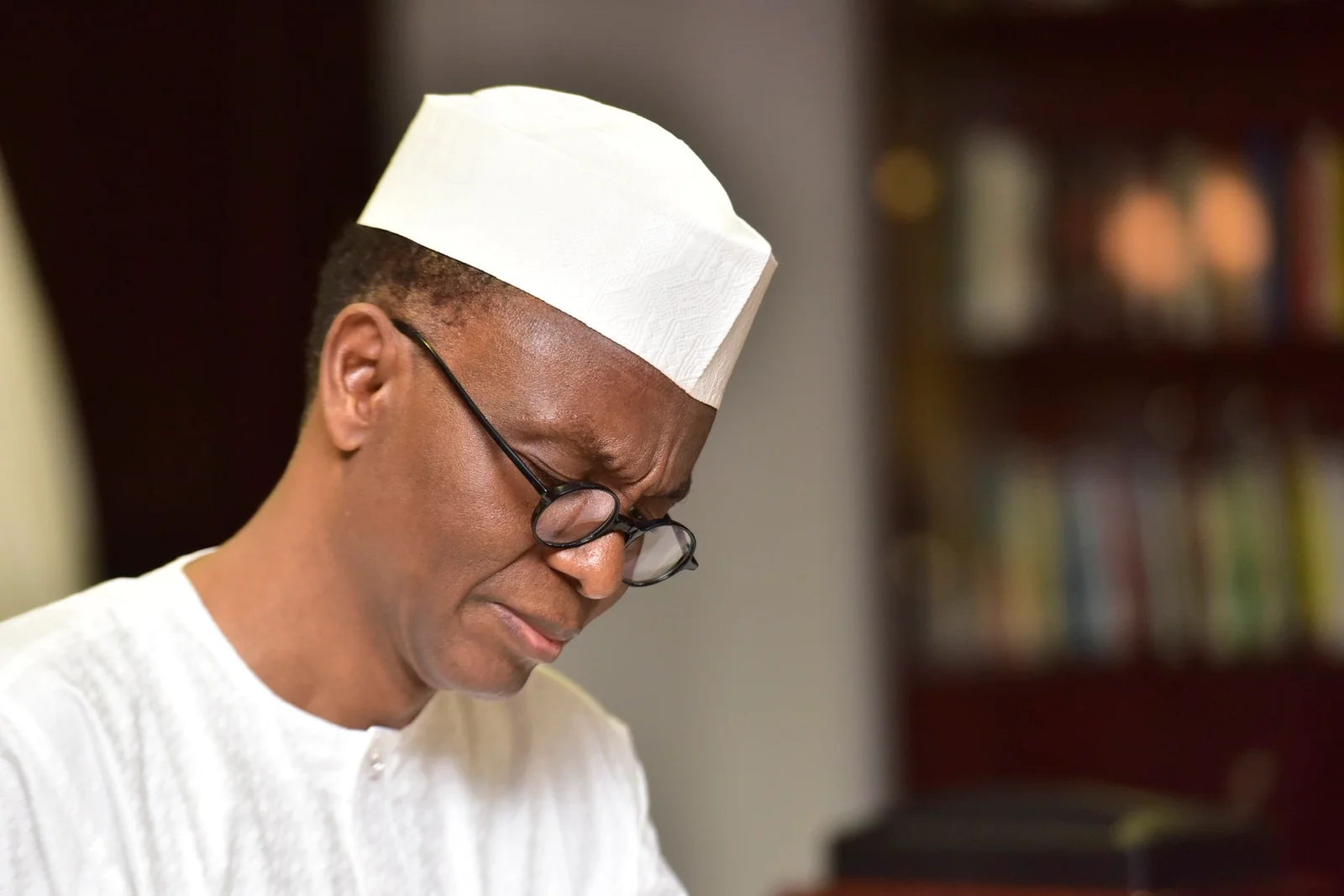
The Independent Corrupt Practices and Other Related Offences Commission (ICPC) and the Attorney-General of the Federation (AGF) have asked the Federal High Court in Abuja to dismiss a ₦1 billion suit filed by former Kaduna State Governor, Nasir El-Rufai, over alleged denial of access to his family.
El-Rufai instituted the suit against the ICPC, its Chairman, Musa Aliyu, SAN, and the AGF, accusing the commission of preventing his wife, Aichatou Asabe, and son, Abba El-Rufai, from visiting him while in detention.
The former governor is seeking ₦1 billion in damages and nine other reliefs, including a declaration that his fundamental rights under Part IV of the 1999 Constitution remain in force despite his detention.
In a joint counter-affidavit, the ICPC and its chairman denied several of the allegations, saying “many paragraphs” in El-Rufai’s affidavit in support of the suit were false.
The commission said El-Rufai was in lawful custody following an order of the Federal High Court in Kaduna and that it had previously facilitated access to his personal physician.
According to the ICPC, a July 7 medical visit involving El-Rufai, his physician, commission officers and his wife was later reported to have turned into a political meeting.
The commission said the development exposed weaknesses in its access-control arrangements, prompting a temporary restriction on non-essential visits.
ICPC officer John Uche said the measure was necessary because “unrestricted access presented a continuing risk until the vulnerability was understood and adequately mitigated.”
Uche also described an incident involving El-Rufai’s son, Abba, who allegedly attempted to gain entry into the commission’s premises on July 7.
He said he tried to stop Abba from entering but fell into a ditch during the confrontation.
“That while being focused on preventing him from gaining access, I fell into a ditch where my leg was trapped, and I called out for help,” Uche said in the affidavit.
He added that security personnel responded to his call and moved to prevent what he described as an unauthorised entry, while CCTV cameras captured the incident.
The ICPC also alleged that Asabe had earlier been “smuggled” into its premises after official visiting hours on July 4, allegedly with the connivance of some commission officers.
According to the commission, the officers involved were subjected to disciplinary action, while Asabe’s visiting access was temporarily suspended pending the completion of a security review.
The commission said other members of El-Rufai’s family, including his son, had subsequently been allowed to visit him and bring meals, medication and other necessary supplies.
The AGF, in a separate counter-affidavit filed on September 11, denied responsibility for El-Rufai’s detention or the alleged denial of access to his family.
The AGF argued that the office “is not saddled with the responsibility of arresting and/or detaining any person suspected to have committed any crime whatsoever, including El-Rufai, and neither does he maintain a detention facility.”
It further argued that the court order relied upon by El-Rufai only directed the ICPC and its chairman to allow him access to his counsel and personal physician.
“That the attached order did not include access to Aichatou Asabe or any other person,” the AGF stated.
The Federal Government also maintained that the ICPC had the authority to enforce security measures within its facility, arguing that “the 1st and 2nd respondents are empowered to put in place protocols within their facilities to prevent breach of security.”
The AGF described the maintenance of strict security protocols at the ICPC detention facility as a matter of national security.
The case, marked FHC/ABJ/CS/1852/2026, has been assigned to Justice Chigozie Onah of the Federal High Court in Abuja for determination.