Follow Us on Google
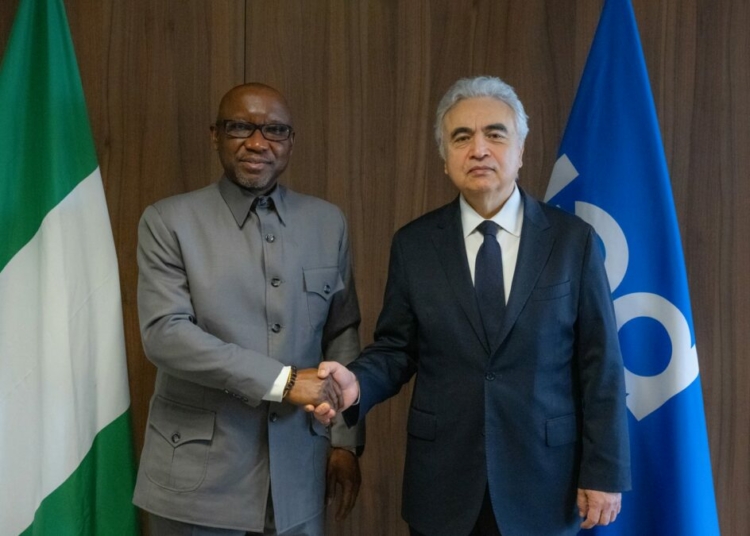
Nigeria has been admitted into the International Energy Agency (IEA) as an Association country, a development the Minister of State for Petroleum Resources (Gas), Ekperikpe Ekpo, has described as a major milestone that will strengthen the country’s role in global energy governance while supporting its drive for universal energy access, industrialisation and sustainable development.
Ekpo, in a statement issued on Thursday by his spokesman, Louis Ibah, said the unanimous decision of the IEA Governing Board to admit Nigeria reflects the country’s increasing strategic importance in the global energy sector.
The minister said Nigeria’s membership would open new opportunities for collaboration with the world’s leading energy body, giving the country greater access to global expertise, research, policy guidance and investment partnerships needed to transform its energy sector.
“I am elated by the decision of the IEA Members to officially welcome Nigeria to the IEA Family as an Association country.
“It is an honour for Nigeria to join this leading energy agency. I also encourage other African countries to deepen their engagement with the IEA as we work together to achieve key development goals, including universal energy access and industrialisation”, Ekpo said.
According to him, the partnership will strengthen cooperation in critical areas such as energy security, gas development, investment mobilisation, electricity access and sustainable energy solutions, while supporting Nigeria’s efforts to build a more resilient, competitive and inclusive energy sector.
The minister noted that Nigeria’s admission comes at a critical period when the country is pursuing reforms aimed at expanding domestic gas utilisation, increasing electricity access, attracting investment and driving industrial growth through improved energy infrastructure.
Nigeria is the latest nation to join the IEA’s Association programme, which brings together major energy-producing and energy-consuming countries to promote secure, affordable and sustainable energy systems.
With Nigeria’s admission, the IEA Family now represents more than 80 per cent of global energy demand, a significant increase from the 40 per cent it accounted for when the Association programme was launched in 2015.
Welcoming Nigeria into the organisation, IEA Executive Director, Fatih Birol, described the country’s admission as a significant achievement for both the Agency and the global energy community.
Other News
“I am thrilled that Nigeria is joining the IEA. It is Africa’s most populous country and a major international energy player. Nigeria becoming part of the world’s energy authority marks an important advance in global energy governance,” Birol said.
He expressed appreciation to President Bola Ahmed Tinubu and Minister Ekpo for their confidence in the Agency, saying stronger cooperation would help Nigeria improve energy security, accelerate economic growth and expand access to electricity and clean cooking solutions.
Birol added that the partnership would also support broader efforts to build more resilient and sustainable energy systems while addressing key development challenges.
The IEA acknowledged Nigeria’s growing influence in international energy markets, particularly following recent developments in the country’s refining sector.
According to the Agency, increased fuel exports from Nigeria during periods of global market disruption helped improve the resilience of fuel supply across Africa and other international markets.
It also recognised Nigeria as one of the world’s fastest-growing markets for decentralised solar energy, noting the country’s ongoing efforts to expand electricity access and promote clean cooking solutions for millions of households.
The Agency said Nigeria’s admission builds on more than a decade of cooperation that began in 2014 and will deepen collaboration in strategic areas, including energy security, clean energy transition, methane emissions reduction, electricity access and wider energy sector development.
Reaffirming Nigeria’s commitment to international cooperation, Ekpo said the country’s admission into the IEA underscores its growing relevance in shaping global energy policy and reflects its determination to work with development partners to strengthen energy security, expand access to affordable energy and build a sustainable future.
He expressed optimism that the new partnership would accelerate Nigeria’s energy transformation agenda while creating fresh opportunities for investment, innovation and inclusive economic growth.