Follow Us on Google

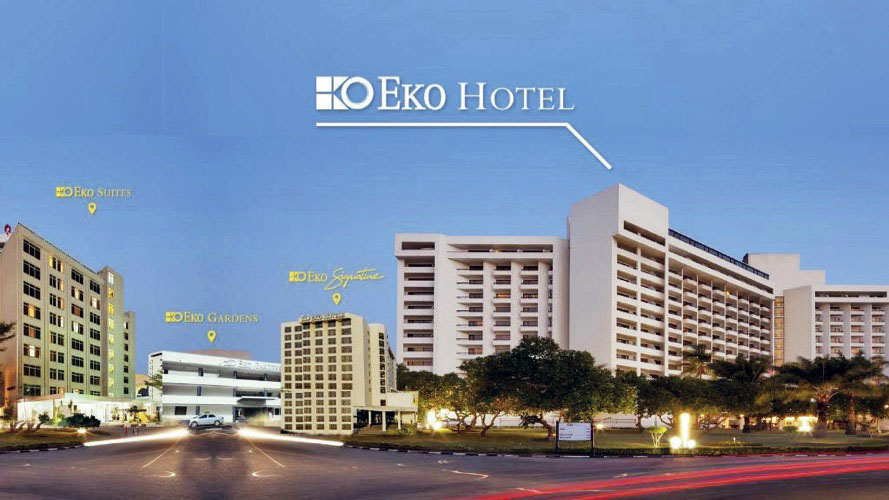
The Legacy Gala & Awards night: 50 years of building more than a hotel. 50 years of building a nation’s hospitality identity.
In Lagos, Nigeria, 2nd of OCTOBER 2026 was written in the sands of time, because some hotels are built to accommodate history. Others are built to make it.
For fifty years, Eko Hotels & Suites has done both.
Beneath the lights of an extraordinary golden jubilee celebration, one of Africa’s most recognisable hospitality institutions made a statement that extended far beyond the walls of the magnificent Eko Convention Centre.
Africa does not lack the capacity to deliver world-class excellence. What it needs are more institutions courageous enough to demonstrate it.
The occasion was The Legacy Gala & Awards night, the grand celebration marking fifty years of Eko Hotels & Suites. An evening of African grandeur, international entertainment, cultural pride, distinguished personalities and extraordinary hospitality.
But to describe it simply as a glamorous anniversary celebration would be to misunderstand its significance.
This was not merely a party. It was fifty years of enterprise taking a bow. Fifty years of memories finding their voices.
Fifty years of an institution reminding a continent that excellence is not foreign to Africa. And for one unforgettable evening, history took attendance.
A hotel became part of a nation’s story
There are buildings that occupy space, and there are institutions that occupy memory. Eko Hotels & Suites belongs to the latter.
Across five decades, its corridors have welcomed presidents and policymakers, entrepreneurs and entertainers, diplomats and dreamers, international visitors and generations of Nigerian families.
Within its halls, businesses have been negotiated, friendships formed, cultures celebrated, careers launched and milestones immortalised.
For many, Eko Hotels is where Lagos welcomes the world.
For others, it is where the world first encounters the warmth, ambition, sophistication and extraordinary possibilities of Lagos.
Yet perhaps its greatest achievement is not simply that it has remained standing for 50 years. It is that it has remained relevant.
In a world where brands disappear as quickly as trends emerge, longevity is an achievement. But longevity accompanied by reinvention is leadership.
Eko Hotels has consistently demonstrated that hospitality must evolve beyond accommodation. It must become an experience. A cultural encounter. An economic opportunity. A reason to travel. A reason to return.
Because the greatest hotels do not merely sell rooms. They give destinations a reputation worth travelling for.
That night, Africa wore her crown
The Legacy Gala & Awards night brought together more than 1,000 distinguished guests, representing an extraordinary convergence of business, government, entertainment, culture and society.
Among the dignitaries were Lagos State Governor Babajide Sanwo-Olu, Deputy Governor Dr. Kadri Obafemi Hamzat, prominent business leaders, industry executives, celebrities and long-standing friends of the institution.
It was a gathering that reflected not simply the prestige of a hotel, but the depth of relationships cultivated across generations.
The evening’s entertainment brought together internationally celebrated musician Wyclef Jean and Nigerian highlife sensation Flavour, creating a memorable meeting of African and Caribbean musical heritage.
Music, fashion, theatrical expression and celebration converged in a spectacle befitting the occasion.
Yet, beyond the performances lay a more compelling message. African creativity is not a decorative addition to hospitality. It is one of its greatest competitive advantages.
Our music travels the world. Our fashion influences global runways. Our cuisine carries the memory of generations. Our storytelling continues to captivate audiences far beyond our borders. And, many started on Eko Hotels grounds.
The question is no longer whether Africa possesses what the world desires. The question is whether we are sufficiently intentional about converting these cultural assets into sustainable industries, jobs, investments and compelling destination experiences.
At The Gala, Eko Hotels offered its own answer; Africa need not borrow another continent’s identity to earn the world’s admiration. She need only invest boldly enough in her own.
There is, however, another story that deserves equal billing. It is the story of the people.
Not the famous faces photographed beneath the lights. Not the glittering personalities whose arrival commands applause. But the extraordinary men and women whose daily dedication has sustained Eko Hotels for half a century.
The housekeepers who prepare rooms with meticulous care. The waiters who understand that genuine service is an act of dignity. The engineers who keep an enormous hospitality operation functioning. The security personnel who protect its people and promises. The gardeners, technicians, stewards, reservation officers, accountants, sales professionals, event planners, administrative teams and countless others whose contributions rarely make newspaper headlines.
These are the custodians of the brand. The quiet architects of its reputation. The human infrastructure behind its commercial success.
For 50 years, generations of employees have given their skills, energy, creativity and commitment to an institution that has become part of Nigeria’s hospitality heritage.
Their stories may not always appear in annual reports, but their fingerprints are everywhere.
A hotel may be built with concrete, steel and capital. But a legacy is built with people who choose, every day, to care. The Chairman, Mr Christopher Chagoury boldly said in an interview.
Perhaps, this is one of the most important lessons of Eko Hotels at fifty: buildings can be replicated, interiors redesigned and technology acquired, but a culture of excellence must be nurtured and that culture is ultimately human.
The leadership understands the weight of legacy
Behind every enduring institution is a succession of decisions, investments, sacrifices and moments when leadership chooses long-term value over immediate convenience.
The golden jubilee provided an opportunity to recognise the vision and stewardship that have guided Eko Hotels through five decades.
Under the leadership of their Managing Director, Mr. Ghassan Faddoul, General Manager Mr. Danny Kioupouroglou and the wider executive management team, the institution continues to strengthen it’s position as a defining hospitality destination.
Their collective responsibility extends beyond protecting a celebrated past, to redesigning a future, our past will be proud of, long after we are gone.
It is to ensure that the institution remains competitive, innovative and relevant to future generations.
The true measure of leadership, after all, is not simply what it achieves during its tenure. It is what remains valuable long after that tenure has ended.
Legacy is not the applause we receive while we are present. It is the relevance of what we build when we are no longer in the room.
Fifty years of Eko Hotels is therefore not merely a tribute to endurance. It is a testament to institutional stewardship.
Hospitality to destination economics
Perhaps the most consequential chapter in Eko Hotels’ evolution is its expanding role in connecting hospitality with tourism, culture, entertainment and the creative economy.
Through initiatives such as Tropical Christmas Wonderland, Theatre @ Eko Hotels, Hakuna Matata Theme Park and other destination experiences, the institution has increasingly demonstrated how hospitality infrastructure can become a platform for cultural production and economic participation.
These initiatives represent a larger philosophy: a hotel should not wait for tourism demand to arrive. It can actively help create the reasons people travel.
A theatrical production creates opportunities for performers, designers, musicians, technicians and production professionals.
A festive destination experience stimulates spending across accommodation, food, transport, entertainment and retail.
A major international conference brings together airlines, logistics providers, service businesses and professionals.
This is the multiplier effect of hospitality.
It is also a reminder that tourism should not be treated as a decorative sector in national economic planning. It is an interconnected economic ecosystem.
Oil may have fed Nigeria’s treasury, but tourism possesses the potential to employ generations of her children.
The opportunity is enormous, provided the country develops the infrastructure, policies, investment climate and destination experiences necessary to realise it.
Eko Hotels’ evolution offers a practical illustration of what becomes possible when hospitality is approached as an economic engine rather than simply a property business.
The Africa Legacy Summit: When celebration became conversation
Importantly, Eko Hotels’ golden jubilee did not begin and end with a spectacular gala.
Earlier in May, the institution convened the Africa Legacy Summit, bringing together policymakers, scholars, diplomats, tourism professionals, business leaders, creatives and young Africans to explore the future of culture, hospitality, tourism and travel.
The summit asked a question of continental importance: How can Africa move beyond celebrating its potential to deliberately building the systems that convert that potential into prosperity?
Discussions examined cultural identity, tourism development, investment, sustainability, innovation, youth participation and the economic opportunities emerging across the continent.
It was an ambitious expression of the institution’s belief that celebrating fifty years should involve more than remembering the past. It should also contribute to shaping the future.
If the Africa Legacy Summit was the intellectual expression of Eko Hotels’ golden jubilee, The Legacy Ball was its cultural and emotional crescendo.
One challenged Africa to think differently. The other demonstrated the extraordinary possibilities of African creativity. Together, they communicated a powerful proposition:
Africa’s future will not be secured by repeatedly announcing her potential. It will be secured by institutions willing to organise that potential into measurable progress.
The creative intelligence behind the celebration
For Dr. Iyadunni Gbadebo, Director of Sales and Marketing at Eko Hotels & Suites, the golden jubilee represented a significant opportunity to connect the institution’s history with a larger vision for African hospitality.
Over the years, her work in commercial strategy, destination experience development, theatre tourism, event curation and cultural marketing has contributed to initiatives that extend the hotel’s relevance beyond traditional accommodation.
Her approach reflects a growing recognition that hospitality brands must compete not only through their facilities, but through the experiences, stories and emotional connections they create.
The Legacy Ball formed part of this wider ambition to celebrate institutional achievement while presenting African creativity with confidence and sophistication.
As Gbadebo has consistently advocated, the continent must move from simply possessing exceptional cultural assets to developing commercially viable platforms that showcase them.
The distinction is critical. Culture alone does not automatically create a tourism economy.
It requires vision, investment, production, distribution, marketing and disciplined execution.
The world cannot buy an experience we have not had the courage to create.
That philosophy has become increasingly visible in Eko Hotels’ evolving portfolio of cultural and experiential initiatives, and the next 50 years begins now.
As the celebrations drew to a close, the greater significance of the occasion became unmistakable.
Eko Hotels & Suites had not simply commemorated 50 years of existence.
It had reaffirmed the importance of building institutions capable of transcending generations.
For Nigeria, the lesson is profound. National development is not achieved by government alone.
It is strengthened by private enterprises that create employment, attract investment, nurture talent, maintain standards and build international confidence in their destinations.
Every enduring African institution becomes evidence that the continent is capable of building and sustaining excellence.
And every successful African experience challenges the outdated assumption that world-class quality must arrive from somewhere else.
Eko Hotels has spent 50 years welcoming the world to Africa.
On one extraordinary night, it reminded the world why Africa deserves to be a destination, not merely a departure point.
The golden jubilee was magnificent. The performances were memorable. The personalities were distinguished.
But the true achievement was something much greater than spectacle.
It was the celebration of an institution, the recognition of its people, the affirmation of its leadership and the demonstration of what African hospitality can become when ambition is matched with intention.
For 50 years, Eko Hotels has stood as one of Lagos’ defining hospitality landmarks. Its next challenge is not simply to remain celebrated. It is to remain indispensable.
Because the most powerful legacies are not monuments to yesterday. They are foundations upon which tomorrow is built.
Fifty years ago, a hotel opened its doors. Five decades later, an institution stands before the world.
And if The Legacy Gala proved anything, it is that Africa does not need permission to be extraordinary.
She needs more people willing to build the extraordinary — and sustain it.
Eko Hotels and Suites is 50.
The golden years are behind us. The golden possibilities are ahead