Follow Us on Google
By Olakunle Olafioye
With the confirmation of Tuesday, May 26, as this year’s Arafat Day, the main hajj ritual, adherents of Islam in Nigeria will join others across the world on Wednesday, May 27, to mark this year’s Eid-el-Kabir, a celebration that marks the end of Muslims’ pilgrimage to the holy land of Mecca.
Pilgrims from all over the world, including over 23,000 from Nigeria, had been converging on the holy land in Saudi Arabia in the past few weeks for the Hajj rites, which is one of the five pillars of Islam.
Eld-el-Kabir is the second of the two major Muslim festivities celebrated globally each year. Popularly referred to as Sallah, the celebration is commemorated to honour the willingness of Prophet Ibrahim to sacrifice his son, Isma’il, as an act of total submission to God’s command.
Countless other adherents of the faith who could not make it to the holy land, according to Islamic injunction, are therefore required to offer sacrifices as their own token.
The festivity, which is marked with funfair and merry-making in several parts of the world, including Nigeria, is more popular with the slaughtering of animals like rams, goats, and camels, among others. But for most Muslim faithful in Nigeria, the worsening economic crisis in the country continues to pose a major challenge, forcing many people to go low-key with the celebration.
In recent years, many families who have made it mandatory to slaughter rams to commemorate the festival have been forced to either outright forgo the custom or settle for celebrating the event with whatever they can afford.
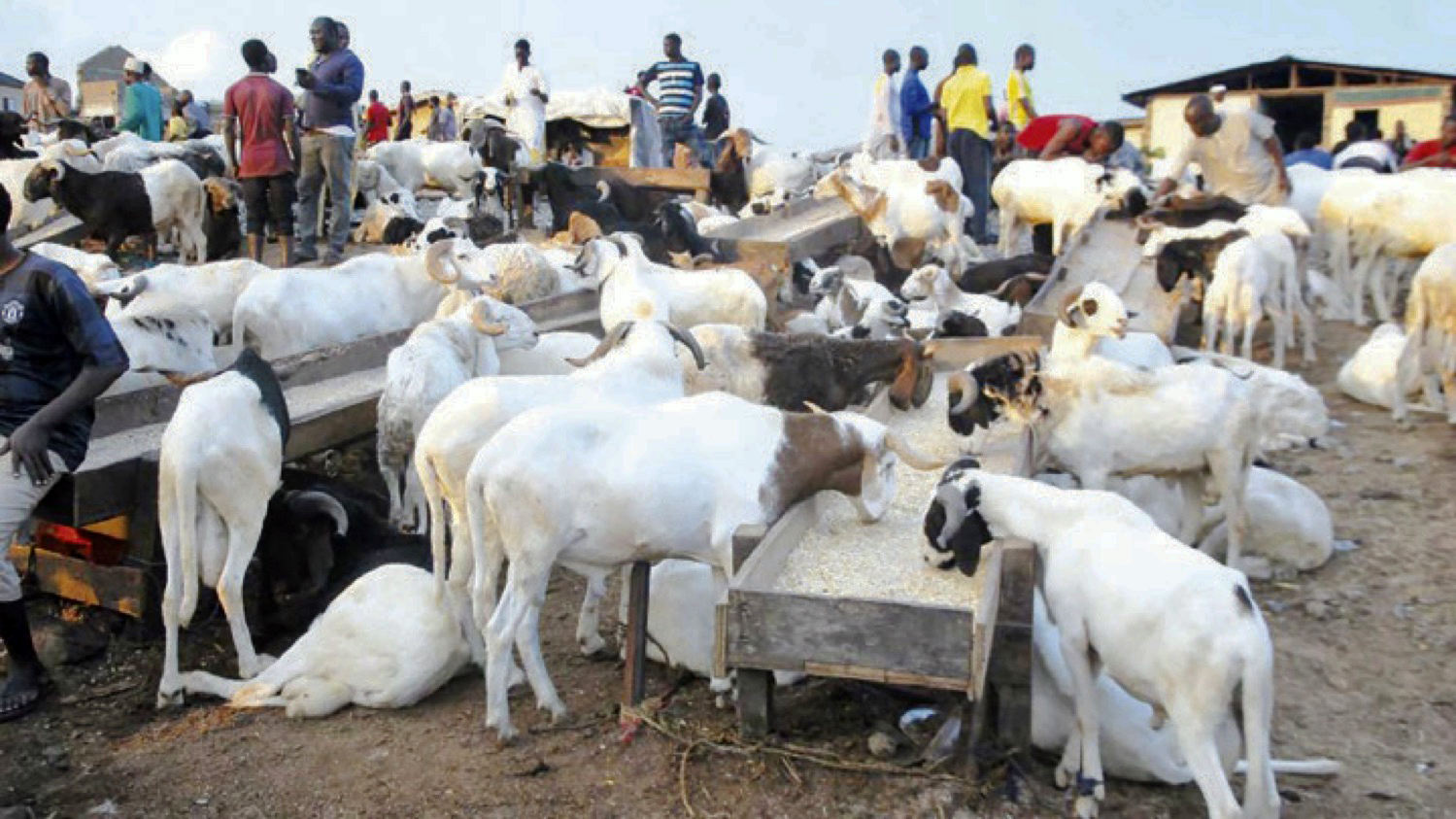
When Sunday Sun visited some ram markets in parts of Lagos and Ogun states, ram dealers expressed frustration over low patronage, blaming the situation on the hardship in the country. A seller who simply gave his name as Muktar painted a very gloomy picture about the ram business in recent years. According to him, the ram business has experienced a steady lull, saying, “Dealers get disappointed every year with sales. Unlike before, when dealers would see the Salah period as the peak period for the market, it is no longer that way. These days the Salah period is just like any other period of the year. Sales have been very low this year,” Muktar said.
Other News
Ram dealers are not the only ones who feel the harsh effects of the nation’s economy. Intending buyers are equally lamenting the situation. Many of them who visited the market in anticipation of procuring the ram for the festival lamented the prohibitive cost of the animal this year. One of them is Usman Abdullahi, who told this reporter that he had been moving from one place to another in search of a moderately affordable ram. He said those available within his budget were ridiculously small compared to what he wanted. “I don’t believe the situation should be as bad as they (ram dealers) want us to believe,” he began, pointing to a particular ram. “That size is what I bought for N300,000 last year. Isn’t it outrageous to insist on N480,000 this year for the same size?” he asked rather indignantly.
At a ram market located in between Meiran and Ijaiye along the Lagos- Abeokuta Expressway, a buyer who simply identified himself as Tajudeen told Sunday Sun that he was at the market for at least a medium-sized ram but expressed disappointment that he could only purchase the size he could afford. He said his target was to buy a reasonably big ram but discovered a medium-sized ram was sold between N500,000 and N600,000. He added that the ram would be supplemented with either fish or cow meat, which he equally noted had become very costly.
“I couldn’t believe that ram could be this expensive. I priced one average-sized ram for N480,000 and another one for N500,000. I decided to settle for this. We will possibly support it with cow meat or fish,” he said.
Besides the prohibitive prices of rams, prices of other basic food items which are largely consumed during the festivity including rice, pepper, palm oil and other ingredients are also a source of constraints and restraints during this year’s celebration.
“As much as we like to mark the occasion in a memorable way, we are conscious of the time we are in economically. Moderation should be the watchword. If you have been buying a bag of rice in the past for the celebration, you have to cut it down to half a bag. Few years ago a bag of rice was less than N50, 000. But now it ranges between N52,000 and N60,000. This same goes for other items like groundnut oil, palm oil and pepper,” Mrs. Muinat Lawal,” said.
Another major feature of this yearly celebration is that the occasion often unites people as family members, friends and well-wishers often come together to commemorate the occasion. With the persistent surge in the price of fuel with the attendant increase in the cost of transportation, there are growing indications that many people could be hampered by the prohibitive cost of transportation from travelling to visit and enjoy the Eid-el-Kabir celebration with their family members and friends.
A Muslim cleric, Alhaji Ismaila Abdukarim, urged the Muslim faithful not to view the occasion beyond the fun and merry-making associated with it. Rather he urged them to consider it primarily as an occasion for sober reflection and rededication to the service of God and humanity.
He also tasked rich Muslims to remember the poor among them in a critical period such as this in Nigeria. “This is a time we need to show more love to the poor among us. Everybody is crying over the hardship in the country. A lot of people do not even know or have what to eat as their next meal. But the Almighty Allah has decided to spare some people from the excruciating pang of this hardship. For this category of people, they must see it as their duty to extend hands of fellowship to the less privileged people in their families and in their neighbourhood,” he admonished.
Another Muslim cleric, Alhaji Yusuf Owolabi admonished Muslim faithful against ostentatious display during the festivity, saying Islam and the hardship in the country do not support such lifestyle. He also warned them against borrowing for the celebration, admonishing them to make do with only what they can afford.
His words: “My advice is that they should go for what they can afford. Their utmost desire and motive should be to please Allah alone; desperation, the urge to impress, and ostentatious living are not the ways to please Allah.
Owolabi noted that though slaughtering of animals like rams and camels is an essential element of the celebration, he noted that it was not compulsory that all Muslims should observe the ritual. “The exception is if you are blessed by God to have the financial resources of buying a ram for the celebration, you are obligated to do so. But for those who do not have the means, it is not mandatory,” he said.
Explaining further, the cleric said ram sacrifice during Eid-el-Kabir celebration signifies the end of the Muslims pilgrimage to the holy land of Mecca. And added that those who were not privileged to go for Hajj were required to offer sacrifices as their own token.
He therefore admonished the faithful who cannot afford to buy rams to focus on the spiritual significance of the celebration, saying, “the most important thing is the praises we offer on Eid. For instance, on the eve of the Eid-el-kabir, we are expected to fast from sunrise to sunset to mark the day of Arafat. This is the most important aspect of the celebration.