Follow Us on Google

From Aidoghie Paulinus, Abuja
The Economic and Financial Crimes Commission (EFCC) has secured 10,872 convictions and recovered N1.2 trillion in stolen funds within 34 months, describing the achievements as evidence of its commitment to tackling corruption and restoring confidence in Nigeria’s governance institutions.
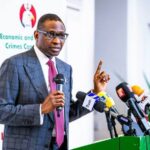
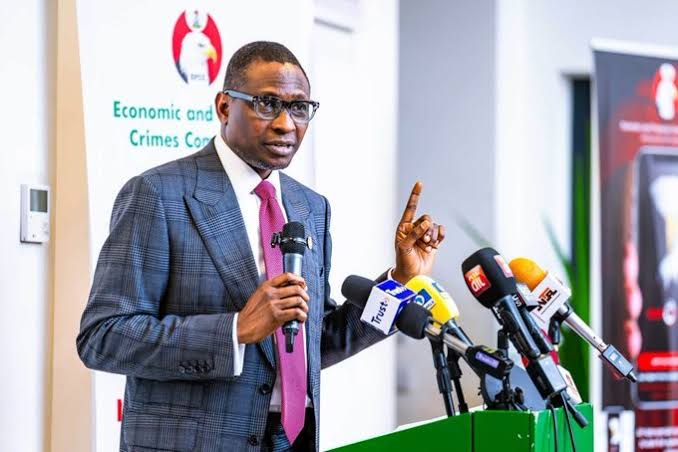
EFCC Chairman, Ola Olukoyede, disclosed this at a one-day Stakeholders Engagement Forum on Anti-Corruption, Party Building and Democratic Governance in Abuja, where he said Nigeria’s commitment to fighting corruption remained its strongest message to the international community.
The forum, organised by the Diplomatic Association of Nigeria (DICAN), was held under the theme: “Nigeria’s 2027 Poll: Promoting Party Organisation, Discipline and Anti-Corruption Reforms: Lessons from Xi Jinping’s Thoughts.”
Represented by the commission’s Head of Media and Publicity, Dele Oyewale, Olukoyede said the convictions were secured for various economic and financial crimes, while the recovered funds had been returned to their rightful owners, including individuals, institutions and the Federal Government.
He said the commission’s enforcement activities were critical to protecting public resources and promoting national development, noting that corruption remained a major obstacle to Nigeria’s economic and democratic progress.
“Within 34 months under my leadership, the EFCC has secured 10,872 convictions. That means 10,872 fraudsters have been sent to jail because of different kinds of economic and financial crimes,” he said.
Olukoyede said the convictions had helped rid the system of individuals involved in fraudulent activities, thereby protecting potential victims and safeguarding public resources.
He also disclosed that the commission recovered N1.2 trillion within the same period, adding that the funds were returned to their rightful owners and channelled back into the economy.
According to him, the recoveries underscored the importance of sustained enforcement and public participation in the fight against economic and financial crimes.
“The best diplomatic statement that we can make to the rest of the world is our commitment to the fight against corruption. And the best export that we can make to the rest of the world is what we do with the issue of corruption,” he said.
The EFCC chairman argued that although economic growth, infrastructure development and strong democratic institutions were important, Nigeria’s international standing would depend largely on its ability to demonstrate a genuine commitment to tackling corruption.
He linked several of the country’s challenges, including kidnapping, banditry, insecurity, poverty and poor living conditions, to corruption, warning that sustainable development would remain elusive without a collective commitment to confronting the menace.
“If you look at all of the issues that we are battling with today in Nigeria, kidnapping, banditry, insecurity, poverty, very low life expectancy and all of the issues around us that are giving us troubles, they are issues that can be traced to corruption.
“It therefore goes to suggest that if all of us, we come together and we say that we are not going to allow this cancer of corruption to spread any further, then we will have a breath of new life,” Olukoyede stated.
He stressed that the fight against corruption should not be left to the EFCC alone, urging public institutions, political leaders and citizens to join forces to address the problem.
“Now, imagine what will happen if all of us join our hands together and we say that we must do this thing together, we must fight this fight together and we must ensure that we do that, that we move our nation forward,” he said.
Olukoyede maintained that Nigeria’s ability to attract international respect and sustain economic progress would depend on the integrity of its institutions and the seriousness with which corruption was addressed.
Also speaking, Counsellor at the Embassy of the People’s Republic of China in Nigeria, Dong Hairon, disclosed that China had recorded 8.1 million corruption-related cases and subjected 7.92 million officials to disciplinary and administrative sanctions since launching its anti-corruption campaign in 2012.
She said the campaign, driven by a policy of zero tolerance, full coverage and no upper limit, had affected officials across different levels of government, including more than 900 officials at the vice-ministerial level and above.
According to her, the campaign had strengthened public confidence in governance, with public support for the initiative reaching 97.4 per cent.
Dong explained that the campaign was part of the Communist Party of China’s efforts to strengthen discipline, accountability and integrity in public administration.
She, however, acknowledged that despite the achievements recorded, corruption remained a serious challenge that required sustained efforts.
“And much remains to be done to win the campaign. The CPC has found a distinctive Chinese path to combating corruption, and the fight against corruption will be carried through to the end. This is a battle that we cannot afford to lose and must never lose,” she said.
The engagement brought together stakeholders to examine the relationship between anti-corruption reforms, political party discipline and democratic governance as Nigeria prepares for the 2027 general elections.