Follow Us on Google
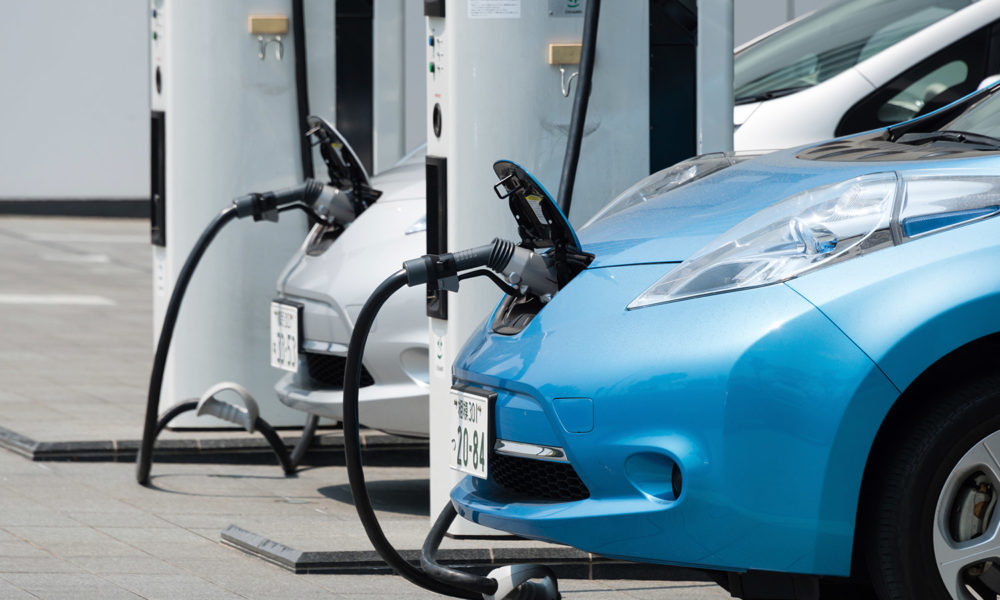
…Targets 40,000 cars annually
By Chukwuma Umeorah
E.F. Network has announced plans to establish an electric and hybrid vehicle assembly plant in Nigeria by the first quarter of 2026, as part of efforts to support the country’s shift toward sustainable transportation and reduce dependence on petrol-powered cars.
The Chairman and Chief Executive Officer of E.F. Network, Gideon Egbuchulam, disclosed this during the ongoing Lagos International Trade Fair at Tafawa Balewa Square, where the company is exhibiting its hybrid car models in partnership with Chinese automaker Zhejiang Pukao New Energy Vehicle Co., Ltd (BCBL).
According to Egbuchulam, the plant is expected to produce 40,000 cars annually in its first phase, with plans to increase capacity to 100,000 units by 2028. The project is also projected to generate over 5,000 direct and 20,000 indirect jobs across the country.
He explained that the company’s entry into Nigeria’s auto manufacturing sector aligns with the Federal Government’s drive to attract investment into electric mobility, following the incentives introduced by President Bola Ahmed Tinubu’s administration for local vehicle assembly.
“The Federal Government has welcomed electric vehicle manufacturing in Nigeria with mouth-watering incentives, and we couldn’t afford to miss this opportunity to key into the production of CKD/SKD hybrid electric cars,” Egbuchulam said. “Soon, Nigerians will be able to buy our locally assembled cars at affordable prices and save thousands of naira daily in fuel costs.”
Highlighting the company’s models on display, Egbuchulam noted that the Orca hybrid model offers a combined range of 385 kilometres: 185km on electric power and 200km on its petrol extender, while the Panda model can cover up to 150km on a single charge. “The beauty of our cars is that if you don’t have electricity, you add petrol. That means our cars use both electric and petrol,” he added.
Egbuchulam assured that Nigerians would benefit directly from the government’s tax incentives, stating that the cost savings would be reflected in the vehicle prices. He added that the company plans to expand its product line to include electric pickup trucks and buses while developing after-sales service centres and spare parts outlets nationwide.
Speaking on the company’s progress, the Director of Business Development, Chidi Success, said that preliminary work for the project has been completed, including the acquisition of land and partnership agreements with local and foreign technical teams. He confirmed that Chinese engineers would collaborate with Nigerian experts during the construction and training phases to ensure technology transfer.
He also disclosed that discussions have been held with local energy companies such as MRS and Oando to install public charging stations across the country.
“Just like what we have with CNG refuelling stations, we are working with partners to create charging points at major filling stations so users can easily recharge their vehicles,” he said.
Addressing affordability concerns, Chidi revealed that the company would introduce a flexible payment plan allowing buyers to make a 30 per cent down payment and spread the remaining balance over six to twelve months.
Shela Lin, Sales Manager at BCBL, reaffirmed the company’s commitment to the partnership, stating that BCBL would provide the technology and technical expertise required for the project, including vehicle assembly, maintenance, and the training of local engineers. She emphasized that the collaboration was designed to ensure full technology transfer and support Nigeria’s long-term vision for a sustainable automotive industry.
“Our goal is to build local capacity by empowering Nigerian engineers with the skills and knowledge to manage the production and maintenance of hybrid and electric vehicles. This partnership is not just about assembling cars; it’s about laying the foundation for a self-sustaining green mobility ecosystem in Nigeria,” Lin said.