Follow Us on Google
From Sola Ojo, Abuja
Kaduna State is taking steps to address the heavy reliance on donor-funded programmes for life skills education, institutionalised such initiatives into formal policy.
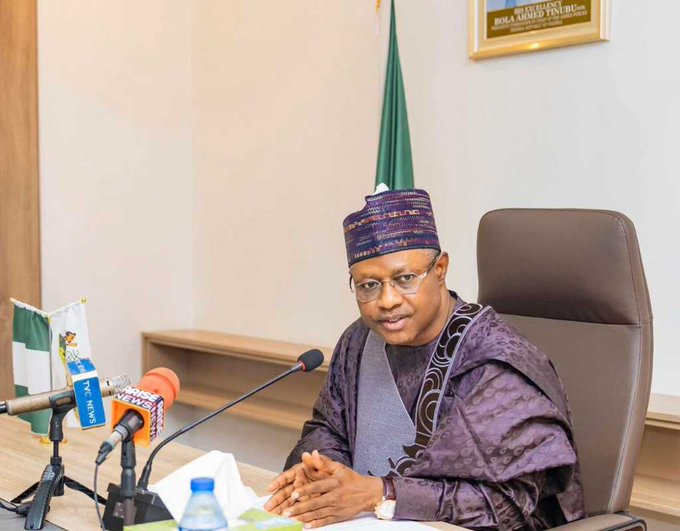
At a stakeholders’ validation workshop, the Permanent Secretary, Ministry of Internal Security and Home Affairs, Mallam Bashir Muhammad, warned that without embedding life skills education into government policy, years of interventions funded by development partners risk becoming unsustainable.
He noted that many life skills programmes currently implemented in schools across the state are largely driven by external partners, raising concerns about continuity if such partners withdraw.
“If these partners leave, that means the effort will be in futility,” he said.
Across Nigeria, education and youth development initiatives, particularly those focused on life skills, sexual and reproductive health, and entrepreneurship are often funded and implemented by international donors and NGOs.
Data from development sector reviews show that a significant proportion of non-core curriculum programmes in public schools are externally funded, with limited integration into state budgets or legal frameworks.
This has led to frequent disruptions when funding cycles end.
In Kaduna, programmes such as safe spaces, adolescent empowerment, and life skills training have been widely implemented over the years, but largely as standalone projects rather than embedded curriculum components.
The Permanent Secretary said the state is now making a “deliberate action” to change that trajectory through the development and validation of a Life Skills Policy.
Other News
According to him, the goal is to build an education system that goes beyond classroom instruction to include practical competencies such as entrepreneurship, vocational expertise, and real-world problem-solving.
“We want a robust education system that will include not only learning in class but also learning to become an entrepreneur… a practical somebody while you are in school,” he said.
Education experts have long argued that Nigeria’s curriculum remains overly theoretical, contributing to rising youth unemployment.
The National Bureau of Statistics has consistently reported high rates of youth joblessness, partly linked to skills mismanage.
The Permanent Secretary expressed optimism that the initiative could serve as a model for other states, leading to a more uniform national approach to life skills education.
Executive Director, Centre for Girls’ Education, Habiba Mohammed believed that expanding access to education and life skills for girls would help curb child marriage, early pregnancy and gender-based violence.
AGILE Project Coordinator, Hajia Maryam Dangaji noted that the framework was beyond enrolment to focus on retention and completion, especially among adolescent girls.
Reaching Out of School Children (ROOSC) Project Coordinator, Ezra Angai described the policies as a roadmap for addressing barriers to education, particularly for out-of-school children, by improving enrolment, retention, transition and post-school opportunities.