Follow Us on Google
By Charles Onunaiju
The administration of President Bola Tinubu is desperate to balloon the government revenue basket in order to accomplish its dream of one trillion U.S dollar economy. But paradoxically, it seeks to do this without creating value and its shortest route is to indiscriminately extract the existing money from citizens across all income levels through subsidy withdrawals, VAT and other punitive tax regimes. Progressive taxation are usually designed to incentivize new money through extant value creating endeavours, while the current government’s so called tax reform is viciously focused at transferring existing monies from citizen’s wallets to government coffers through a means of excessive financialization of the economy where bank profit is exponentially growing to the detriment of the real economy by simply warehousing government funds into non performing deposits. If the humongous deposits are performing, , real sectors of the economy would have optimized their performances with evidence in job ceations and general economic expansion.
Only recently, after the coming of President Tinubu administration, some major banks have crossed the one trillion-naira threshold in profits, while the real sector consisting of manufacturing, agriculture, small and medium scale businesses holdings struggle to stay afloat. The revenues that the government has been extracting from citizen’s wallet and even designing further ways to extract more is not only a regressive approach but a lazy one that has enormous consequences for negative growth and economic contraction in the near future.
If not for poor or no thinking at all, there are prospective ways to earn new money with ramification for both value creation and economic expansion. There are low hanging fruits for new money and the Nigeria’s aviation and maritime sectors are among the most lucrative in the world and the fact that Nigeria has no presence in the sectors are not only a matter of national shame but a pathetic neglect of major source of new money that would not only contribute to the government revenues but also expand liquidity of the economy.
With a relatively completed airport remodeling and acquisition of a modern deep seaport, Nigeria should be able to participate visibly in these major sectors, not only for national pride and the optics, it generates for the national image but also for the money to be made. Efficient management of national asset as Air and shipping lines are measures of national competence and any nation which seek global reckonings, cannot possibly ignore. And Nigeria’s obsessive desire for a regional and even world power status would remain vitiated by government inability to own and efficiently manage critical national assets and this is whether it is power, telecommunication, aviation or maritime sectors. But beyond been significant national symbols, the aviation and maritime sectors where Nigeria has some measure of comparative advantage due to the size of the market, its absence of public sector participation in these critical sectors because of gross incompetence of successive governments, especially since the return of civil rule in 1999, constitute a flagrant neglect of the creative revenue stream with all its implications for job creations and other positives in the value chain.
Aviation contribute about 6% to Ethiopia’s GDP and support more than 1.5million jobs, while maintaining 19,000 direct jobs. Having strategically embedded itself as the aviation hub in Africa, and following its recent launch of her grand renaissance dam with a potential, to turn the country to sub-regional energy hub, Addis Ababa will not have to make very loud statement about her regional influence, because the sheer success of the state in such strategic sectors of the economy would naturally recommend her competence in international affairs and guarantee her, a place on the table.
With a functional deep sea port and sizable airport infrastructure, Nigeria maritime and aviation can generate new money and spur the creation of substantive values in the economy, if the Nigeria state through the government can make investments and follow up with efficient management. Meanwhile, the desperate revenue accumulation of the president Tinubu administration has not translated to visible investments in areas with prospective accelerated economic activities and returns. In a bid to turn a 230 million population based economy into a mere financial hub with all the consequential hazards both in the short and long term, banks and other financial institutions have become cash warehouses generating massive profits not on rational investment returns but by just cash holdings. The tax structure that has made a recycling of existing money into an economic virtue has been hailed as innovation. But sitting over a recycled money, extracted from the wallet of the citizens and warehoused in banks are never value creation, let alone value addition, and driven by the bankruptcy of its own measures, government has resorted to binge on external borrowings, thereby worsening the economic situation and more dangerously, dooming the prospect for recovery in the long term.
Other News
Recently President Tinubu claimed that the economy has turned the corner, but participants in the real sectors of the economy; manufacturers, industries, small and medium scale businesses were unanimous in rebutting the claim and the toils of millions of Nigerians, with outcomes that hardly meets basic needs is evident that the government and its henchmen are leaving in alternative universe. There is a world of difference between an economy in which existing money is merely shuffled around and one in which values are created and translated to new money.
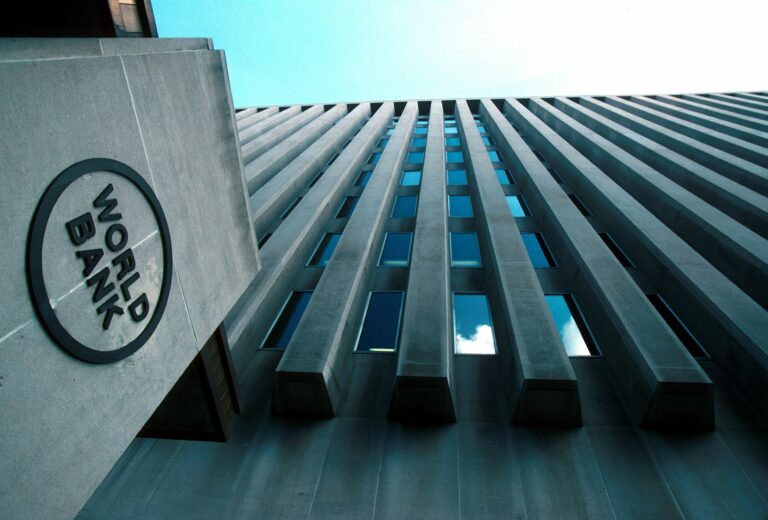
President Tinubu and his government devoted to the former, in which the resultant financialization of the economy is the equivalent of a floating balloon, merely waiting to burst, despite the optics of the beauty on the top. The economy of over 200 million people, with the demographic dividend of a youth bulge and huge resource endowment cannot be organized this way on a sustainable basis. The path to innovative economic construction of contemporary times do not follow through any known economic regime- orthodoxy but a mix of pragmatic measures of what works and an acute understanding of what has been tried in the past and why it failed. While figures remained essential in macro-econometrics, crunching and fetishizing it, is an outdated indicator of how an economy progresses. And president Tinubu key econmic managers are known for chronic obsession with figures and graphs, largely unrelated to the desperate living condition of most Nigerians. The latest report delivered by the Bretton Woods institutions (World and IMF) titled “The state of social safety Nets in Nigeria” observed that the current social intervention which government claimed recently to have expended over 300 billion naira “remain too small, too fragmented and too inefficient to move a needle on poverty”. Pointedly, the report insisted that “ at their present scale and design, social protection programs are simply not adequate to cushion vulnerable families to reverse the rising poverty trend”.
The central category in the outcome of any economic reform and management is the quality of life of the people. Every economic reform has some costs but its trajectory must be sufficiently revealing of its potential beneficial outcomes, otherwise the sacrifices it calls for , would not be worthwhile and worst it would descend into sheer esoterism that make sense only to a few people that design and manage it and exclusively for their own interest.
President Tinubu economic reform plan need a wholesome revisit because its current shape and trajectory have greater prospect to worsen the Nigeria’s economic condition than to relieve it of the structural dysfunction and deepen the crises of its fundamentals.
Economic constructions especially of structural realignment are too serious to be combined with effusive political goal- scorings, when the imperative is rather of sober reality checks with the usual early returns of negatives to be ameliorated and turned into positive outcomes with unremitting hard work and persistence, devoid of easy claims to victory.
• Onunaiju writes from the Federal Capital Territory of Abuja.