Follow Us on Google
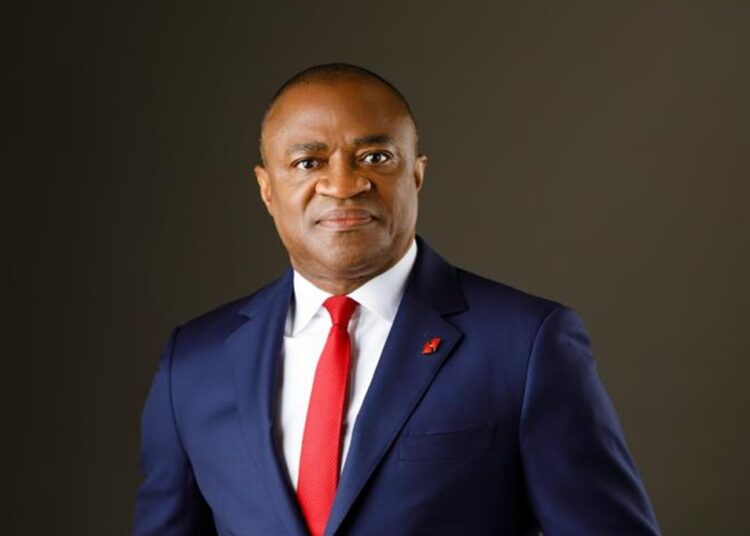
The Group Managing Director of United Bank for Africa (UBA) and Chairman of the Body of Bank CEOs in Nigeria, Oliver Alawuba, has called for stronger collaboration between the government and private sector to turn recent improvements in Nigeria’s economic indicators into jobs, affordable credit and better living standards.
Alawuba made the call at the 19th Annual Banking and Finance Conference of the Chartered Institute of Bankers of Nigeria (CIBN), held in Abuja on Tuesday.
Speaking on the theme, “Building a Resilient Economy in an Era of Disruptions: Imperatives for the Banking and Financial Services Industry,” he said Nigeria must deliberately build resilience into its economic policies, institutions, infrastructure, supply chains, energy systems, financial architecture and human capital.
According to him, economic resilience does not mean preventing every shock but ensuring that the economy can absorb and recover from disruptions without passing the full burden to vulnerable Nigerians.
He said the global economy was still facing major disruptions arising from geopolitical conflicts, volatility in energy and shipping markets and inflationary pressures, making it necessary for Nigeria to build systems capable of withstanding future shocks.
Alawuba commended the Federal Government and the Central Bank of Nigeria (CBN) for what he described as improved coordination between fiscal and monetary policies, saying recent improvements in key economic indicators were important milestones in Nigeria’s stabilisation journey.
He, however, said the gains must now translate into wider economic opportunities and improved living standards for Nigerians.
The UBA boss described banks as “financial shock absorbers and growth partners”, stressing that the banking industry has a major role to play in strengthening the economy and financing productive activities.
He pointed to the N4.65 trillion raised by 33 banks during the recent recapitalisation exercise as a major step towards strengthening the industry’s capital base and capacity to withstand economic shocks.
He said the exercise would also help improve asset quality, balance-sheet transparency and investor confidence while giving banks greater capacity to finance large-scale projects.
Alawuba also highlighted increased investment in digital infrastructure, cybersecurity and operational resilience by banks.
He said four leading banks invested more than N119 billion in technology in the first quarter of 2026, representing a 43.2 per cent increase compared with the same period last year.
He said such investments were necessary to strengthen the banking system against disruptions while improving the delivery of financial services.
At the conference, President Bola Ahmed Tinubu, represented by the Minister of Finance and Coordinating Minister of the Economy, Taiwo Oyedele, challenged banks to move beyond expanding their balance sheets and increasing profits to financing productive businesses capable of driving investment, job creation and economic growth.
The President said the next phase of Nigeria’s economic reforms must focus on moving from financial intermediation to economic transformation.
He identified affordable credit, financial inclusion, technology and long-term capital as critical to building a stronger financial system and a more resilient economy.
Also speaking, CBN Governor Olayemi Cardoso, represented by the Deputy Governor, Economic Policy Directorate, Philip Ikeazor, stressed the importance of a strong banking sector to sustaining Nigeria’s economic recovery.
World Bank Country Director for Nigeria, Mathew Verghis, urged banks to channel more capital to businesses with the capacity to create jobs and expand economic opportunities.
The President and Chairman of Council of CIBN, Dr Dele Alabi, said the real test of Nigeria’s economic reforms would be whether improvements in macroeconomic indicators eventually result in lower living costs, more jobs, higher incomes and affordable credit for households and businesses.
Alawuba, in his concluding remarks, said the banking industry was ready to work with the Federal Government and other stakeholders to strengthen Nigeria’s economic resilience.
He said the ultimate goal should be to ensure that the resilience being built in the financial sector translates into tangible economic opportunities and improved prosperity for Nigerians.