Follow Us on Google

•Expert warns misinformation, delayed diagnosis could undermine containment
As Nigeria intensifies surveillance following the confirmation of an imported Ebola case caused by Bundibugyo virus, a public health expert has warned that misinformation, delayed detection and poor understanding of the disease could undermine containment efforts, making accurate public communication as critical as medical intervention.
The warning comes amid an escalating outbreak of Ebola disease caused by Bundibugyo virus in the Democratic Republic of the Congo (DRC), where 10,141 confirmed infections and 4,928 deaths had been recorded from data up to October 26, according to the European Centre for Disease Prevention and Control (ECDC). Kenya had also recorded nine confirmed cases and two deaths, while Nigeria confirmed one imported case. Uganda, which recorded infections earlier in the outbreak, has since declared its outbreak over, although surveillance continues to guard against fresh infections.
Dr Shakir Balogun, Resident Advisor with the Nigeria Field Epidemiology and Laboratory Training Programme (NFELTP), said the battle against Ebola extended beyond laboratories, isolation centres and contact tracing to how communities understood the disease, responded to health advisories and treated people exposed to infection.
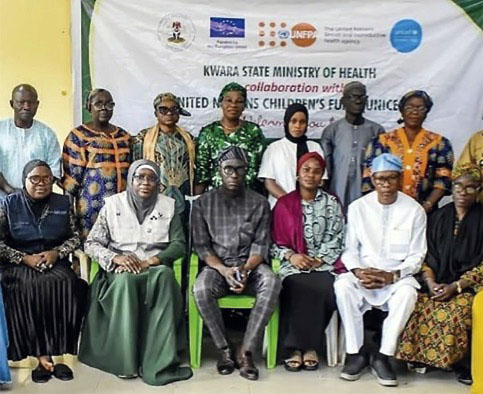
Speaking at a virtual capacity-building workshop for journalists on effective Ebola reporting held on Tuesday, October 27, 2026, Balogun stressed that the media had a critical responsibility to ensure that information reaching the public was accurate, timely and free from sensationalism.
He recalled experiences in eastern DRC, where misconceptions about Ebola transmission and the purpose of treatment centres reportedly contributed to attacks on health facilities, violence against health workers and resistance to isolation.
According to him, even effective scientific interventions could be undermined when communities distrusted health authorities or misunderstood how the virus spread.
“The fight against Ebola could be lost not only through failures in medical response, but also through failures in communication,” he warned.
Deadly myths that could derail Nigeria’s Ebola response
Balogun identified persistent misconceptions about Ebola transmission, prevention and treatment as major challenges confronting outbreak responders, warning journalists against presenting unverified claims as established medical facts.
He explained that Bundibugyo virus is not transmitted through ordinary airborne spread and that people exposed to the virus do not become infectious merely because they have been identified as contacts.
“The infection spreads primarily through direct contact with the blood or body fluids of an infected person who is ill or has died, or through contaminated materials. This distinction is particularly important for people identified as contacts of confirmed cases.
“A contact that remains well during monitoring is not automatically a suspected case, nor does the person pose a transmission risk merely because of the exposure history,” he said.
Balogun cautioned against portraying exposed but asymptomatic individuals as threats to their communities, noting that inaccurate reporting could encourage stigma, discrimination and resistance to public health measures.
He also dismissed persistent claims that salt water, bitter kola or herbal preparations could prevent or cure Ebola, warning that reliance on such remedies could delay medical assessment and treatment.
“No food or herb prevents Ebola. The distinction between Ebola virus species is equally important. While vaccines and specific treatments exist for the Zaire species, these cannot automatically be assumed to work against Bundibugyo virus.
“For the current outbreak, no vaccine or drug has been licensed specifically for Bundibugyo virus, making early detection, isolation, infection prevention and supportive medical care central to the response.
“For journalists, the implication is significant: reporting that a vaccine or treatment exists for Ebola without specifying the virus species could mislead the public about the protection currently available,” he said.
Hide behind malaria symptoms
Another major challenge in identifying Ebola, Balogun explained, is that its early symptoms can resemble common illnesses, particularly malaria and influenza.
He said fever, headache, weakness, fatigue, muscle and joint pain, sore throat and loss of appetite could occur during the early stages of infection, making it difficult to distinguish the disease from more familiar illnesses without considering a patient’s exposure history.
“These symptoms are common in Nigeria, where malaria is widespread, creating the possibility that Ebola could initially be mistaken for a more familiar illness. Bleeding, often associated with Ebola in public perception, may occur late and is absent in many patients. Waiting for a patient to bleed before suspecting the disease could therefore delay diagnosis and intervention,” he explained.
The epidemiologist stressed that identifying a suspected case required careful consideration of symptoms alongside recent travel and contact history.
He said anyone who developed compatible symptoms after travelling to an affected area or following contact with a confirmed case required prompt assessment by public health authorities.
The incubation period, according to him, ranges from two to 21 days, with symptoms commonly appearing within eight to 10 days.
“An exposed person who remains without symptoms is not infectious, but must complete the prescribed monitoring period.
“Nigeria’s surveillance system relies on identifying exposed individuals, monitoring them for symptoms, investigating suspected cases, collecting samples for laboratory testing and isolating confirmed patients,” he said.
Balogun explained that surveillance teams at major ports of entry, including airports in Lagos, Abuja, Kano and Port Harcourt, were monitoring travellers from affected areas.
“Travellers who are well may be referred to state surveillance teams for follow-up, while those who develop symptoms require prompt investigation.
“Once a case is confirmed, isolation and supportive care help protect the patient while reducing the risk of further transmission. The message for the public is that early reporting matters. For the media, it is that symptoms must be reported accurately, without suggesting that every fever is Ebola or that the absence of bleeding rules out the infection,” he added.
Bundibugyo virus infection
In Nigeria, the Nigeria Centre for Disease Control and Prevention (NCDC) confirmed that the country’s index patient, a 42-year-old woman who arrived in Abuja from Uganda through Addis Ababa on October 3, had been evacuated to Switzerland alongside her spouse.
The woman developed symptoms on October 7 and was admitted to a private health facility in Abuja on October 11, before laboratory tests confirmed Bundibugyo virus infection on October 20.
According to the NCDC’s October 26 situation report, 54 contacts linked to the patient had been identified and placed under follow-up, with no secondary infection confirmed at the reporting date.
The report also recorded two suspected cases investigated in the Federal Capital Territory and Rivers State, while three contacts who developed symptoms had not tested positive for the virus.
Although the evacuation meant that the confirmed patient was no longer receiving treatment in Nigeria, health authorities maintained surveillance and contact monitoring, as the absence of a confirmed patient within the country did not amount to an official declaration that the outbreak was over.
Hospitals can become transmission hotspots
Beyond misinformation and delayed diagnosis, Balogun identified inadequate infection prevention and control measures in healthcare facilities as another major threat to Ebola containment.
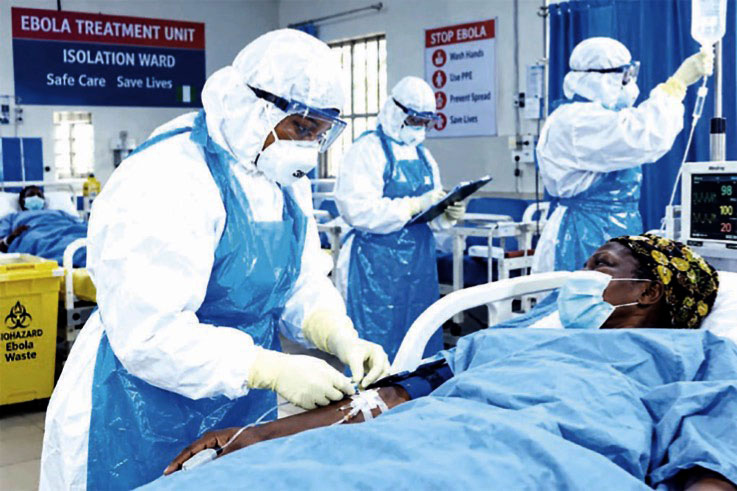
He warned that hospitals could become centres of transmission when healthcare workers attended to infected patients without appropriate protective equipment or when contaminated materials were handled improperly.
Similar risks, he said, could arise when relatives cared for sick family members at home without understanding how exposure to infectious body fluids could occur.
Balogun explained that the virus could enter the body through broken skin or the eyes, nose and mouth following contact with infectious fluids, while contaminated bedding, clothing, equipment and other materials could also pose risks if not properly handled and decontaminated.
“The danger does not necessarily end when a patient is discharged, evacuated or dies. Appropriate terminal decontamination and safe handling of infectious materials are essential to prevent further exposure.
“Burial practices also require special attention because direct contact with the body of someone who has died from Ebola can expose mourners and others involved in funeral preparations,” he said.
He stressed that safe burial procedures must preserve human dignity and involve meaningful engagement with families and communities rather than relying solely on enforcement.
Balogun said the lessons were particularly relevant to Nigeria, where healthcare workers also faced occupational risks from other infectious diseases, including Lassa fever.
“The broader challenge is to ensure that infection prevention is treated as a routine component of healthcare delivery, rather than a measure introduced only when an outbreak attracts national attention,” he said.
Vaccine race intensifies as Bundibugyo cases spread
While surveillance and supportive care remain critical, the absence of a licensed Bundibugyo-specific vaccine has intensified efforts to develop vaccines against the virus.
The European Medicines Agency’s Emergency Task Force and the African Medicines Agency (AMA) have issued a joint position paper outlining how promising vaccine candidates can advance into clinical trials without unnecessary delays while maintaining scientific rigour and safeguards for participants.
The paper followed a scientific consultation convened by the two agencies and the World Health Organisation (WHO) on August 24, 2026.
It calls for the rapid progression of promising vaccine candidates through the necessary clinical trial phases, with particular emphasis on making early studies available in Africa to facilitate larger efficacy trials in affected populations.
The recommendations recognise that existing vaccines against the Zaire species cannot automatically be relied upon to protect against Bundibugyo virus.
According to the paper, some vaccines developed using well-characterised platforms, including messenger RNA and certain viral-vector technologies, may be able to enter early clinical trials without additional repeat-dose toxicity studies, depending on the available safety evidence.
The document also recommends non-human challenge studies to establish whether candidates have a reasonable prospect of protection before they advance to later-stage trials. A single-dose vaccine is preferred because it could be easier to deploy rapidly during an outbreak.
For assessing effectiveness, the agencies propose a Phase III platform study that could enrol and randomly assign close contacts of confirmed cases in a ring-vaccination approach. Such a design could potentially allow multiple vaccine candidates to be evaluated within the same trial.
The agencies further recommend that studies involving children and pregnant women begin once sufficient initial safety data from adults becomes available, given that the disease may also affect these groups.
Vaccine developers are being encouraged to engage early with African regulators to accelerate trial assessments and ensure that the evidence generated meets the requirements for future regulatory decisions.
However, faster trials do not mean bypassing safety requirements. Candidate vaccines must still demonstrate that they are sufficiently safe and effective before they can be licensed for use.
In a further development, the TUMAINI vaccine trial was launched in Bunia, DRC, on October 23, as part of efforts to generate evidence on potential protection against Bundibugyo virus.
The Phase II/III trial is evaluating vaccine candidates in the affected population, representing an important step towards establishing whether effective protection can be developed against the virus.
Until effective vaccines and specific treatments become available, Nigeria’s immediate defence rests on surveillance, prompt diagnosis, isolation, infection prevention, supportive care and public cooperation.
Balogun maintained that journalists had an important role in communicating these measures without creating panic or offering false reassurance, particularly when misinformation could weaken public trust and delay the reporting of suspected infections.
For Nigeria, where the early symptoms of Ebola can easily be mistaken for malaria and other common illnesses, his warning highlights the importance of recognising possible exposure, seeking prompt medical assessment and ensuring that communities receive accurate information throughout the outbreak.