Follow Us on Google
From Desmond Mgboh, Kano
How free is the press in Kano State? This is the big question that has resonated across the state ever since the Wole Soyinka Centre for Investigative Journalism (WSCIJ), listed the state as one of the three top states violating the freedom of the press in Nigeria in 2024.
But the state government dismissed the report as misleading and unfounded and urged the centre and similar organisations to ensure professionalism, proper verification and field assessment before releasing reports that could misrepresent states like Kano, “who are genuinely promoting and supporting press freedom and civic engagements.”
Specifically, Commissioner for Information and Internal Affairs, Abdullahi Waiya, noted that the report did not reflect the true status of media freedom practices and civic engagement in the state, describing it as “a mere expression and figment of imagination of some armchair analysts.
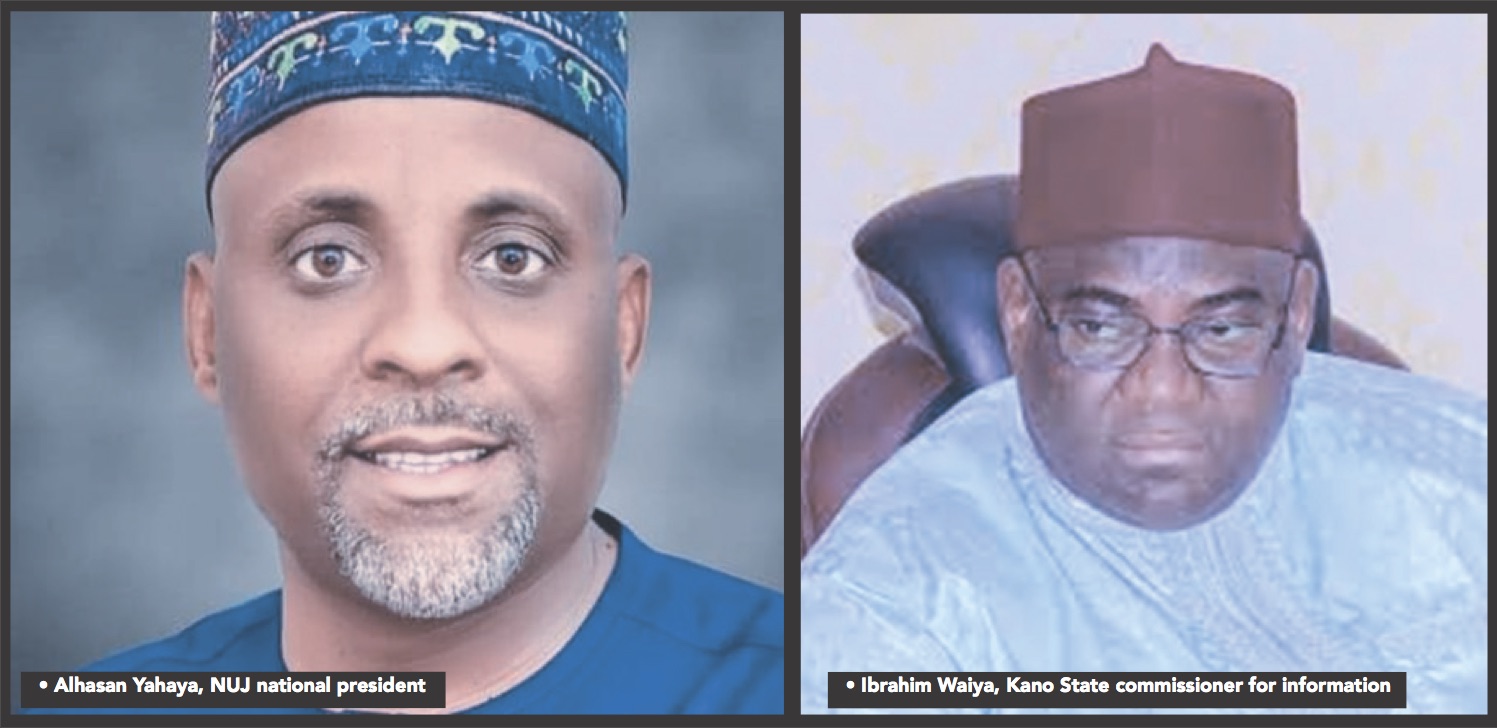
“Kano State remains one of the most open, media-friendly and journalist-supportive states in the federation,” adding that the administration of Governor Abba Yusuf has consistently demonstrated a firm commitment to promoting press freedom, professional development and inclusive civic engagement.
He noted that this has resulted in several media-friendly awards bestowed on the governor by various highly reputable media outlets in recent times: “These recognitions were clear reflections of the governor’s open-door policy, accessibility, friendliness to the media, respect for journalists and communication professionals, as well as the freedom of expression as guaranteed by the nation’s Constitution.”
He also called attention to the recent sponsorship and hosting of the meeting of the National Executive Council of the Nigeria Union of Journalists in state as a demonstration of their partnership with the media.
Waiya said government was also working to replicate the Freedom of Information Act as part of its commitment towards enhancing access to information and ensuring best practices of accountability and transparency: “In further recognition of the governor’s outstanding support for the media, the Nigeria Union of Journalists, at its 70th anniversary held in June 2025, honoured him with an award as the Most Media-Friendly Governor in Nigeria. This rare distinction underscores the governor’s national reputation as a leader who values press freedom and encourages journalistic excellence.
“In view of these veritable facts, it is clear that Kano State cannot, by any credible standard, be classified among states that violate press freedom. On the contrary, the state remains a model of open governance, transparency and mutual respect between government and the media.
“Government of Kano State will continue to uphold the principles of free expression, responsible journalism and open dialogue as pillars of democracy and good governance.”
However, a former Commissioner for Information, Muhammad Garba, advised government to embrace tolerance and constructive engagement with the media, rather than dismiss the report by WSCIJ.
The former two-term national president of the NUJ and member, All Progressives Congress (APC) in the state, said genuine collaboration between the government and the media would enhance the flow of accurate information, deepen citizens’ understanding of government policies and promote transparency in governance.
He remarked that a government confident enough to engage the press constructively demonstrates both strength and accountability: “Freedom of the press is measured not by plaques or ceremonies but by the ability of journalists to report without fear of reprisal.”
He described as contradictory government’s claim of promoting free speech while simultaneously using state institutions to undermine journalists and silence dissenting voices: “The media is not an enemy of government; it is a partner in nation-building. Respecting press freedom is not only a constitutional obligation but also a mark of mature and responsive leadership. Despite government’s dismissal of the WSCIJ’s report, the growing record of arrests, intimidation and restrictive media policies in the state paints a different picture.
“Government should reverse this trend and adopt a media-friendly approach that guarantees journalists’ safety and freedom, as democracy can only thrive in an environment where the government and the media operate in synergy rather than hostility.”
A practitioner’s view
A former news manager, Cool FM/Wazobia FM/Arewa Radio, Kano, Kolawole Omoniyi, insisted: “When we want to talk about press freedom in Kano State, from my experience as someone that has worked in Kano State for almost one and half decades, I will tell you that we cannot say that all is well completely in the state.”
The media manager, Resource Center for Human Rights and Civic Education, Abuja, urged actors in the media space to do more to lift up the freedom of the press in the state.
He lauded government for its timely response to news reports, especially outcomes of credible media investigations: “Once an issue is raised that is credible, government takes swift steps to resolve it.
“When it has to do with response to media reports or published reports, I think I will commend the current government of Kano State in that regard, not because I have any affiliation with them, but as a journalist that is into developmental journalism and investigative journalism.
“I have done a number of reports that, probably, instead of the government to react negatively, they swung into action and addressed the issues raised. I will appreciate them and give them kudos in that regard.
“The government will want to let you know that we are doing the right thing, we are media-friendly, we have a number of media awards, here and there and if we were not doing the right things they would not be giving us awards. But you know what awards mean in Nigeria.”
He also lamented the difficulties faced by journalists in the state to access data and information relevant to their reports: “This is a very big challenge. This is not only in Kano State but nationwide. This is true of what investigative journalists suffer.
“I also remember that the current government said they want to domesticate the Freedom of Information Act to make it more easily accessible to the media and other citizens or residents. We will appreciate them if they can achieve that. We hope that it will boost and address the problem of access to information in the state.”
However, beyond the challenge of access to information, he was not comfortable with some instances of arrests of journalists on the directive of state actors: “I think, a month before I left the state, two journalists were arrested because of their reports and eventually the authorities said that, okay, they were not arrested, they were only invited for questioning.”
He also highlighted issues of subtle and direct interference here and there: “These factors led to cases of self-censorship and undue restraint, which is a violation of press freedom.”