Follow Us on Google
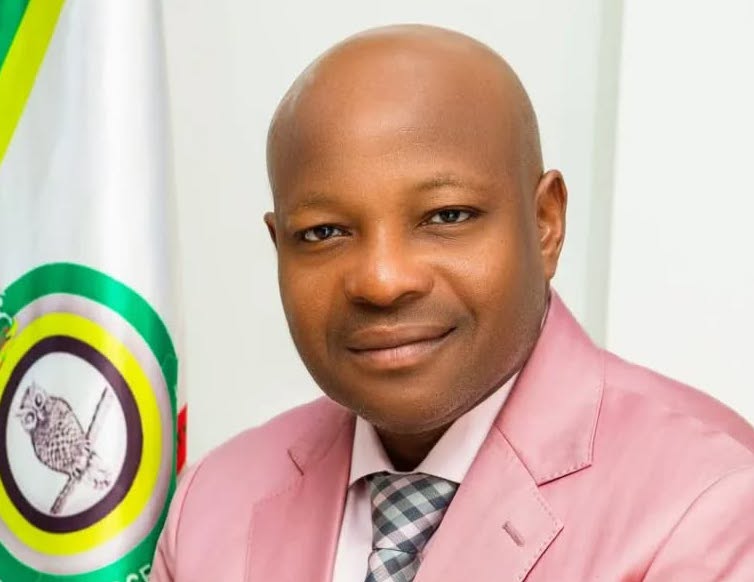
In the two years of Oluwatosin Ajayi in the saddle as Director-General of the Department of State Service (DSS), there is a discernible shift in the way Nigeria’s foremost domestic intelligence agency approaches security challenges. One clearly noticeable feature of the Ajayi era is the combination of operational effectiveness with institutional accountability. At the heart of this approach is a simple doctrine: “No sanctuary for terrorists, no impunity for criminals.”
Under Ajayi, the DSS is becoming more proactive, rather than reactive after violence has occurred. The agency’s preventive intelligence is disrupting criminal networks. There’s also more prosecution. The Service has equally deepened cooperation with the military, police and other stakeholders. This reflects the reality that terrorism, kidnapping, banditry and separatist violence cannot be effectively confronted by one institution operating alone.
The record of prosecutions is significant. The DSS has secured convictions against high-profile terrorists, kidnappers and members of support networks. Ansaru commanders Mahmud Usman, alias Abu Bara’a, and Abubakar Abba, also known as Mahmud Al-Nigeri, were convicted of terrorism and kidnapping offences and sentenced to life imprisonment. The DSS has also indicated its intention to pursue a stiffer penalty.
In another case, three members of a cross-border terrorism and illegal arms-trafficking syndicate received death sentences in Sokoto. The agency has pursued those who facilitate terrorism, not merely those who carry weapons. The convictions of Safiya Salihu and Halima Abdullahi for providing support to a terrorist network demonstrate an intelligence-led effort to dismantle the wider ecosystem sustaining violent extremism.
Suspects linked to attacks on schools were prosecuted, while four terrorists connected to the 2022 St. Francis Catholic Church attack in Owo, Ondo State, were sentenced to death. In Ekiti, two kidnappers involved in the abduction of a National Youth Service Corps member also received death sentences.
Yet institutional accountability is proving to be a more consequential evolution of the DSS under Ajayi. Arrests and convictions are as important as owning up and making amends when the agency’s own operations go wrong.
The DSS’s review of inherited and pending detention cases and release of people subsequently found not to have committed offences are commendable. So are payment of compensations and public expressions of regret when DSS men get it wrong. This is a departure from a culture in which institutional mistakes were rarely acknowledged or remedied.
More than ₦300million has reportedly been paid in compensation to persons wrongfully arrested or detained. Cases involving Abdulyakini Salisu, Chineze Ozoadibe, Kenneth Okechukwu Nwafor, Nura Idris and others illustrate one principle: national security is not an excuse for disregarding the rights of innocent citizens.
Compensation has also been made to a Jos businessman mistakenly shot during an earlier operation, with medical care provided. This was in response to judicial findings. The decision to facilitate Mohammed Ciroma Jr’s return to university and provide him with a scholarship indicates an intention to repair lives disrupted by institutional error.
Other News
This may be the most encouraging dimension of the Ajayi reforms. A professional intelligence service must be trusted by law-abiding citizens. The DSS’ intelligence-led intervention in freeing hostages while disrupting kidnapping networks is noticeable in the coordinated operations in Oyo and Kwara states, as well as the rescue of Nasarawa State University lecturer, Dr. Samuel Okunsebo.
Ajayi has initiated structural changes to prepare the DSS for threats in the modern era. The dismissal of 115 personnel found to have violated service rules signals an attempt to enforce discipline from within. Staff welfare initiatives—including improvements in housing, healthcare, recreational facilities and childcare—underscore the point that institutions perform better when their personnel are properly supported.
The humanitarian dimension is equally noteworthy. The recruitment initiative for orphans from care homes across the country projects an institution capable of creating opportunity for vulnerable Nigerians. Under Ajayi, the DSS is being redefined not merely by the number of arrests or convictions recorded, but by the effort to achieve effective intelligence gathering with a human face.
The new DSS anticipates threats and dismantles networks. It secures convictions and rescues victims but also accepts responsibility when innocent people are hurt. It disciplines erring officers and recognises that constitutional rights must not be sacrificed on the altar of security duty.
The first two years of Oluwatosin Ajayi at the DSS have shown a bold effort to build a Service that is tougher on crime yet more conscious of its obligations to citizens under the law. That may ultimately prove to be his most enduring contribution. The DSS’s toughness on criminals is not measured merely by apprehensions, prosecutions and convictions, but also by the discipline to uphold the law, acknowledge mistakes and retain the confidence of citizens. In spite of his achievements, there is still room for improvement.
Oluwatosin Ajayi was appointed Director-General of the DSS by President Bola Ahmed Tinubu on August 26, 2024, succeeding Yusuf Magaji Bichi.
He joined the Service in 1990 as a cadet officer and has since accumulated more than three decades of extensive experience in intelligence and national security. Over the course of his career, he served as the State Director in Rivers, Bayelsa, Enugu and Kogi states.
Ajayi holds a Bachelor of Arts (BA) in English, a Diploma in National Security from Galilee Institute, Israel, and completed Harvard Kennedy School’s Leadership in Crisis Programme. With his achievements in two years and prospect to do more, we can only wish him a successful and impactful years ahead as Director-General of the DSS.