Follow Us on Google
By Rita Okoye
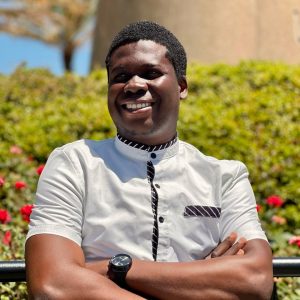
In a moment that signals both personal triumph and artistic arrival, Nigerian poet Ìfẹ́olúwa Àyàndélé has been named the winner of the 2024 Moon City Poetry Award for his evocative debut collection, My Father Paints His Dreams on My Body. The award, presented by Moon City Press at Missouri State University, includes a cash prize and the promise of publication—one that will introduce Àyàndélé’s powerful voice to a broader readership in the United States and beyond.
Originally from Tede in Oyo State, Nigeria, Àyàndélé’s work straddles continents and consciousness. Now a PhD student at Florida State University, where he also earned his MFA in Creative Writing and holding a Master’s in English Literature from the University of Lagos, his poetry has been nominated for Best New Poets, The Pushcart Prize and the Best of the Net, and his poems have appeared in prestigious literary journals such as Magma, Transition Magazine, Michigan Quarterly Review, Poetry Wales, The Texas Review, and The Los Angeles Review, among others. He writes with both tenderness and urgency, often invoking the landscapes of memory, fatherhood, and personal myth.
I sat down with Àyàndélé, whose poetic language is as vivid in conversation as it is on the page, to talk about the inspiration behind his award-winning manuscript, the emotional terrain it explores, and what it means to carry the dreams of one’s father across oceans and borders.
Where were you born and raised? And how did it influence your writing and thinking about the world?
I was born in Ago Are, southwest Nigeria, but I grew up in Lagos and I am from Tede, Nigeria. These places have significantly influenced my poetry. This is so that when I try to place my poetry in a spatial context, I have vivid images of these places plastered across my inner mind. You know, my mind kind of works like a storehouse for these images. I keep going back to them, and I’m always trying to recreate those memories in my poetry. Honestly, those places really give my writing a strong voice. They help me explore both the natural world and, I guess, the more emotional or poetic space too. They’ve shaped the way I see things. A lot of my poems end up reflecting family roots, ancestral memory, and just this deep sense of history that’s always been there.
How did your writing journey begin?
I started writing quite early, although my love for reading came first. I read books like Kola Onadipe’s Sugar Girl, Charles Dickens’ Oliver Twist and Ted Osondo’s A Chained Tomb as a child, and these books and many others, shaped my desire to write. I started writing my story in notebooks, and in pencil. It wasn’t until my senior year in high school that I decided to write poetry and paste it on the walls of my classroom. At the time, I was studying lots of African poets, like Léopold Sédar Senghor, David Rubadiri, Wole Soyinka, Dennis Brutus, J. P. Clark, Niyi Osundare, and Kofi Awoonor, etc., and non-African poets, like Andrew Marvel, Ezra Pond, T. S. Eliot, John Keats and William Wordsworth, in high school and these poets shaped my formative years as a poet. These poets have helped me to discover myself and to translate my memories of personal and historical consciousness into poetry.
Your first poetry collection recently won the Moon City Poetry Award from the Moon City Press at Missouri State University. What inspired you to begin working on the collection?
Other News
The creative process that birthed my debut collection, My Father Paints His Dreams on My Body is deeply rooted in my Nigerian heritage, family history, and socio-political realities. My grandfather was a soldier during the Nigeria-Biafra civil war. He told me stories of the war and the indelible mark it leaves on his life. I remember one day, I saw him go to the Nigerian Army Headquarters in Lagos to collect his pension after the war. But he didn’t get anything. And honestly, that stayed with him. It made him really sad for the rest of his life.
His sadness opens my inner mind into the vastness of his dream that he never realized, and I am drawn towards that to explore dreams as an ancestral connection throughout generations. I draw heavily from my personal and collective experiences rooted in place and ancestry. The dreamlike landscape in the collection is inspired by my growing memories, and the places that have shaped my perspectives, even to life itself. I am a dreamer, and I believe that everything starts with a dream, without dreams, as an ideal, nothing exists in the natural world. I am drawn to the interpretations of these dreams, and the movement of how these experiences exhibit spiritual awareness which has become a constant theme in my poetry.
Your emphasis on place and spatial elements suggest a pattern in your style of poetry. What is this style, concept and how has it shaped your work generally?
Oh, yes! That is the concept of ecopoetics. It emphasizes the relationship between the natural world and human relationship, and as a poet, my writing focuses on my relationship with my natural environment, especially where I was born—Ago Are, where I am from, Tede, where I grew up, Lagos, and all the places I have lived. I am interested in the landscape of my poetry, and how those images shape the way readers picture the settings in their minds. An underlying yet latent concept you’ll find in my poetry is the poetics of grief and the transatlantic poetry.
In your biography you said you teach writing at Florida State University, and you are also a doctoral student there. Can you share with us your experience in teaching writing, and your teaching philosophy?
My experience as a writing instructor at Florida State University has been truly eye opening and enriching for me. I have been blessed to have students that are willing to write and share their ideas with me in the classroom. My teaching philosophy is pretty student-centric; I value one-on-one interactions generally, so that feeds into my style. Besides, it has been a nurturing time for me, teaching writing, helping students from around the world to embrace writing as key component of their lives.
How did you feel when you learned you were named a finalist and then won the Moon City Poetry Award? What kind of preparation went into your manuscript?
When I first heard I was named among the eleven finalists for the Moon City Poetry Award in April, I was really honored. I mean, Moon City Press is well respected, and knowing my work was being recognized alongside other leading poets was encouraging. Then, when I found out I actually won, it was a mix of excitement and gratitude. It felt like all the hard work was finally paying off. Preparing the manuscript was a long process. I’ve been carrying these poems with me for years, shaping them through different stages of my life and studies, from Lagos to Florida. I revised carefully, making sure each poem spoke clearly about the memories, family history, and the landscapes that mean a lot to me. The process involved a lot of patience and reflection, but it was worth it to create a collection that feels true to my experience.
Can you share with us what you are presently working on now?
Presently, I am working on a new collection of poems about living with terminal disease like cancer; the unpleasant road of pains, while trying to find a solution, its effect on the family and how people prepare for the impending grief. I am interested in this because of the grief people carry around in this present world, and there is at present no succor for it. Though the work is still in its infancy, I am certain that the collection will provide comfort for many around the world. While presently working on these collections, I am reading collections of poems like Victoria Chang’s Obit and Katie Farris’ Standing in the Forest of Being Alive to strengthen my imagination about grief and living with terminal diseases.
What is your biggest dream as a poet?
You know I have mentioned earlier that I am a dreamer, and my greatest dream is to continue to create a beautiful world of African poetics, to share with the world the beauties of the human conditions, and while at it, to help teach poetry to everyone in such a clear and interesting way. Besides, wherever the dream takes me, I am going. Like birds, I just want my words to fly into the hearts of people that my words would transform, reform, and even heal them from grief because of acute loss, and to teach people the way of the world in such definite ways. If these dreams come true, I am fulfilled as a poet.