Follow Us on Google

By Olakunle Olafioye
Nigeria is making another attempt to resolve one of the longstanding controversies in the nation’s education sector- the Higher National Diploma (HND) and Bachelor’s degree dichotomy. After several attempts and moves, which include major pronouncements and legislative proposals, to end the dichotomy without success, the Minister of Education, Tunji Alausa, said a new policy is in the pipeline to address the controversy.
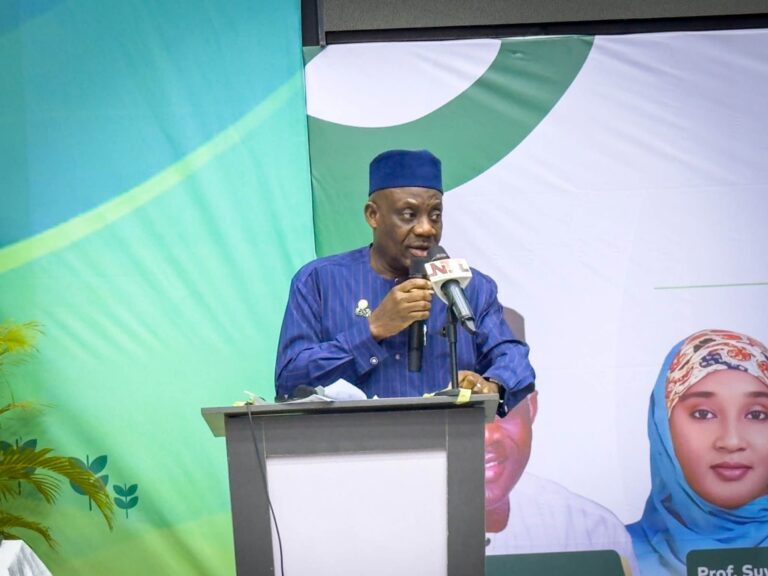
The minister made the disclosure at a retreat which had council chairpersons, commissioners of education, rectors, registrars and bursars of polytechnics in attendance. The latest move, according to the minister, is intended to significantly reform Nigeria’s tertiary education system.
Under the proposed reform, accredited polytechnics will be empowered to award bachelor’s degrees, placing them on the same academic and professional rung as universities. Stakeholders say the new policy will put an end to decades of discrimination faced by HND holders in employment, career progression, and public service appointments
Addressing the gathering, Alausa said the latest move is in line with the government’s commitment to prioritising technical and vocational education. He disclosed that the transition would be guided by clear standards, strong regulation and quality assurance mechanisms to ensure global competitiveness and best practices.
For decades, stakeholders in the nation’s education sector have lamented the dichotomy between HND and degree and bemoaned what they describe as unfair treatment meted out to holders of HND. They also contend that the dichotomy has continued to undermine technical education, discourage enrolment in polytechnics, and devalue graduates with strong hands-on and industry-focused training.
But with the new move, the minister revealed that priority attention will be accorded technical and vocational education to ensure graduates are not only industry-ready, but also innovative and capable of driving the nation’s economic growth.
“These reforms are aimed at bridging the gap between theoretical knowledge and practical application to foster industrial, agricultural, commercial and economic growth,” the minister said, adding that “the repositioning of TVET is to serve as a catalyst for national development and productivity.”
Many stakeholders have also expressed concern over the treatment being meted out to graduates of polytechnics, especially in the federal civil service. Today, in many government institutions, products of polytechnics hardly go beyond level 14 just as many of them are being systematically frustrated out of the service when their juniors are promoted above them, even though HND holders have continuously proved their mettle.
Not a few analysts have therefore expressed the view that the new policy will be pivotal to repositioning Nigeria’s education system to better meet the demands of industrial growth, technological advancement, and economic diversification, if allowed to sail through.
Notwithstanding, doubts still persist over the government’s readiness and willingness to make good its promise as previous attempts to end the dichotomy had failed to see the light of the day. Lack of political will on the part of the government ranks high among the few factors, which stakeholders believe, have worked against the proposal in the past. A lecturer, Dr Timothy Adebakin, said attempts by successive governments to address the discrimination against holders of HND had failed to demonstrate the will power required to see the policy through.
He recalled that the quest to address the dichotomy between HND and Bachelor’s Degree, which began long ago, recorded a major leap in 2021 when the Senate and House of Representatives passed a bill entitled: “A Bill for an Act to Abolish and Prohibit Dichotomy and Discrimination between First Degree and Higher National Diploma in the Same Profession/Field for the Purpose of Employment and for Related Matters”
“I can recall vividly that both the House of Representatives and the Senate passed the bill that year but up till today the bill is yet to be signed into law. The dichotomy has remained a major threat to polytechnic education in Nigeria. This is because HND holders continue to face challenges in the job market, often feeling marginalised. It will be the right direction to be on the same page with degree holders. HND is being undervalued. Post Graduate Diploma is not even bridging the Bachelor’s Degree/HND gap. In a normal circumstance, PGD is supposed to close the gap but in reality it is not so. The way out is that the government must show genuine commitment to ensure that the disparity is permanently addressed by way of giving legal backing by way of the President’s assent,” Adebakin said lamentably.
He therefore called on President Bola Tinubu to act decisively. He emphasised the need for a legislative framework to enforce fairness and abolish the dichotomy once and for all.
He noted that although the National Council on Establishment had officially removed the discrimination on paper, its implementation across ministries, departments, and agencies remains poor. “The bill to back it up was passed at the ninth Senate but was not duly signed into law by the then president. Therefore, a new Bill needs to be sponsored or the previous one revisited by the present 10th National Assembly and sent to President Tinubu for his assent,” he suggested.
Before 2021, former President Olusegun Obasanjo’s administration, in 2006, in a move to end the regime of discrimination, approved a new policy reversing the existing one, which restricts HND holders from rising above salary grade level 14 in the public service, unlike their university graduate counterparts.
Other News
The bold step was seen by many as the beginning of a new dawn and a ray of hope for HND holders in the country.
Under the late President Umaru Musa Yar’Adua in September 2007, the Federal Executive Council (FEC) also directed that the dichotomy and ceiling on salary grade level attainable by HND holders should be removed.
Former President Muhammadu Buhari also had a cause to seriously frown at the disparity and discrimination between degree and HND holders in the civil service, a development which led the then Head of Service of the Federation, Mrs. Winifred Oyo-Ita, in a circular dated March 26, 2018, to pass the decision of the National Council on Establishment (NCE) to all concerned. In the circular, it was stated that HND holders will enjoy Salary Grade Level 08 (SGL08) in the civil service at the entry point like their colleagues with university degrees. It also encouraged serving officers who hold HND to fulfil all specified conditions in the scheme of service and extant rules for career progression beyond SGL 14.
But in spite of these efforts, discrimination against HND holders in private and public agencies persists owing to what analysts described as lack of demonstrable political will to drive the policy.
A polytechnic graduate, Mrs Olabisi Ganiu said there is no viable reason for the continued discrimination against HND holders in Nigeria.
“There is no justifiable reason for the discrimination against polytechnic graduates in the labour market apart from the ill-will to rob thousands of competent professionals of equal opportunities for employment and career advancement. Our country is the major loser because the practice undermines the nation’s industrialisation drive by side-lining its technically skilled workforce.
“All over the world employers are now prioritising skills, problem-solving abilities, and innovation over mere paper qualifications. So we cannot afford to continue dilly-dally in ending this unjustifiable discrimination. The world of work today values skills, innovation, and problem-solving over certificate titles. Nigeria cannot industrialise while side-lining its own technically skilled workforce.
“So why does Nigeria still place HND holders on lower rungs of the ladder, despite their competence and proven track record? The answer is outdated policies and prejudice, not lack of ability. It is time to enforce equity, scrap the dichotomy completely, and allow Nigeria’s progress be driven by competence and skills not by paper certifications” she stated.
In his own reaction, Dr. Yusuf Amodu, said the Nigerian government must go beyond the rhetoric and convince Nigerians about its seriousness to end the discrimination between HND and degrees.
Amodu urged President Bola Ahmed Tinubu to write his name in gold by ensuring that the disparity between both certificates does not linger beyond his administration.
“Former President Buhari had the opportunity to take the glory for ending the dichotomy but he failed at the very end. The bill was before him for more than two years after its passage in June 2021 by the National Assembly. But he kept us in suspense till the end of his administration, thereby making monumental waste of public resources and time committed to deliberate on the bill.
“I wonder how long Nigeria will continue to play needless politics with an issue of public importance like the one in focus. As long as we allow the imbalance between HND and degrees, the nation’s education and the economy will continue to suffer,” Amodu argued.
Nigerian polytechnic graduates are also calling on the FG to bring an end to the dichotomy as a matter of urgency and fast track economic development in the country. One of them is Olalekan Mese, who maintained that sustainable economic development would remain a mirage as long as the government fails to address the bias against holders of HND.
Mese who describes the level of development a nation records as an indication of the recognition given to its polytechnic education, said Nigeria cannot afford to deny itself of the many benefits accruable to nations that accord their polytechnic graduates the honour and the recognition they truly deserve.
“Nigeria must raise the status of polytechnic and put it at par with university if we are serious and ready to benefit from polytechnic education. We are tired of going overseas to import goods that we can conveniently produce here because we fail to do the needful. China is a good example we must emulate if we are serious in our desire to rise above our current level among the comity of nations. China believes in practical knowledge and Nigeria must take a cue from China to move ahead,” he posited.
Another polytechnic graduate, Amudat Bashiru noted that ending the disparity between HND and university degrees is long overdue and opined that the move would certainly boost enrolment into polytechnics across the country.
“The discrimination against HND holders has done a great damage to the polytechnic education and this will likely continue unless the government decides to take the bull by the horns to reverse the trend.
“Many brilliant students who would have naturally enrolled to acquire high technical skills and knowledge are now running away from seeking admission into polytechnics. If the trend is allowed to continue for a few more years, we may have to face the negative consequence of getting to a point where our polytechnics will be deserted and abandoned to rot away,” she stated.