Follow Us on Google
•Pegs minimum cost at N150,000
By Chinelo Obogo [email protected]
The lingering foreign exchange crisis has hit domestic airlines hard with operational costs soaring to unbearable levels.
Rising Jet A1 prices and inadequate infrastructure are the twin-blight frustrating them.
Other constraints include; arbitrary Customs duty charges, multiple aviation charges and a generally difficult business environment. These have led to the astronomical hike in domestic airfares, beyond the reach of the average air traveller whose purchasing power has continued to decline.
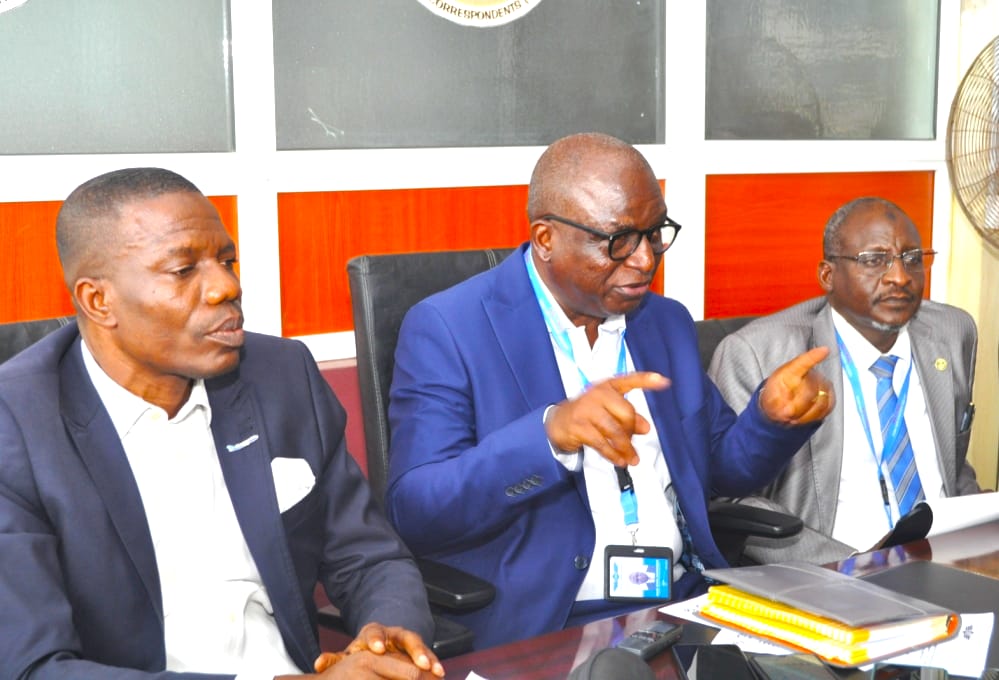
However, despite air tickets starting from N62,000, the management of United Nigeria Airline, led by the Chief Operating Officer, Osita Okonkwo, spoke to journalists recently as part of activities designed for its third anniversary celebrations.
Okonkwo lamented that domestic operators are struggling to break even and may vacate the skies if help does not come quickly.
He also spoke on the milestones the airline has achieved, disclosing that with six aircraft in its fleet, UNA now flies to 11 domestic destinations and would soon commence regional and international operations.
Expansion of routes
We are ready to go into markets where others have not gone, that is why we went to states like Ebonyi and Bayelsa and that was why we are exploring other airports because there are people there who are willing to pay for regional and international air travel. We are making final preparations to start our Ghana operations and we are also focusing on other regions of Africa.
We are grateful to the Ministry of Aviation and Aerospace and the Nigerian Civil Aviation Authority (NCAA) for designating to; London, Amsterdam, Milan, Houston, Dublin, among others. But these are oppourtunities we want to develop gradually and systematically. We don’t fly for the sake of flying, we fly because the route is viable and we can sustain whatever we put in there.
The aviation industry is essential. All over the world, it contributes to a country’s GDP and ours should not be different. We need to promote local tourism with aviation. I lived in Kenya for over 25 years and one of the things they have is the ‘Mombasa migration’. When that happens, the President moves the entire cabinet out of Nairobi to Mombasa and that does so much to the economy of Mombasa. We need to begin to do something that would retain forex in-country. Apart from the migration to the South East during the Christmas celebration, what other migrations do we have? Even with the insecurity, without the annual migration, the economy of the South East would not be what it is. So, we need to create markets and opportunities for movements.
We really have a lot of work to do and we are committed to supporting any initiative that would help to develop internal travels which we think is still very low. We are major players and are ready to do the heavy lifting and hard work that is required to unite our customers across the globe. We look forward to an aviation market that is fully developed. We need investments in all the subsectors of the industry.
Spring Alliance
The Spring Alliance was supposed to be a very formal structure but it is more informal and we must admit that it is not a perfect interline agreement. It is now more of a cooperation agreement but we are still working on it. At the moment, only two or three airlines are currently strong in that aspect, that is, United and Air Peace and we work very closely with Dana. There is the problem of capacity in the market and many people would not be able to bail you out if you have issues because they don’t have the capacity to do so and not that they don’t want to do so. Also, the person must be going to the destination you are going to in order to help you. So, you find out that the coverage of many operators is not widespread as one would have expected. Some days ago, we had an agreement with Aero that did some of our flights. We also had one with Arik and NG Eagle because we didn’t want to do outright cancellation for passengers. We are committed to developing this alliance because the local airlines must collaborate before they expect others to collaborate with them.
New aircraft
We said we would be bringing in new aircraft every quarter and it was supposed to be dry lease or outright purchase. What we did last year was to bring in two Airbuses in keeping with our plan. When the ones we had planned to acquire were being delayed, we had to opt for leasing, which is a short term measure. We are hoping that by the time the lease terminates, we would have something to replace them. We have ongoing discussions to lease three more aircraft and we have placed an order with Embraer for five new aircraft and we are finalising the negotiations.
Proposed increase in handling charges
Everyone is increasing except the airlines. Handling companies have announced an outrageous increase in their charges. All the airport owners have increased their rates except FAAN. Asaba airport has increased its Passenger Service Charge (PSC) to N8000, Anambra has also increased theirs, MM2 is at N7, 000 and the NCAA is still collecting five per cent charges. So, if they are talking about reducing air fares, they should also reduce theirs because it is all additional cost to the passenger. We are buying aviation fuel at a minimum of N1, 300 per liter, $1 is N1, 700, so, if we are leasing, how do we pay for the aircraft and spare parts?
The truth is that the minimum cost of airfare should be $100 because I don’t see how you can fly for less than N150, 000 and expect to get margins. Once the cash runs out, you will start seeing people parking their aircraft. In fact, some have done so because if not for the parked aircraft, you would not have been able to use someone’s plane to do 300 passengers. Today, we had another operator telling us they want to transfer their passengers to our aircraft because it doesn’t make sense to fly with 50 passengers in a 160-seater aircraft. The minister and policy makers need to also intervene on our behalf because we need cheap loans, forex and lower country risks so that lessors don’t charge you more money because you are from Nigeria, whereas an operator from Togo is getting it at cheaper prices.
If you fly into Asaba airport by 7.05pm on a 50-seater, it would cost you N500,000 extra. They would tell you they close at 7pm, so, if you land at 7.05pm and leave at 7.10pm, you would still pay N500, 000 per hour. If you tell them you are landing at 8.05pm, it would cost you one million. If you tell them to leave the airport open for 10pm, you are going to pay extra N1.5m for three hours. So, how much does the operator make? When we started, we were charging N25,000.
Now, we are not even getting $50, yet 90 per cent of our expenses is in dollars. It is a discussion that is very important.
If you want to run an airport, the NCAA should be able to tell them that the airport should be open till midnight as a requirement to get a license. It is very difficult for us because there was a time it was only Asaba that could open at night. Why do you collect extra money for operating after 7pm even after collecting PSC? It is double taxation and what is happening now is that there is a five per cent tax on turnover in addition to the NCAA charges.
We can sit and calculate how much it costs to fly on each aircraft type. We have an ERJ aircraft which is a 50-seater and recently, I was looking at our Abuja-Port Harcourt schedule and it was selling for N62, 000. If you multiply it by the number of the seats, it would give you N3 million. If you want to land in an airport like Asaba, where the PSC is N8, 000 per person, you will see that it is not working. It is very difficult.
The NCAA controls whatever the airlines do. You don’t fix ticket price or even run a promotion without the agency’s approval. Otherwise, if we are given the opportunity, the average cost of an economy ticket should be between N150, 000 and N200, 000.
People should shop for tickets wisely. If you look at flights of one week or two weeks in advance, you can still get very cheap tickets. The problem we have in Nigeria is that at times, we don’t plan because we think that if we plan, something would happen. If you are a student and you know you would be on holidays on a particular date, nothing stops you from buying your ticket and locking in the price. Tickets are done in such a way that they are optimised. You start low and move to the next level. What we do is that we wait for those who are late shoppers to pay for the early shoppers. But the most important thing is that for the survival of the industry, the economic situation has to reflect on the ticket.
Compensation for passengers
We go above and beyond to get the passenger to where they want to go to. We hardly cancel flights except it is when it is beyond our control. If we have a sunset airport situation in Anambra for instance and we have a delay where we can’t make it, we give our passengers the option of dropping at Asaba airport. If they agree, we usually don’t mind paying the extra cost which the passengers don’t know about.
We have always taken care of our customers anytime there is flight delays or cancellations. We ensure they get refreshments and where they have to go and come back the next day, we always provide transport for those who want to be paid in cash. We have taken them to hotels where necessary. On many occasions, we have moved empty aircraft to ferry passengers and lodged them in hotels.
Forex scarcity
I don’t know if anyone has seen the 52-page document for accessing foreign exchange. As an airline, one of the things you are meant to submit before you can access forex is engine status report and maintenance record. I got a mail today from one of the lessors saying that they don’t keep such documents and they can’t give it to us. Then you go back and the bank tell you that it is CBN’s requirement. So, the ease of doing business means that those who are in the banking sector understands what the technical requirements are. We have elevated the dollar so much and that is why we are having these challenges.
Aircraft lease
What we have on our Airbus at the moment is ‘damp lease’ which allows you to put your own crew on the aircraft which saves a lot of money. It took us a lot of money because we had to take them abroad for training. But in the long run, it is cheaper and it also helps with the employment of Nigerians.
For wet lease, the operational control is with the lessor while dry lease gives you the flexibility of having the aircraft registered in your name and you have complete operational control. The problem is that if you don’t meet the requirement of the dry lease, how easy is it in Nigeria for lessors to take back their aircraft? That is where the bottleneck is and the lessors are not happy with their previous experience in Nigeria that is why the operators and the Minister of Aviation are trying to resolve the issue.
Slot sharing
It is very difficult for FAAN who are the owners of the airport to give slots. The airlines know the rush periods, if you are not there, you are not there. Slot sharing is good for international airlines. For the local airlines, you want the aircraft to rotate for at least six times to be able to get something meaningful. It would be an issue for everyone. The important thing is for the facilities at the airports to be improved upon.
On BASA
Our BASA is a great challenge to domestic operators because of the so-called open skies. We need to interpret the open skies agreement properly. Open skies does not mean that we give foreign airlines six entry points into your country, this deprives domestic airlines some of these privileges. Nigeria should make it one entry point to any of these foreign carriers so that it should be forced to interline and codeshare with domestic carriers.
Bird strike
We have had two bird strikes on our Airbus, one damage the blades of the aircraft and we were on ground for more than a week in Abuja. Unfortunately, no airport compensates the airline if you have such an issue.