Follow Us on Google
By Omodele Adigun
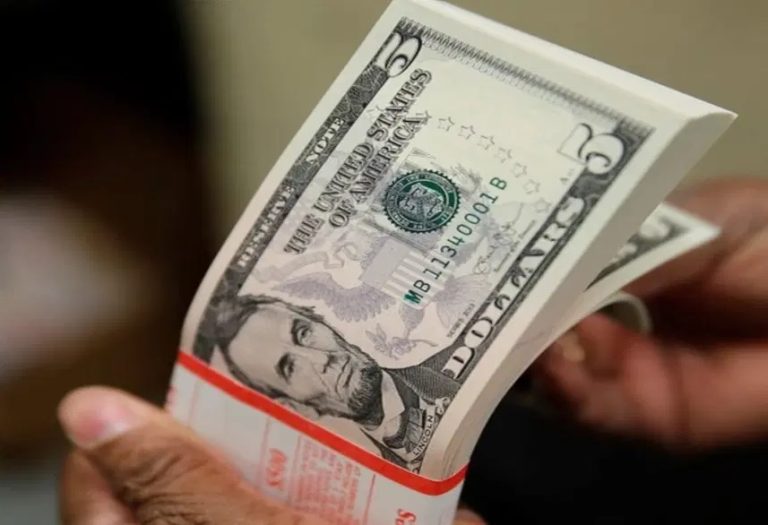
Barring any last minute change, the Debt Management Office (DMO) will tomorrow auction N150 billion Federal Government bonds to investors.
DMO announced this recently in a circular on its website.
A bond is a fixed income instrument that represents a loan made by an investor to a borrower — typically corporate or government.
According to the circular, the bond issuance will be in two tranches valued at N75 billion each.
The first tranche is the 10-year, 12.5 per cent FGN Jan 2026 re-opening bond, while the second is the 20-year, 13 per cent FGN 2042 reopening bond.
It said the bonds sell for N1,000 per unit, subject to a minimum subscription of N50,001,000 and in multiples of N1,000 afterwards.
The DMO stated that the settlement date of the bond issuance is February 18, 2022. For re-openings of previously issued bonds (where the coupon is already set), the agency specified that successful bidders are required to pay a price corresponding to the yield-to-maturity bid that clears the volume being auctioned, plus any accrued interest on the instrument.
It said interest on the bonds would be payable semi-annually while bullet payments would be made on maturity date.
The DMO says the bonds qualify as securities in which trustees can invest under the Trustee Investment Act.
“Qualifies as government securities within the meaning of Company Income Tax Act (CITA) and Personal Income Tax Act (PITA) for Tax Exemption for Pension Funds amongst other investors,” the circular reads.
“Listed on the Nigerian Exchange Limited and FMDQ OTC Securities Exchange. All FGN Bonds qualify as liquid assets for liquidity ratio calculation for banks.”
DMO assured investors that all bonds are backed by the full faith and credit of the Federal Government of Nigeria and are charged upon the general assets of Nigeria.
The Minister of Finance, Budget and National Planning, Mrs. Zainab Ahmed recently hinted of the Federal Government’s plan to borrow more in order to finance the N6.258 trillion deficit in the 2022 budget.
The Minister maintained that it was necessary that the government would continue to borrow in order to fund developmental and infrastructure projects as it does not get enough from its revenues.
“So, we need to borrow to be able to build these projects that will ensure that we’re able to develop on a sustainable basis.
“Nigeria’s borrowing has been of great concern and has elicited a lot of discussions. But if you look at the total size of the borrowing, it is still within healthy and sustainable limits. As at July 2021, the total borrowing is 23 per cent of GDP.”