Follow Us on Google
By Lukman Olabiyi
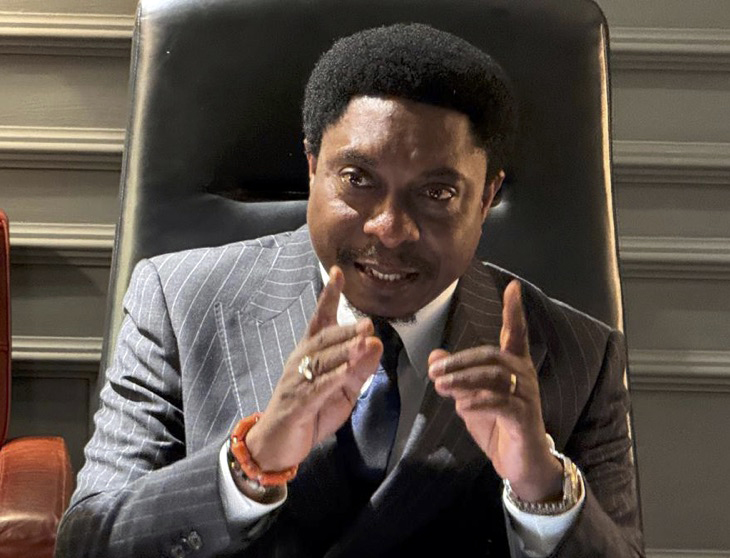
The Peoples Democratic Party (PDP) governorship candidate in Abia State, Dr. Kelechi Anosike has outlined an ambitious agenda focused on economic prosperity, social welfare, healthcare, education, youth development and agricultural transformation for the state if he becomes the next governor.
A lawyer with expertise in international petroleum law and policy, Anosike has built a distinguished career spanning energy law, commercial practice and public service. In this interview, he discusses his credentials, political experience, the debate over zoning, and why he believes people-centred governance is the key to Abia’s future.
Tell us about yourself and your professional background.
My name is Dr. Kelechi Anosike. I am from Abia State. I am a lawyer by profession, specialising in international petroleum law and policy. I am also a commercial lawyer.
I obtained my first degree from Addison University, graduating as the best student in my class. Thereafter, I attended the Centre for Energy, Petroleum Law and Policy in Scotland, where I earned a Master’s degree in Development Policy. I also hold a PhD in Property Law and Mortgages.
Over the years, I have practised extensively in electricity, energy, oil and gas, and related sectors. My law firm operates from Abuja and the United Kingdom, and our practice is recognised among the leading firms in Africa.
I am a member of several international professional bodies, including the Scottish Bar Association and the Association of International Petroleum Negotiators (AIPN) among others.
In 2013, while in the United Kingdom, I served as President of the Society of Petroleum Engineers (SPE), an umbrella body for oil and gas professionals, including lawyers and engineers.
Why did you decide to contest for the governorship of Abia State?
I believe Abia State deserves a government that puts people first. Development should not be measured solely by roads, buildings and physical infrastructure. It should be measured by the quality of life of the people.
I am offering myself because I have the experience, the vision and the capacity to transform Abia through people-centred governance. By the grace of God, I believe I will have the opportunity to serve the people from Government House next year.
Some people have raised concerns about zoning. How do you respond?
Abia politics has always reflected a balance among the various zones of the state. We must appreciate the need for inclusiveness and fairness in our political arrangements.
My emergence will not disrupt any political balance. We have had governors from the Ukwa/Ngwa axis, including the current administration. My candidacy is consistent with the need for equity and balanced representation.
Ultimately, democracy allows citizens to make their choices, and I believe the people of Abia will support a candidate with the capacity to deliver meaningful development.
What is your political experience?
I have been involved with the PDP for many years. During my National Youth Service in 2003, I obtained approval from former President Olusegun Obasanjo to write one of his biographies, which was formally launched in November 2006.
Since then, I have served on several national assignments and committees within the party. In 2006, I chaired a National Assembly screening committee in Plateau State and worked alongside distinguished Nigerians, including Professor Joe Irukwu.
I also contested for the position of Deputy National Financial Secretary within the PDP structure. My experience in politics has largely been focused on institution-building and reforms.
How would you describe your leadership philosophy?
I am not a conventional politician. I see myself as a reformer and a builder. Throughout my career, I have worked with organisations, helping them restructure and improve their performance. I apply the same philosophy to governance. My focus is on solving problems, creating opportunities and improving people’s lives.
The hallmark of our administration will be people-centred governance. Every policy and programme will be designed with the welfare of the people as the primary consideration.
What are the key pillars of your governance agenda?
Our governance framework is built around seven strategic pillars, all aimed at improving the quality of life of Abians. The first pillar is economic welfare, which focuses on prosperity and wealth creation. We will support SMEs through financing programmes, entrepreneurship grants and skills acquisition initiatives. We will also promote industrialisation, market development and solid minerals exploitation.
Abia has significant deposits of limestone and other minerals. We intend to attract investors and industrial partners to develop these resources, including the establishment of cement manufacturing facilities.
Other News
What are your plans for social welfare and vulnerable groups?
We will prioritise social protection for vulnerable citizens, including widows, senior citizens and persons with disabilities. These groups should not be treated as burdens but as valued members of society. We will establish targeted support programmes for poor households, food assistance schemes and welfare initiatives that provide dignity and security. No citizen of Abia State should go to bed hungry.
Healthcare remains a major challenge. What reforms will you introduce?
Healthcare is a critical priority. We will establish functional primary healthcare centres across all 17 local government areas. These facilities will be equipped with modern laboratories and diagnostic equipment because accurate diagnosis is the foundation of effective treatment.
We will also recruit qualified professionals, including biochemists, microbiologists and laboratory scientists to ensure that healthcare facilities are fully functional and capable of delivering quality services.
Our goal is to make healthcare affordable, accessible and reliable for every citizen.
What is your vision for education?
Education is central to human capital development. We will introduce scholarship programmes, improve teacher welfare and professionalise teaching. Teachers must be properly trained, adequately remunerated and motivated. We also plan to integrate digital learning into the education system and rehabilitate schools across the state.
Importantly, we want students to graduate with practical skills, not just certificates. We will incorporate vocational training, entrepreneurship and enterprise development into our educational curriculum.
Youth unemployment is a growing concern. How do you intend to address it?
Youth empowerment will receive special attention under our administration. We will establish technology hubs, provide grants for young entrepreneurs, promote sports development and organise talent discovery programmes. We also intend to prepare our young people for the global digital economy. Countries such as India and Kenya have leveraged outsourcing and remote work opportunities to create jobs and generate wealth. Abia can do the same. We will train our youths to work remotely for international companies and earn foreign exchange income while residing in the state.
What will your administration do for civil servants and pensioners?
We believe workers deserve dignity and fair compensation. We will work towards implementing a living wage system, improve workers’ welfare and provide health insurance coverage for civil servants. We will also undertake pension reforms and develop a structured framework for clearing outstanding pension liabilities. Housing support programmes will also be introduced to assist workers and retirees.
Agriculture remains a major economic sector. What are your plans?
Agriculture will play a central role in our development strategy. We are introducing a comprehensive “Back to Farm” programme focused on food security and economic growth.
We will revive agricultural extension services, train farmers on modern farming techniques and ensure the proper use of fertilisers to improve productivity and maintain export standards. Government support will also include land clearing assistance, farm inputs and access to markets.
Do you trust the Independent National Electoral Commission (INEC) to conduct a credible election?
Yes, I trust INEC. I trust the process and the electoral system. No system anywhere in the world is 100 per cent perfect, and there may always be attempts at manipulation in one form or another. However, I believe INEC has continued to improve its processes.
With adequate funding from the government and the support of security agencies, I am confident that the commission can deliver a largely credible election. Measures such as electronic transmission of results have significantly enhanced transparency. While perfection may be difficult to achieve, I believe we can attain a process that is over 90 per cent fair and that is encouraging for our democracy.
Are you ready for a public debate with the incumbent Governor, Alex Otti?
Absolutely. I will welcome the opportunity for a debate. Elections should not only be about personalities; they should be about ideas, policies and performance. A debate would provide a platform for the governor to defend his policies and achievements before the people, while I present my own vision and alternatives. It would allow the electorate to objectively assess both sides and make an informed decision about the future of Abia State.
You often emphasize that you are not a conventional politician. Do you think Abians are ready for a generational and ideological shift in leadership?
The signs are already there. You can see it from the outcome of our party primary election, where I secured over 16,000 votes, while the next closest contender received about 3,000 votes. That result reflected a strong desire among party delegates for a new approach to leadership. People are looking beyond traditional politics and are seeking fresh ideas, competence and people-oriented governance.
I believe the same sentiment exists among the wider electorate. As we continue to engage with the people and present our vision for a more prosperous Abia, I am confident that the momentum we witnessed during the primaries will be replicated in the general election.
What message do you have for the people of Abia State?
My message is simple: governance must be about people. We will build roads and infrastructure, but we will also build lives. Our success will not be measured by the number of projects commissioned, but by the number of lives improved. We are committed to creating prosperity, expanding opportunities, protecting the vulnerable and ensuring that every citizen has a fair chance to succeed. That is the Abia we envision, and that is the Abia we intend to build.