Follow Us on Google
Exporters under the Manufacturers Association of Nigeria Export Promotion Group (MANEG) have raised concerns over the persistently low contribution of manufactured goods to Nigeria’s total exports, despite significant growth in overall export figures.
Although Nigeria’s total export value rose to N77.44 trillion in 2024, marking a 115 per cent year-on-year increase, manufactured exports still accounted for less than three per cent of the total.
This gap, stakeholders say, highlights structural challenges within the country’s export ecosystem.
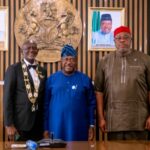
Chairman of MANEG and Corporate and Regulatory Affairs Director at BAT Nigeria, Odiri Erewa-Meggison, disclosed this at the Lagos Chamber of Commerce and Industry (LCCI) Exporters Development Programme. She stressed the urgent need for Nigeria to transition from policy formulation to effective implementation in order to boost export performance.
Erewa-Meggison noted that Nigeria’s challenge is not market access but poor execution. While the African Continental Free Trade Area (AfCFTA) offers a $3.4 trillion market opportunity across 1.3 billion people, she said the benefits cannot be realised without adequate preparedness.
“Nigeria does not have a market access problem; we have an execution problem. AfCFTA presents a $3.4 trillion opportunity across 1.3 billion people, but access without readiness delivers no value,” she stated.
Other News
She further revealed that over 70 per cent of Nigerian food exports are rejected in international markets, while about 30 per cent of manufactured goods fail due to poor packaging, labelling, traceability, and certification.
According to her, these setbacks point to deeper issues, including weak quality assurance systems and limited technical expertise across the value chain.
She added that many manufacturers operate below capacity, not due to lack of ambition, but because of inadequate access to technical support needed for export documentation, utilisation of AfCFTA tariff benefits, and engagement with global buyers.
To address these challenges, Erewa-Meggison proposed reforms built on four key pillars: improved quality standards, efficient logistics, access to export financing, and effective domestication of AfCFTA frameworks.
While acknowledging the role of government policies, she urged industry players to take greater responsibility for their export readiness by complying with international standards, forming strategic partnerships, and fully leveraging available trade platforms.
She reiterated MANEG’s commitment to promoting value-added manufacturing as a pathway to enhancing Nigeria’s competitiveness in the global export market.