Follow Us on Google
By Rita Okoye
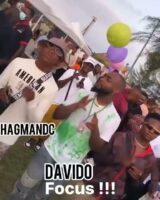
Davido met up with Abatiade this week, and the internet noticed immediately. Clips of the singer trying his hand at the Focus Dance alongside the man behind it spread fast, the kind of casual, unplanned-looking video that ends up outperforming a lot of official content. The clips quickly spread across social media, with many users pointing to them as proof that even Davido couldn’t resist joining in.
The Focus Dance itself rides on a beat by Ajimovoix, but it was Hagman DC and Abatiade who turned it into a movement. By mid-2021, you could barely scroll through Instagram or TikTok without running into someone attempting it, footballers Paul Pogba and Jesse Lingard included. Part of its appeal was how easy it was to copy. People picked it up quickly, and once it started appearing in short videos, the dance spread even faster, and that combination is usually what separates a dance that lasts a few weeks from one that becomes a reference point.
What a lot of people don’t know about Abatiade, born Abati Adeotan Abidemi, is that this isn’t his first time in the spotlight. He started as a ballet dancer while still quite young, and back in 2015, he actually performed in front of Professor Wole Soyinka, getting honoured at the Vision of the Child event and also the inauguration party of the Governorship Candidate of the APC, Mr Akinwumi Ambode at Tafawa Balewa Square (TBS) in Onikan, Lagos Island, and a handful of comedy skit content with some notable content creators like Broda Shaggi and the rest. So the Focus Dance didn’t come from nowhere. It’s more than a long-running dancer finally catching the internet at the right moment.
Other News
The Focus Dance followed a route familiar to many Nigerian dance crazes. What began as clips shared among dancers soon found a wider audience through social media before musicians and celebrities joined in. Something small starts in one corner of Lagos, gets filmed, gets copied, and within weeks it’s everywhere. Nobody plans it. It just happens, and every so often, the person behind it gets pulled into the same spotlight as the artists who end up using their moves.
Zanku is still the one people measure everything else against. Zlatan popularised it around 2018, that leg-work-heavy style where one leg is raised while the arms swing in the opposite direction, and it spread so far beyond street-pop that you’d see it at weddings, in adverts, everywhere. Some of what came after, including Focus Dance, still carries traces of it.
Before Zanku, there was Shaku Shaku, which was more associated with Agege and was pushed by Slimcase and Idowest, among others. It had its own shoulder-and-leg combination, sparse percussion behind it, and for a while it did the same job Zanku later did: it gave dancers from areas that don’t usually get attention a real shot at being seen.
Go back further, and you’ll find Alanta, Suo, and a handful of others who had their own moment and were mostly forgotten once the next one arrived. Most of the people who created those dances never got proper credit, even after musicians borrowed the moves for hit records.
The pattern is familiar. A beat is released, a handful of dancers build a routine around it, and within weeks, the dance has been copied hundreds of times online. As musicians begin using it, some of the original creators receive wider recognition, while others remain largely unknown. Davido linking up with Abatiade and HAGMAN Dc, currently students at Kwasu, fits a pattern of his own. He’s known for getting involved with street trends early rather than waiting for them to blow up first, and given how big his following is, that alone tends to push a dance further than it would’ve gone on its own.
Whether Focus Dance ends up lasting as long as Zanku or Shaku Shaku did is anybody’s guess at this point. What’s already happened, though, is that Abatiade got the kind of recognition dancers behind these trends don’t always receive, and that’s nothing in an industry where the people who make a hit move rarely get paid the way the songs attached to it do.
For now, the Focus Dance has secured its place among the street routines that defined Nigerian pop culture in 2021. Davido’s appearance alongside Abatiade was another sign of how quickly grassroots dance trends can move into the mainstream. It’s the same one Nigerian street dance keeps teaching every couple of years: the moves that stick around aren’t necessarily the flashiest ones; they’re the ones simple enough for everybody, from a kid on the street to Davido himself, to just join in.