Follow Us on Google
From Adanna Nnamani, Abuja
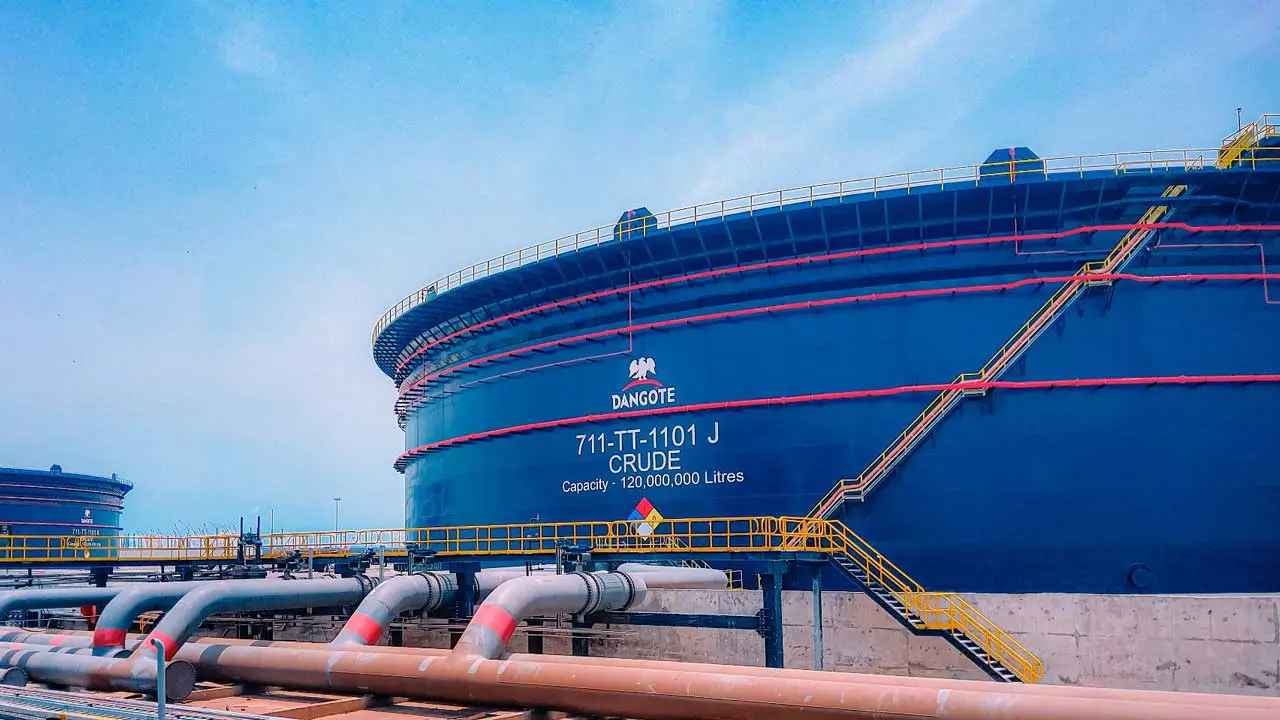
Nigeria may avoid fuel shortages despite a sharp surge in global oil prices triggered by escalating tensions in the Middle East, the management of the Dangote Petroleum Refinery has assured.
Managing Director of the refinery, David Bird, said the facility will continue to supply enough petrol to meet Nigeria’s domestic demand even as geopolitical conflicts disrupt global energy markets and push crude oil prices higher.
His assurance comes as international oil benchmarks surged above $100 per barrel amid rising tensions involving Iran, the United States and Israel, which have threatened critical oil infrastructure and shipping routes, particularly the Strait of Hormuz.
Market data shows the global benchmark Brent crude recently climbed to about $102 per barrel after peaking near $119.50, while the U.S. benchmark West Texas Intermediate rose to around $100 per barrel.
The sharp rise in crude prices has raised fears of supply shortages worldwide, with some import-dependent countries already experiencing panic buying and rationing.
However, Bird said Nigeria is now better positioned to withstand such shocks due to the country’s growing domestic refining capacity.
“What would be worse than $120 oil is no oil,” he said during a media chat, noting that some countries heavily reliant on fuel imports are already restricting exports to protect their domestic markets.
According to him, the refinery remains committed to ensuring uninterrupted fuel supply to Nigerians even as crude prices, freight charges and insurance costs rise globally.
Other News
“Just a week ago, oil was trading in the mid-$60 range, and it has now climbed to nearly $120 per barrel,” Bird explained, adding that the sudden spike has affected the entire global energy supply chain.
The refinery, he said, is currently operating at its full nameplate capacity of about 650,000 barrels per day—making it one of the largest single-train refineries in the world.
Bird disclosed that the facility can produce between 50 million and 55 million litres of petrol daily, significantly above Nigeria’s estimated consumption of about 35 million litres per day.
“We will ensure that Nigeria enjoys fuel abundance, not fuel scarcity,” he assured.
Still, analysts warn that rising global crude prices could keep fuel prices elevated even with increased local refining.
Chief Executive Officer of the Centre for the Promotion of Private Enterprise, Muda Yusuf, said local refining alone cannot shield Nigeria completely from global oil price fluctuations.
“Crude oil feedstock for refineries is priced using international benchmark prices and denominated in U.S. dollars, irrespective of the location of the refinery,” he said.
According to Yusuf, domestic refineries also pay additional premiums to secure crude supplies, meaning global market trends will continue to influence petrol prices in Nigeria despite improvements in local refining capacity.