Follow Us on Google
•Monthly cargoes drop from 13 to 5
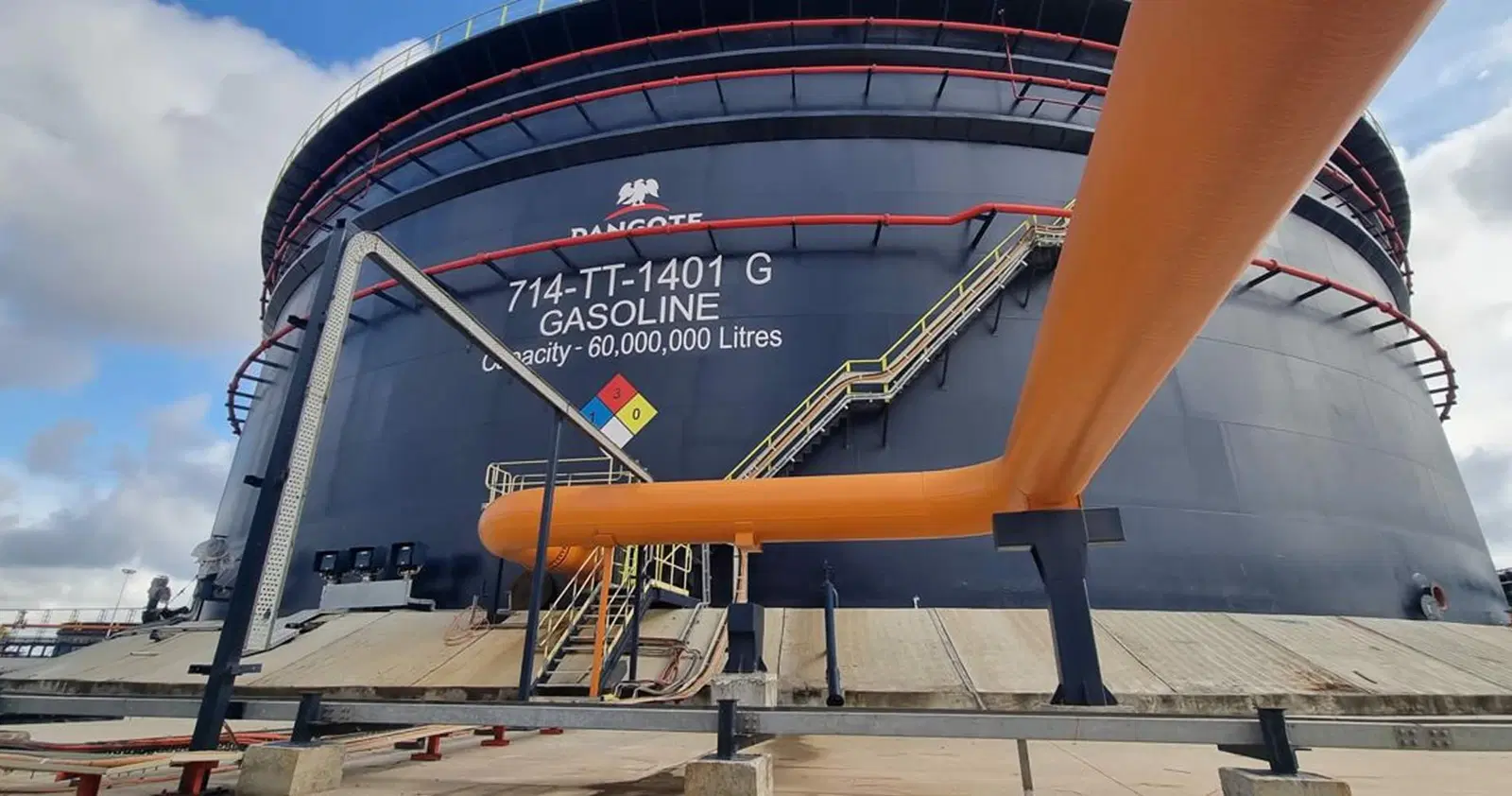
Hopes of improved local refining output and cheaper petroleum products at the Dangote Petroleum Refinery appear dim as a 62 per cent crude oil supply shortfall is threatening its continued operation.
The $20 billion, 700,000 barrels per day facility, which began operations in 2021, is facing a severe crude supply shortfall of eight cargoes per month.
To operate at optimal capacity, the refinery requires 13 cargoes (ships) of crude monthly as against five cargoes currently being supplied by NNPC.
A report by the African Energy Council (AEC) highlighted that the refinery is currently running at a third of its crude oil requirement.
The report lamented that the refinery running at a shortfall is not because the feedstock does not exist in Nigeria, but because the system supplying it has a vested interest in keeping the import window open.
AEC added that the decision of the Dangote Petroleum Refinery to file a suit against the Federal Government, NNPC and Downstream regulator is less a legal story and more of a governance issue.
“When your mandated crude supplier competes with you in the same market, a shortfall of eight deliveries per month stops being a logistics problem and starts looking like a structural one,”, the report noted.
It added that the Petroleum Industry Act(PIA) 2021 was supposed to settle this.
Specifically, the AEC noted that Section 317(9) served as an implicit agreement with private investors to refine locally, meet domestic demand, and operate in a context where import competition is effectively limited.
“That compact is now being tested in a Lagos courtroom and the outcome will say far more about Nigeria’s investment credibility than any roadshow ever could”.
The think-tank group pointed out that the real cost is not felt in Ibeju-Lekki but at the pump, at the CBN’s FX desk and in boardrooms across the continent watching to see whether Nigerian energy law means what it says.
AEC argues that Dangote’s crude dispute lays bare a governance failure that no court ruling can fully fix.
The body lamented that a state oil company acting as both supplier and competitor to the very refinery built to end Nigeria’s import embarrassment is a conflict of interest hiding in plain sight.
“Until NNPC’s commercial and regulatory roles are cleanly separated, the PIA remains a promise on paper, and Africa’s most ambitious private energy investment stays hostage to institutional self-interest,”, it noted.
The drop in crude supply to the Dangote refinery is further supported by latest data released by the Nigerian Midstream Downstream Petroleum Authority (NMDPRA) for the month of May.
Other News
The report indicated that crude oil deliveries to Dangote, including other local refineries declined during the review period. Refiners received an average of 578,000 barrels of crude oil per day in May, down from 612,000 barrels per day in April, representing a decrease of 5.6 per cent.
Industry observers pointed out that the development suggests that while local refining capacity continues to expand, refiners may still be facing operational and feedstock challenges that require supplementary imports to bridge supply gaps and maintain market stability.
Dangote Refinery had last month dragged the Attorney General of the Federation before the court in a fresh legal battle over fuel import licences granted to marketers and the Nigerian National Petroleum Company (NNPC), court documents have shown.
The latest suit signals renewed tension in Nigeria’s downstream oil sector, barely one year after the refinery withdrew an earlier case challenging similar import approvals issued to NNPC and some fuel traders.
In the fresh filing before the Federal High Court in Lagos, Dangote is asking the court to nullify import permits issued or renewed by the Nigerian Midstream and Downstream Petroleum Regulatory Authority (NMDPRA), insisting that the approvals violate an earlier court order directing parties to maintain the status quo.
However, regulators and petroleum marketers have consistently defended fuel imports, arguing that they remain necessary to guarantee adequate supply and forestall scarcity across the country.
Dangote, in the court documents, maintained that the fresh licences issued this month threaten its operations and run contrary to the law, which it said only permits fuel importation where local supply is insufficient.
The refinery had in July 2025 quietly discontinued its earlier suit without giving reasons, leaving unresolved concerns over market competition and fuel supply in one of Africa’s biggest petroleum markets.
The latest disagreement comes shortly after the NMDPRA granted import licences to six marketers to bring in 720,000 metric tonnes of Premium Motor Spirit (PMS), otherwise known as petrol.
According to the allocations, NIPCO is to import 120,000 metric tonnes; AA Rano, 150,000MT; Matrix, 150,000MT; Shafa, 120,000MT; Pinnacle, 120,000MT; while Bono will import 60,000MT, bringing the total approved volume to 720,000MT.
The approvals also came amid claims by the NMDPRA that Dangote Refinery currently supplies more than 90 per cent of Nigeria’s daily petrol consumption.
Vice President of Oil and Gas at Dangote Industries Limited (DIL), Mr. Devakumar Edwin, two years ago lamented that IOCs are intentionally obstructing the refinery’s efforts to procure local crude oil by inflating premium prices beyond market rates, thereby forcing Dangote to import crude from distant countries like the United States, leading to increased operational costs.
The company also criticised the NMDPRA) for indiscriminately issuing licenses to marketers to import substandard refined products. This practice has compelled the Dangote refinery to look abroad, recently exporting diesel and aviation fuel to Europe and other markets.
“The same industry players fought us for reducing the prices of diesel and aviation fuel,” Edwin remarked, “but our goal is to grow our economy.” He emphasized that the refinery adheres to international standards and strict environmental regulations, enabling it to export products globally.
Edwin noted that although the Federal Government issued 25 licenses to build refineries, Dangote was the only one to fulfill this promise. Since production commenced, over 3.5 billion liters, representing 90 per cent of the refinery’s output, have been exported. He urged the government and regulators to support the refinery to foster job creation and national prosperity.