Follow Us on Google
Nigeria’s oldest newspaper will mark a rare milestone tomorrow as the Daily Times of Nigeria (DTN) founded on June 1, 1926, clocks 100 years.
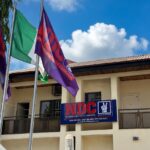
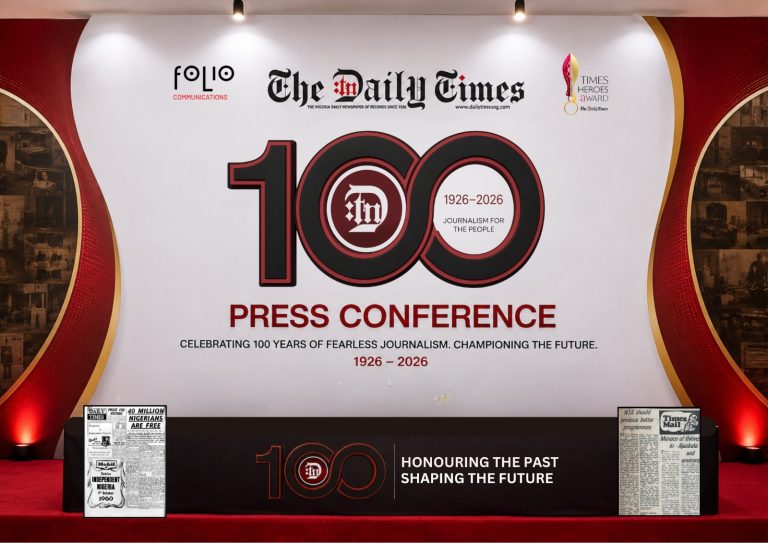
Marking the centenary celebrations, the Management of DTN will hold a press conference on today at the Nigeria Union of Journalists (NUJ) Secretariat in Utako, Abuja, with a theme, “Daily Times is 100 years, celebrating 100 years of fearless journalism, championing the future 1926-2026.”
The DTN management led by the publisher, Fidelis Anosike, will unveil a year-long calendar of activities, ranging from public lectures to exhibitions of archival front pages and a digital archive project to put 100 years of Daily Times editions online for researchers and the public.
The banner added, “100 years honouring the past, shaping the future. 1926-2026: practicing journalism for the people.”
It is instructive to note that Daily Times was started by Richard Barrow and Ernest Ikoli as a four-page daily in colonial Lagos. From that small start, it grew into the nation’s newspaper of record.
In the 1950s, Daily Times published nationalist voices and debates on self-rule. After independence in 1960, it reported every major turning point, ranging from the First and Second Republics to the 1966 coups, the Civil War, decades of military rule and the return to democracy in 1999.
At its peak in the 1970s and 80s, Daily Times had the largest circulation in West Africa. Its Kakawa Street building in Lagos became a landmark. For many families, it was the paper at the breakfast table, carrying election results, public notices and the stories that shaped public opinion.
It is important to note that the last 25 years have been turbulent. Ownership changes, economic downturns and digital disruption forced the print edition to scale down. But the brand survived. Today, the Daily Times publishes in print and online, still holding to its founding mission of journalism “for the people.”
Organizers said the Abuja event is not just about nostalgia; it is a statement of purpose.
“The centenary is about honouring the past, but more importantly, shaping the future,” a senior editor said. “We are 100 years old, but we are not a museum piece. We are championing the future of journalism in Nigeria, Africa and the global community.”
Other News
The NUJ secretariat was chosen to signal that the anniversary belongs to the entire profession. Expected guests include former Daily Times editors and reporters, media owners, journalism lecturers, students and press freedom advocates.
The phrase “fearless journalism” anchors how the paper wants to be remembered. It clashed with colonial authorities in the 1950s. During military rule, its editors faced detention for stories that held power to account. In the Fourth Republic, it continued investigative reporting despite shrinking advert revenues and online competition.
“Practising journalism for the people” is the second pillar. Editors said it means keeping readers at the centre, reporting on the government, but also on markets, clinics, schools and daily life.
“You can change the owners, you can change the format, but if you stop being for the people, you stop being Daily Times,” a veteran reporter who spent 30 years at the paper said.
The centenary comes as Nigerian media face hard realities. Advertising has moved online, audiences are mobile-first and disinformation spreads fast. Daily Times has had to rebuild its digital newsroom and retrain reporters for multimedia.
At today’s press conference, management will outline how it will “champion the future: Digital-first newsroom with data journalism; video and podcasts to reach younger readers; public digital archive of its 100-year collection for research and education; media literacy projects with schools and the NUJ to help Nigerians spot fake news; training fellowships for young reporters in investigative and solutions journalism.
“The world has changed since 1926,” the editor noted. “But the job has not. People still need reliable information to make decisions. That is what we have done for 100 years, and that is what we will do for the next 100 years.”
Anosike pointed out why 100 years matters, saying, “Centenaries are rare in African media. A few newspapers reach 100 years and fewer are still publishing. For Nigeria, Daily Times at 100 is a living archive. It carried headlines on independence, on July 29 and January 15, 1966, on June 12, 1993 and on May 29, 1999. It also recorded quieter stories: a new bridge, a market fire, a university admission list.
“Today’s event at the NUJ Secretariat will be brief, but the message is big. Daily Times is not just marking 100 years. It is asking what journalism is for.
As the banner says, “1926-2026, practising journalism for the people, for a newspaper that has outlasted colonialism, war and the internet, that mission may be why it is still here at 100.”