Follow Us on Google
•AON hails move
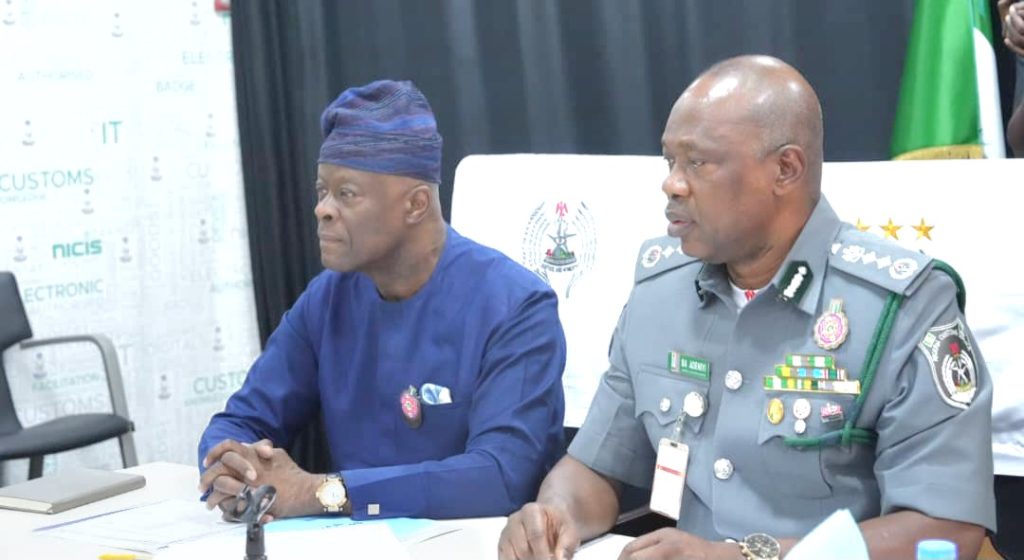
The Nigeria Customs Service (NCS) has confirmed receipt of a directive from the Federal Ministry of Finance to suspend the planned implementation of the 4% Free-on-Board (FOB) charge on imported goods. The Service expressed appreciation for the Ministry’s engagement, reiterating its commitment to supporting government fiscal policies while ensuring smooth operations across Nigeria’s borders.
This was contained in a statement by the Spokesperson, Abdullahi Maiwada.
Following the directive, the NCS has initiated consultations with the supervisory Ministry to explore alternative measures during the suspension period. “We are actively engaging the Ministry to ensure continuity of service delivery to all stakeholders while respecting the suspension,” a statement from the Service noted.
The NCS emphasized its optimism that ongoing discussions with the Federal Ministry of Finance, as well as other relevant stakeholders, will address concerns raised over the FOB charge. “We look forward to constructive engagement that will ultimately serve the best interests of the Federal Republic of Nigeria, enhance revenue generation, and support the nation’s economic growth objectives through efficient customs administration,” the statement added.
Addressing recent media reports suggesting that the 4% FOB was a new imposition, the NCS clarified that the provision is a statutory requirement established by the National Assembly under Section 18(1)(a) of the Nigeria Customs Service Act, 2023. The law mandates that the Service collect “not less than 4% of the free-on-board value of imports according to international best practices” as a funding mechanism for its operations. This framework, the Service explained, ensures compliance with international standards while providing sustainable funding for Customs’ operations.
Reassuring the public, licensed customs agents, and international trade partners, the NCS affirmed that its operations would continue without disruption. “Our commitment to delivering efficient service, upholding international best practices, and supporting Nigeria’s economic growth through effective revenue collection and enhanced trade facilitation remains unwavering,” the Service said.
Customs’ engagement with the Ministry of Finance reflects a broader effort to balance statutory obligations, fiscal policy priorities, and the realities of trade facilitation. By suspending the implementation of the 4% FOB and pursuing alternative approaches, the NCS seeks to maintain operational stability, protect the interests of stakeholders, and contribute to the nation’s economic development goals while ensuring transparent and accountable revenue collection.
Other News
Meanwhile, Airline Operators of Nigeria (AON) has commended President Bola Tinubu and the Minister of Finance and Coordinating Minister of the Economy, Wale Edun, for the suspension of the proposed 4% Free on Board (FoB) fee on imports.
In a statement released by its President, Abdulmunaf Sarina, and made accessible to Daily Sun on Tuesday, the suspension was described as a “clear demonstration of President Tinubu’s commitment to creating a business-friendly environment, protecting critical sectors of the economy, and promoting sustainable growth.”
It was earlier reported that the FOB fee has sparked outrage among manufacturers, importers, and customs agents, with claims that new levy would worsen inflation in the country.
Edun said in a statement on Monday that the fee, imposed by the Nigeria Customs Service, threatened trade facilitation, economic stability, and Nigeria’s business climate.
Edun noted that the suspension was in response to numerous concerns made by manufacturers, importers, and clearing agencies, who warned that the charge would worsen inflation, undermine trade competitiveness, and depress investment.
AON particularly lauded the Minister of Finance for what it called “exemplary leadership as a listening Minister,” noting that his responsiveness to stakeholder concerns reflects deep patriotism and a strong commitment to fairness, diligence, and national economic development.
The statement partly reads, “This bold and thoughtful intervention will go a long way in safeguarding the aviation sector, protecting jobs, reducing inflationary pressures, and ensuring that Nigeria remains competitive in the global business environment.”
The group underlined its willingness to work with the federal government to enhance the aviation industry while also promising support for the President’s broader economic plan.