Follow Us on Google
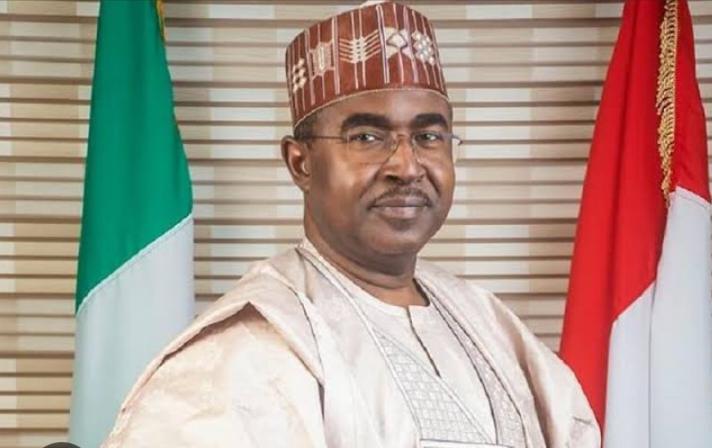
The war against illicit drugs has entered another decisive stage with the recent launch of the pilot scheme of the alternative development programme in three cannabis-growing communities in Ondo State by the chairman/Chief Executive Officer of the National Drug Law Enforcement Agency (NDLEA), Brig-Gen. Mohammed Buba Marwa (rtd). According to the NDLEA boss, the alternative development programme will curb illicit cannabis cultivation, uplift rural communities and strengthen national security.
Consequently, Marwa has called for a strong national response and sustained support for the alternative development programme, the first in Africa’s drug control imitative. The NDLEA is equally optimistic that the initiative will strengthen rural economies through value-chain development; reduce the burden on law enforcement and the justice system; promote peace and social cohesion in previously crime-prone areas; support national food production and agricultural diversification; improve Nigeria’s international standing in global drug control and development cooperation.
The NDLEA says that the alternative development will give illicit cannabis growers an alternative source of legitimate income through the growing of licit crops like cassava, maize, cowpeas, cocoa etc thereby achieving sustainable livelihoods and economic empowerment.
“This approach represents a win-win solution—for communities, for government, and for national security. The recent successful take off of the pilot scheme in Ilu Abo, Ifon, and Eleyewo in Ondo State clearly demonstrates that alternative development works when communities are engaged, supported, and empowered,” Marwa stated.
Instructively, the pilot project has been overwhelmingly accepted and supported by host communities, their traditional and community leaders. Apart from offering a dignified and lawful source of income for farmers, the alternative development helps in reducing poverty and vulnerability among rural households. It also helps to improve food security through the introduction of viable alternative crops.
The initiative will enhance community stability and safety because illicit drug cultivation often fuels criminal networks and insecurity. There is no doubt that replacing cannabis cultivation with sustainable agricultural and economic opportunities will tackle the root causes of drug production instead of treating the symptoms. Although this is a voluntary programme, the NDLEA should extend the scheme to other communities across the country affected by illicit drug cultivation and help them to build lawful, productive, and secure livelihoods. Later, it should be extended nationwide.
The NDLEA adopted the alternative development programme because of widespread illicit cannabis cultivation and use in the country. It is a model endorsed by the United Nations (UN) to solve the cannabis menace. It has also worked in many countries in Latin America, Southeast Asia and parts of Africa where high-value cash crops to climate-resilient staples have successfully replaced illicit crops. It has improved food security in several countries through targeted development programmes.
Other News
These countries include Colombia, Peru and Bolivia in Latin America, Afghanistan, Myanmar and Laos in Southeast Asia, Thailand, Indonesia and others. Good enough, Nigeria has joined the league as the first African country to create an alternative development unit to replace illicit cannabis production with legal cash crops. The successful alternative crops used in these countries include coffee, cocoa, oil palm, nuts, fruits, millet, sorghum, cassava, lentils and peas.
In fact, drug use in Nigeria is pervasive. The 2018 National Drug Use Survey, conducted by the National Bureau of Statistics with technical support from the United Nations Office on Drugs and Crime (UNODC), revealed that an estimated 14.4 per cent of Nigerians aged 15–64 years, or about 14.3 million people, reported using at least one psychoactive substance in the past year.
This figure is more than twice the global prevalence of drug use. Unfortunately, cannabis is at the centre of this crisis, dominating both patterns of consumption and the illicit cultivation landscape. It is also the most frequently used and widely available illicit drug in the country.
Over 10.6 million adults – more than one in every ten Nigerians in the prime of life – reported using cannabis in the past year, far outstripping the use of other drugs. The crop is widely cultivated and consumed in the country. For instance, a recent study of high-risk areas in the South-West region shows that nearly 8,900 hectares of land are under cannabis cultivation.
The foregoing has underscored the enormity of the illicit drug challenge in the country. Winning the war against the consumption of illicit drugs and substances requires all hands to be on deck. This is probably why Marwa called for a strong national response and sustained support for the alternative development programme recently initiated to curb illicit cannabis cultivation.
While acknowledging the support of the federal government and many global institutions and partners, including the United Nations Office on Drugs and Crime (UNODC); the International Institute of Tropical Agriculture (IITA), Global Partnership on Drug Policies and Development (GPDPD), Berlin, Germany; Mae Fah Luang Foundation under Royal Patronage (MFLF), Bangkok, Thailand and Ondo State Government; we call on other states to align with the alternative development programme.
Beyond this, the NDLEA should intensify the sensitization programmes on the dangers of illicit drugs trafficking and consumption in schools, motor parks, town halls and worship centres. We urge religious and community leaders to be part of these campaigns.