Follow Us on Google
Eight-year retirement policy for research professors bone of contention
By Sunday Ani
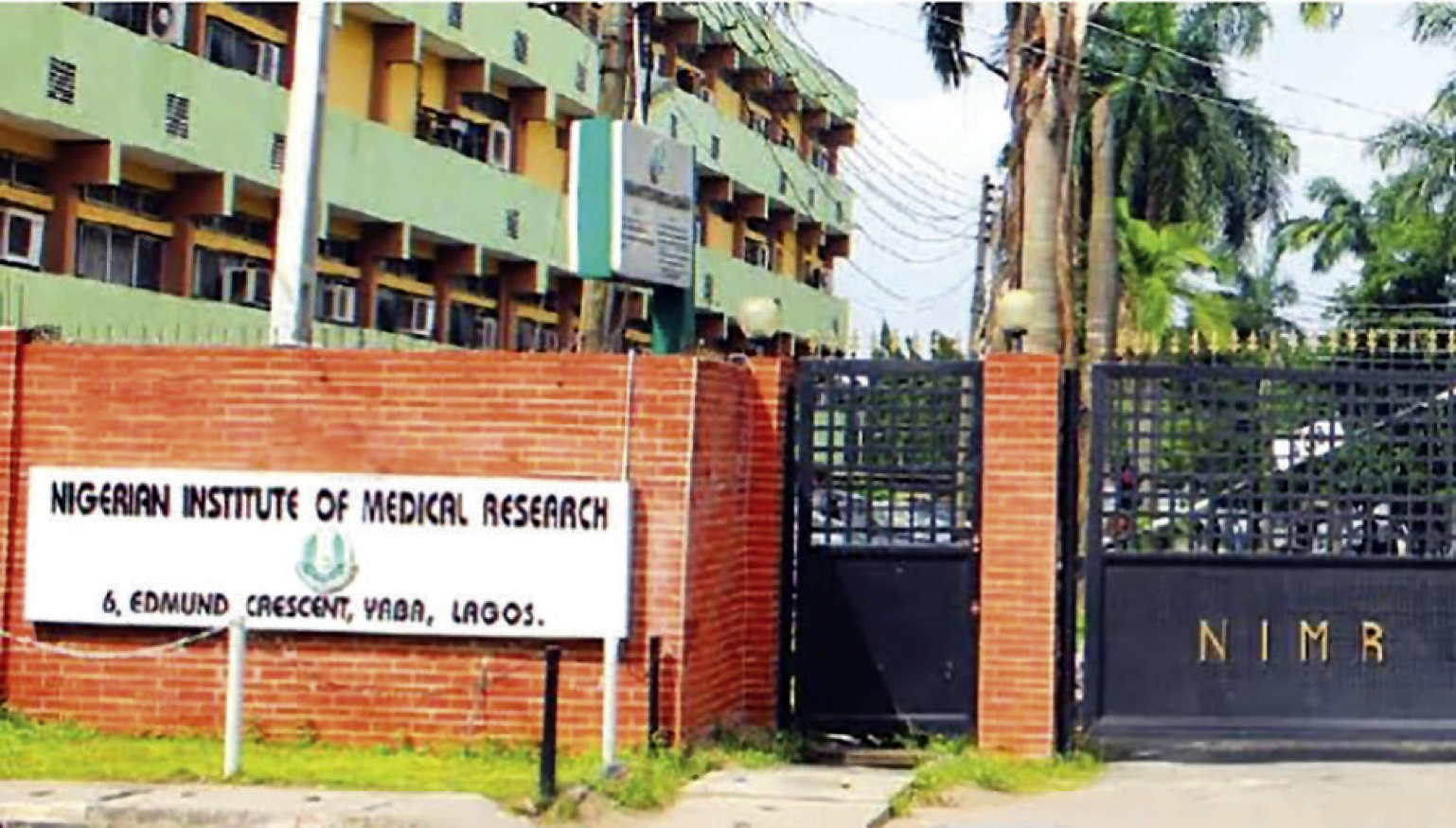
There seems to be a cold war raging between the Director General (DG) of the Nigerian Institute of Medical Research (NIMR), Yaba, Lagos, Professor John Obafunwa and the Academic/Research Professors on one hand and between the DG and the Academic Staff Union of Research Institutions (ASURI) on the other hand.
The DG appears to be locked in a titanic battle, following his insistence to implement a retirement policy that had been nullified by a pronouncement of the National Industrial Court, under Justice Olufunke Anuwe and a policy statement from the Head of the Civil Service of the Federation.

Professor Obafunwa had been accused of alleged highhandedness, total disregard for established law and an attempt to treat academic/research professors as mere civil servants.
Among the litany of accusations against him is his insistence on implementing the retirement policy. He is alleged to be among the DGs of a few research institutions in Nigeria, who are bent on implementing the Federal Government’s eight-year tenure policy for the federal public service, which mandates the compulsory retirement of directors at Grade Level 17 after eight years in that rank.
However, the Academic Staff Union of Research Institutions has argued that the policy does not apply to Chief Research Fellows or Research Professors in research institutions since they are treated as their counterparts in the universities. They insisted that such a policy was a threat to the research component of Nigeria’s national development and that the matter had been conclusively addressed, negotiated and resolved.
Genesis of the crisis
The National Secretary of ASURI, Prof Theophilus Ndubuaku, said the crisis started when a circular from the Head of Service earlier this year did not categorically exempt research professors as numerous previous memos in the past had done.
He said: “The Head of Service issued a circular last year; the same circular they have been issuing in the past but she did not issue the
one she normally issues exempting directors in the research institutions. We wrote to the Head of Service asking her to issue the exemption as usual so that people will know. But she has not replied to that letter for almost one year now.”
So, her failure to respond was what gave the NIMR DG the nerve to want to retire some research professors after serving eight years as directors; a development Ndubuaku said runs contrary to even the law establishing the research institute. He insisted that chief research fellows or research professors are legally entitled to the same number of years in service or retirement age as their counterparts in the university system.
To ensure that the Head of Service came clean on the memo, he said: “We now asked some ministries to ask the Head of Service if she had changed the policy. Some of them wrote but she did not reply. However, some other ministries said they didn’t need to hear from the Head of Service again because they already have the memos she wrote in the past, exempting research institutions and that they were going to work with those research institutions. They said if the Head of Service feels they have made any mistake, she should tell them when she changed the policy.”
However, following the confusion in the memo, a Grade Level 17 director in the University Education Department of the Federal Ministry of Education, Rakiya Iliyasu, approached the National Industrial Court to look at the matter and offer a definite and final clarification on it.
The Court, on Wednesday, July 10, struck down the policy requiring education directors to retire after serving eight years in office, insisting that teachers and education officers are entitled to remain in service until they attain 65 years of age or complete 40 years of pensionable service.
In her ruling, Justice Olufunke Anuwe, held that the circulars enforcing the eight-year tenure rule were inconsistent with the Harmonised Retirement Age for Teachers in Nigeria Act, 2022. She further declared that the circulars could not lawfully apply to teachers and education officers, who are protected by the 2022 Act.
“The eight-year tenure as director is not a retirement condition for teachers any longer,” Anuwe ruled.
The judge agreed that Section 3 of the Act exempts teachers from a Public Service Rule requiring retirement before the statutory age or years of service. The court found that the Act’s definition of a teacher expressly includes education officers, placing Iliyasu within the category protected by the legislation.
Justice Anuwe equally observed that the Office of the Head of the Civil Service of the Federation, in a 2025 correspondence, acknowledged that education officers covered by the Act were exempted from the eight-year retirement policy, making the government’s subsequent directive inconsistent with its earlier position.
The court, therefore, declared as illegal, null and void, the February 10, 2026 circular issued by the Head of the Civil Service of the Federation, alongside the February 24 and 26, 2026 circulars by the Federal Ministry of Education, as far as they applied to teachers and education officers.
The court also set aside the circulars and granted a perpetual injunction restraining the Federal Government and the Ministry of
Education from implementing the eight-year mandatory retirement policy against teachers and education officers in a manner inconsistent with the Harmonised Retirement Age for Teachers in Nigeria Act, 2022.
“A teacher or education officer, whether he or she got to the post of Director or not, is entitled to retire from service after attaining 65 years of age or 40 years of service,” Justice Anuwe held.
In the same vein, in 2014, Dr Soibi Dede took the National Office for Technology Acquisition and Promotion (NOTAP) to the National Industrial Court over the same issue.
In the ruling, the judge said: “I hold that the action of NOTAP in this case runs contrary to Section 254 C (l) (f) of the 1999 constitution of Nigeria as amended, which forbids unfairs labour practice as it is also against international best practice on labour.
“The claimant being a Director of Technology and Research at the National Office for Technology Acquisition and Promotion, an agency of the second defendant (NOTAP) is not affected by the eight-year tenure policy being a research academic staff and as such, he may continue in office until he attains the age of 65 years.
“The defendant (NOTAP) is hereby restrained from retiring the claimant (Dede) from the services and employment of the defendants.
“I direct NOTAP to withdraw all the retirement notices and restore to the claimant all his rights, benefits, emoluments, salaries and entitlements to his office as a director for NOTAP forthwith.”
However, in spite of the foregoing court pronouncement, some DG’s of research institutions, including that of NIMR, are still bent on implementing the policy; a development that led to a warning strike by the union in April.
The Union lamented that the FG’s eight-year tenure policy for Directors in the core civil service was being wrongly extended to Academic/Research Professors, who are covered by the 2022 Act.
Other News
The union argued that such a development was resulting in premature and forced retirement of highly specialised researchers and professors, disruption of ongoing research programmes, erosion of institutional memory and weakening of the country’s already fragile research ecosystem.
In a notice of an industrial action to the Ministry of Education, as well as Ministry of Labour and Productivity, the Union reminded them that, “The matter is not novel and had been conclusively resolved by the FG. At a conciliatory meeting on November 13, 2014, convened by the Ministry of Education and attended by the Head of Service of the Federation, it was agreed that Academic and Research Professors in Research Institutions are exempted from the eight-year tenure policy.”
ASURI also demanded the immediate suspension of all ongoing and proposed retirements under the eight-year tenure policy, formal reaffirmation of the exemption of Academic/Research Professors, full restoration of all affected officers where retirement had occurred, recognition and enforcement of retirement at 65 years, as well as urgent convening of a conciliation meeting under the auspices of the Federal Ministry of Labour and Productivity.
The Union warned that if those conditions were not met, it would proceed on a full-scale industrial action after the warning strike, arguing that the dispute transcends institutional concern as it represents a national emergency.
Following the agreement between the Union and the Government to meet the demands, the planned industrial action was shelved aside.
However, just when the Union felt that peace had returned and that all parties had accepted to abide by the law, a statement from NIMR emerged, directing research professors that have served for eight years as directors to hand over all government properties in their possession and vacate their offices and apartment by August 31, 2026.
Part of the statement, written on August 7 and titled, “Re: Disengagement from service – Notice to handover all government properties and vacate your office and apartment read: “I am directed to refer to our earlier communication with you in respect of your disengagement from service, effective December 31, 2026.
“The Institute noted that despite the letters written to you, no action on your part has been taken to hand over government’s properties in your possession, neither have you vacated your office nor your apartment. You have also not made any effort to pay the rent for the apartment you are occupying, which is the amount accruable to the institute for the maintenance of the facilities.
“Consequently, you are by this notice required to hand over all the government’s properties in your possession, including the office, as well as the apartment by August 31, 2026. “Please, note that if you fail to comply with the dateline, the Institute would be left with no option than to take all necessary steps to recover government properties in your possession. “Please, endeavour to treat this memo with all the courtesy and seriousness it deserves.”
ASURI vs NIMR DG
According to ASURI’s national secretary, Prof Ndubuaku, the union had earlier wanted to picket NIMR, following complaints from its staff about the DG’s conduct. He said a reconciliation meeting was convened by the labour ministry.
He stressed that all the issues were resolved except the eight-year tenure policy. He also noted that a director in the ministry advised the NIMR DG to wait till he gets a response from the Head of Service.
The DG was also advised to wait for the outcome of the matter in the court since the union was advised to go back to the industrial court.
“We dragged NIMR to the Ministry of Labour, not just because of the eight-year tenure policy; there were other things the man was doing which we didn’t like. We resolved every other issue except that of the tenure of research professors. But the tenure policy does not affect
NIMR alone. So, we were advised to take the matter up with the Head of Service. We were also advised to go back to the national industrial court, which had earlier adjudicated on the matter.
“The DG’s argument that after serving eight years as a director, one should retire even if the person has attained the position of a research professor or chief research fellow is going against several memos in the past. This is just like telling a university professor who was appointed as a director of students’ affairs or any other department to retire from service after serving in that capacity. No, that is wrong because the position of a director in the university, as well as in the research institutions is an appointment not a rank.
“So, after serving as a director, you should go back to your normal duty as long as you have not exceeded the age of 65 years or 40 years in service. That is what the NIMR DG has refused to understand,” he said.
He condemned the NIMR DG’s action, saying: “MOU was signed on July 20.
On that date the Permanent Secretary reminded DG NIMR of the inappropriateness of ejecting the Research Professors while the dispute on tenure policy was still outstanding. But on August 7, he still sent them a letter of ejection.”
With the latest development, ASURI has concluded plans to return to the trenches, particularly with NIMR.
“By this position,” the Union argued, “The NIMR DG has shown that he has no respect for the court and even the Office of the Head of the Civil Service of the Federation, both of which had at different times, exempted
Academic/Research Professors from the eight-year tenure policy. Why is he insisting on going ahead with a policy that the court had declared illegal, null and void and placed a perpetual injunction restraining the government or anybody from bringing it up again? It appears he is now fighting a personal war and no longer protecting the institution he oversees.”
ASURI’s next move
According to Professor Ndubuaku, the Union is going back to the National Industrial Court as the Ministry of Labour directed because they started the reconciliation. “We have written a letter to the Ministry of Health and if the NIMR DG does not want to be cautious, we will lock down NIMR on August 31.”
He described Professor Obafunwa’s action as an act of wickedness because even if the research professors were legally retired, they should be given some time to collect their gratuities before vacating their residence.
“But to just throw them out as he is trying to do is the height of wickedness. Researchers live within the Institute because of the nature of their work. I am a retired researcher and I was once the chairman of the housing committee in the research institute where I worked.
“The practice is that when a researcher retires, we allow the person some time to collect his or her gratuities and pensions to enable the person to build a house. Researchers hardly build a house during their years in service; they put all their earnings into research and they don’t collect kickbacks from anywhere. It is not a job that you get kickback; it is a job that you put in your own money. Even the university system does that; so you don’t just kick people out of their apartments without giving them time to even collect their gratuities,” he said.
He lamented that instead of celebrating the research professors for dedicating all their lives to the service of the country, they are being humiliated in this manner. “To attain the position of a Chief Research Fellow or Research Professor, you must go the extra mile unlike your university counterpart. You put in your personal resources to do research that will benefit humanity. Most of them sacrifice all their life’s earnings and savings for research just for the good of the country and humanity. And after all these rigorous processes to attain that position, Professor Obafunwa wants to equate them to those in the civil service, thereby elevating the university professors above those in the research institute. That’s wrong because even the Head of the Civil Service of the Federation had written several memos to the effect that Research Professors should be treated as their counterparts in the university. And we will not accept that.
“So, why is the NIMR DG in a hurry to implement a memo that is yet to be clarified if he is not out to victimise the staff involved? If it is not wickedness, why is he in a hurry to throw away research professors in the streets of Lagos when their case is still in court? In labour matters, once negotiation starts, it becomes a judicial process and the judicial process which started from the Ministry of Labour can go on to the Court of Appeal. So, the best he can do is to wait until he gets the judgment. “He has also not received a formal letter from the Head of the Civil Service of the Federation and the court is yet to clarify its position and he is in a hurry to throw these people out of their residence. I believe it is no longer about official process; he is fighting a personal war but we will not allow that. We will lock down NIMR on August 31, while we wait for a response from the Head of Service and the national industrial court’s final decision on the matter,” he submitted.
When contacted, the DG, Prof Obafunwa said: “At this point in time, there are no issues, I can tell you that. Everybody is at work, so there are no issues. You might want to go and read Saturday Vanguard of August 22, page 26, where a rejoinder was published. That will give you the answers to all the questions you might have for me. There was a rejoinder in Saturday Vanguard, page 26.”
When our correspondent insisted that he should respond to at least the issue about the notice of ejection to some Academic/Research Professors in NIMR, he cut in saying, “Sir, you will find the answers in Saturday Vanguard. I am a very humble guy and very polite. That’s why I am answering this question here. If you check Saturday Vanguard, page 26, you will see answers to all your questions.”
When asked if the views expressed in the said Saturday Vanguard could be taken as his own expressions, he said yes.