Follow Us on Google
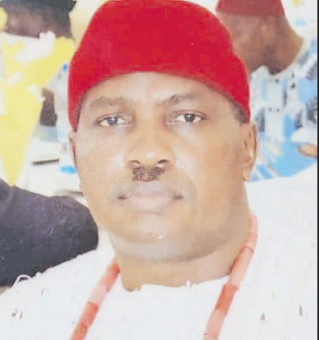
The Media and Publicity Director of the Anioma State Creation Technical Committee, Chief Tonnie Oganah, has warned that traditional rulers opposing the creation of Anioma State risk sabotaging long-term development and opportunities for their people.
Oganah noted that the agitation has gained momentum, reaching its most advanced legislative stage in the National Assembly. He insisted that decades of advocacy are finally nearing realisation, despite prevailing political tensions and clashing interests.
Cautioning against internal resistance, Oganah stated that opposition from certain royal fathers could undermine a “historic opportunity” for economic growth, political inclusion, and identity restoration.
“The Anioma State creation has passed critical stages in the National Assembly. We are closer than ever before,” he said, noting that the bill currently awaits its third reading before harmonisation by both chambers. He credited Senate President, Godswill Akpabio, and the National Assembly leadership for facilitating the progress. Oganah said the final legislative hurdle will lead to a referendum conducted by the Independent National Electoral Commission (INEC). He clarified that the process is not a scramble for political offices, but a determination of collective aspiration.
“Voters will be asked a simple question: ‘Do you want Anioma State? Yes or No,’” he said, stressing that the outcome rests with the people.
Other News
Oganah also defended the bill’s sponsor, Senator Ned Nwoko, describing his efforts as a continuation of a 70-year struggle. He argued that much of the current opposition is fueled by national political alignments rather than the merits of the proposal.
“The senator has inherited many political battles beyond his control because of his alignment with the President,” Oganah remarked, adding that Nigeria’s political climate remains highly fluid.
Addressing concerns over sustainability, Oganah argued that Anioma already possesses the requisite infrastructure to function as a state. He cited the airport, courts, schools, and administrative facilities in Asaba and surrounding areas as evidence.
Beyond economics, Oganah maintained that the agitation is rooted in identity. He asserted that while the Anioma people are culturally Igbo, they remain politically marginalised within Delta State. He noted that the demand for a state dates back over 70 years to early nationalist figures.
In a direct appeal to the traditional institution, Oganah urged stakeholders to support the process. He argued that creating Anioma State would help correct structural imbalances in the federation by bringing the number of states in the Southeast geopolitical zone to six, aligning it with other regions. He expressed confidence that, should the referendum succeed, the dream of Anioma State could be realised within the current generation.