Follow Us on Google

Juliana Taiwo-Obalonye, Abuja
President Muhammadu Buhari has said his administration’s wisdom in promoting self-sufficiency averted food crisis over the last four months as the world went under lockdown due to the outbreak of COVID-19.
Buhari stated this, yesterday, at the National Food Security Council meeting in Abuja.
He lauded farmers for contributing to the stability in food security, saying the favourable rainy seasons should serve as enough encouragement for majority of citizens to take up farming.
A statement by the president’s media aide, Femi Adesina, quoted him as saying there was need to increase food production and self-sufficiency even as he assured that Federal Government would continue to promote policies that favour investments in the agricultural sector.
“The coronavirus pandemic has illustrated more than any event in recent history how countries must strive harder to protect food systems. It has also exposed the limits of dependency on other countries. In the last five years, we have recorded notable achievements. Despite the decline in GDP by 6.1 per cent in Q2 of 2020 as a direct result of coronavirus, the agricultural sector continued to grow because of government targeted policies. I am pleased to note that most Nigerians are taking advantage of the opportunities in the agriculture and agric-business sector. I want to assure you that this government will continue to support these initiatives and many more to come,” he said.
He also said efforts would be channeled to innovative ways of farming to guarantee maximum output.
“To protect agricultural investments and boost confidence to our farmers, we have deployed thousands of agro-rangers and integrated rural communities to the formal economy by extending access to credit and inputs to rural farmers and building feeder roads. We have invested in building our strategic grain reserves in recent years which we recently released significant quantities to cushion the adverse impact of the COVID-19 pandemic to vulnerable households and industries,” he said.
Kebbi Governor, who is also the Vice Chairman of the Council, Governor Atiku Bagudu, said details of the level of destruction were still being compiled.
He said the impact of the floods were massive not just on agriculture but on lives.
“The quantification is being done because it’s a very diligent exercise by the National Emergency Management Agency, in conjunction with State Emergency Management Agency and that activity is currently taking place to ensure that we appreciate the record and support, as much as possible, all those who have been affected.
“Beyond the expression of condolences and sympathy, the report is being awaited, which will be incorporated in the written presentation to Mr President. However, it has all been acknowledged by Mr President in particular and others that the scale of flooding is massive.
“The water levels are still rising, the River Niger, as per the report sent by Niger Republic, the country has never witnessed this level of water since they have ever known the river. Similar stories are coming about other river and dams”, he said.
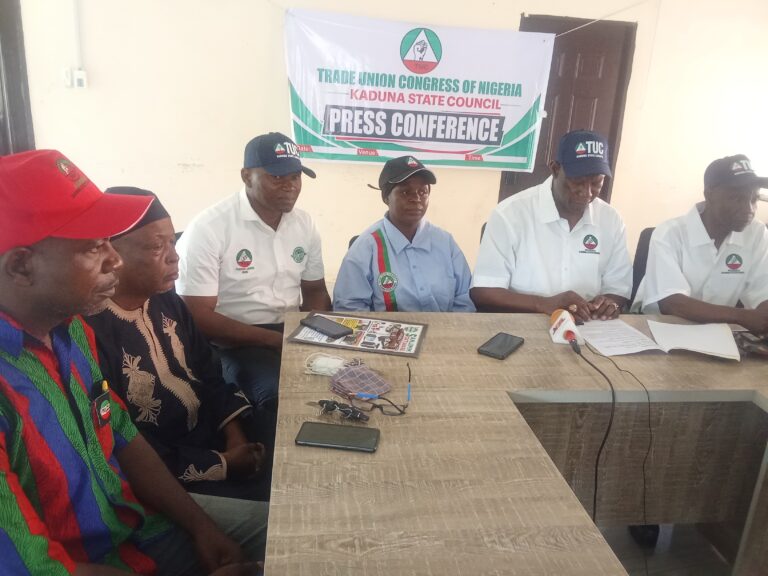
Meanwhile, the 225 Wards of Rice Farmers Association of Kebbi have appealed to the federal and state governments, as well as the Central Bank of Nigeria (CBN) to suspend the anchor borrower’s loan repayment until 2022.
Chairman of the association, Alhaji Shehu Abubakar-Zaki, made the appeal in Birnin Kebbi when he briefed newsmen on the devastating effect of flood to farmlands across the state.
He said farmers, especially rice farmers, have lost all their planted crops to the flood, and could not, in any way, sustain the repayment of the loans.
Abubakar-Zaki said farmers were committed to the repayment, adding that almost all the farmers had reduced the bulk of their loan after the dry season harvest.
“In spite of the COVID-19 pandemic, almost all our members redeemed a part of their loan and utilised the remnant for the rainy season farming.
“Our intention was to complete the repayment after this year’s harvest but God has done what He so wished, the flood ensued and the resultant effect was destructive upon our crops.
“We don’t even have farmlands to plant now and all our farmlands have been submerged. Where can we get money to repay the loan.”
Abubakar-Zaki also called on governments to further assist the farmers with agricultural inputs in order to ensure massive dry season farming when the water receded.
“We are, therefore, appealing to the federal, state governments and CBN as well as the Bank of Agriculture (BoA) to suspend the anchor borrower’s loan repayment and collection until 2021 to 2022 when the farmers are back on their feet and can pay,” the chairman added.