Follow Us on Google
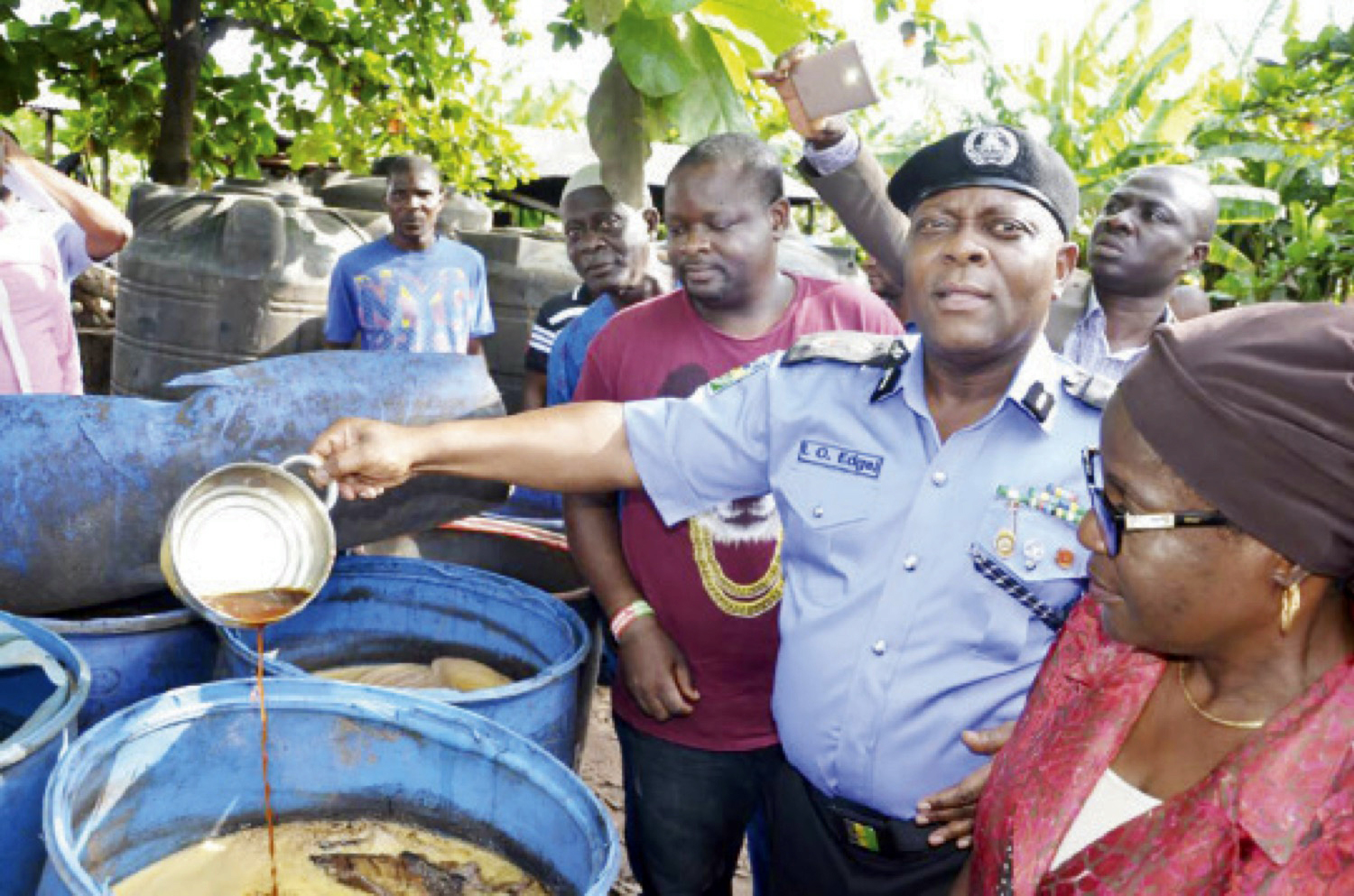
• NAFDAC, SON, MAN, others battle traders
• Health experts warn of looming dangers
By Ngozi Nwoke
In the highly-populated markets of Lagos, a deadly trade thrives. Counterfeit and expired products compete for space with genuine ones in the markets, posing grave health risks to unsuspecting consumers and undermining legitimate businesses.
From tinned foods to drinks, cosmetics, untreated packaged water to beverages, fake goods are everywhere.
These products are often manufactured in unauthorised factories and sold through informal and illegal channels.
The National Agency for Food and Drug Administration and Control (NAFDAC) has been battling this menace, but the counterfeiters seem to be always one step ahead.
Recent busts by NAFDAC include the seizure of large quantities of fake cosmetics, beverages, and food products in Lagos and Abuja.
In one operation, NAFDAC agents seized over 10,000 cartons of counterfeit skin care products worth millions of naira. In another, they destroyed over 50,000 bottles of fake beverages.
The agency also issued a public alert, warning healthcare providers, caregivers, and the general public about the circulation of counterfeit and unregistered Cerelac Mixed Fruits and Wheat products in Lagos markets.

According to a statement released by the agency, Nestle Nigeria Plc, the genuine marketing authorisation holder for Cerelac Mixed Fruits and Wheat, received a complaint about the sale and distribution of the suspected counterfeit products, purportedly manufactured by Nestlé Spain.
The counterfeit products, bearing Batch Code 308002910, were found to have emitted an odour suggestive of possible contact with petrol, and preliminary investigations revealed that the products had expired despite the display of an expiry date of October 2026, indicating possible tampering with the date coding.
According to NAFDAC, a surveillance visit was later carried out at Maxland Shopping Centre at Ago Palace Way, Okota, Lagos, where the products were purchased by the complainant. The suspected counterfeit baby foods were subsequently seized by the agency.
During the investigation, Nestle Nigeria assisted NAFDAC in identifying the distinguishing features of the original product.
NAFDAC also sealed off the Cemetery Market in Aba, Abia State. It is the second time in two years that the agency shut down the market, which has been identified as a major hub for trading in substandard alcoholic and non-alcoholic beverages.
NAFDAC Director-General, Prof. Mojisola Adeyeye said the operation was the most aggressive in the market’s history, resulting in the confiscation of fake food and beverages worth over ₦5 billion.
The raid, carried out by a combined team of NAFDAC officials, the Nigerian military, the Department of State Services (DSS), and the Nigeria Police, revealed over 240 shops where counterfeit beverages were being produced in extremely unhygienic conditions.
The shops were found using water from unsanitary sources, harmful chemicals, and recycled packaging materials to produce fake versions of well-known brands such as Seaman Schnapps, Hennessy, Carlo Rossi, Smirnoff, and Fanta.
The operation also uncovered three major warehouses stocked with expired Hollandia Yoghurt intended for revalidation.
Other News
NAFDAC said the operation resulted in the seizure of additional fake goods valued at ₦5 billion, adding that it destroyed over 1,500 cartons of counterfeit products worth ₦750 million in street value in 2023.
When the reporter visited the Lagos Trade Fair complex in Ojo, Bukola Ojo, a cosmetics trader said: “I’m very particular about the products I sell. I only source from reputable brands and authorised distributors. I can’t risk my business and reputation by selling fake products. I’ve built a loyal customer base over the years, and I won’t jeopardise that for anything.”
But Bertrand Udoh, a beverage trader, was more candid about his business practices.
“I sell both original and low quality products so that my customers can have options. They want cheap products, and don’t bother about the quality. I only ensure that the products are registered with NAFDAC and their expiry dates are still far away. The government should do something about the prices of raw materials and taxes. Maybe then other traders can sell original products at affordable prices.”
These traders’ responses highlight the complex issue of fake products in Nigeria, with some prioritising their reputation and customers’ safety.
Responding to consumers’ inquisition about the health risks of consuming counterfeit products, Ifeoma Abassah, Managing Director of Alpha Nursing Senior Care Centre, warns: “Fake products can cause serious health problems, including food poisoning, skin irritation, and even cancer. Consumers need to be vigilant and always check the authenticity of products before buying.”
Abassah emphasised that the risks are particularly high for vulnerable populations like children, pregnant women, and the elderly, whose immune systems may be compromised.
According to the health expert, the consequences of using counterfeit products can be devastating.
“We have seen cases of severe skin reactions, respiratory problems, and even organ damage due to toxic substances in fake cosmetics and food products,” she says.
She advises consumers to always check for NAFDAC registration numbers, inspect packaging for signs of tampering, and buy from reputable sources to minimise the risk of falling victim to counterfeit products.
Sunday Sun also found out that some stores and supermarkets sell expired products, including snacks, fruit juice, and cosmetics, among others, despite the risks to public health.
It was also discovered that some supermarkets display goods that have overstayed their shelf lives. There are also cases where some products have had their packaging and labels tampered with.
Happiness Kemuel, a Lagos resident, recounted her experience after consuming an expired pack of chocolate biscuits purchased from a popular supermarket around Costain.
She bought a pack of biscuits from a nearby supermarket. She had snacked on some of the biscuits before checking the expiry date, only to discover that it expired a month earlier.
“I was so careless and carried away. I just grabbed the pack and put it in my bag without checking the expiry date. I had eaten about three from the pack before I got home and decided to check the packaging.”
The fake, expired, and substandard products trade is a multi-billion naira business in Nigeria, and it’s not going away anytime soon. Consumers say that with increased awareness and cooperation from the public, NAFDAC and other agencies can combat this menace and protect Nigerian consumers.
“Counterfeit products are a scourge on our society,” says NAFDAC Director-General, Adeyeye.
“They are not only illegal, but they also pose serious health risks to consumers. We have been working tirelessly to combat this menace, but we need the cooperation of the public.”
As Adeyeye says, “We need to work together to protect our people and our economy. Counterfeit products are a threat to us all. The NAFDAC has been using various strategies to combat counterfeiting, including public awareness campaigns, market surveillance, and collaboration with other law enforcement agencies. The agency has also been working with manufacturers to help them protect their brands and products.”
Similarly, the Manufacturers Association of Nigeria (MAN) reacted with concern over the rise of fake and substandard products in the Nigerian market.
The association views fake, counterfeit, and substandard products as a severe threat to the real sector, causing industrial losses, endangering consumers, and hindering economic growth.
Director General of the association, Segun Ajayi-Kadir, disclosed that the association is strongly resolute in fighting product adulteration and advocates for strict penalties for perpetrators, noting the key positions of MAN regarding fake products.
He said: “We have noted emphatically that faking and counterfeiting diminish legitimate manufacturing efforts, drive down profitability, and create unemployment.
“We have raised alarms on the high rate of product adulteration, highlighting that it undermines local initiatives and dumps substandard goods into the Nigerian market. The association partners with agencies like SON, NAFDAC, and the Nigeria Customs Service (NCS) to identify, track, and destroy counterfeit items.
“MAN promotes compliance with the Nigeria Industrial Standard (NIS) to ensure locally produced goods are high quality, helping to protect consumers and boost confidence. MAN is highly active in promoting the credibility of its members’ products through regular collaborations and support for government regulatory bodies.”