Follow Us on Google
By Henry Akubuiro
Before the Anglo-Aro War in 1901-1902, Arochukwu was the most formidable Igbo kingdom, whose legacy stretched across the length and breadth of Igboland and adjacent locales in Nigeria and beyond. Till this day, Igbo history and culture is incomplete without mentioning Arochukwu and the Aro Confederacy and what it represented in the past and contemporary evolution of modern Igboland.
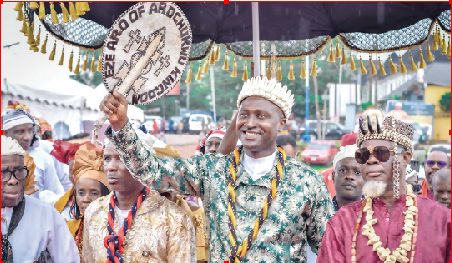
Under the leadership of Eze Eberechi Oji, the new monarch has been dauntless in positioning the ancient kingdom as a haven of peace, tourism and culture. Recently, Arochukwu Okeigbo in Abia State witnessed a potpourri of social activities to mark the first coronation anniversary of the 9th Eze Aro. The four-day event, which was held from July 24–27, 2025, was themed “Aro Renaissance: Consolidating Gains and Charting New Frontiers for Aro Kingdom Unity, Peace, and Development.” It attracted personalities from all walks of life, who had converged in honour of the trailblazing leader, who combines royalty, intellect with foresight.
The celebration kicked off with an interdenominational crusade at Aggrey Primary School Field, Ibom, Arochukwu. A sermon entitled “Let There Be Light” was presented by Pastor Amass Ezekiel, who urged the people to embrace peace and spiritual renewal. In his address, the king affirmed that Arochukwu was under divine mercy and light, a precursor to the unity and developmental agenda of his reign. There was also a medical outreach, which provided free healthcare services to over a thousand residents, offering diagnosis, medications, and eyeglasses, especially benefiting women, children, and the elderly.
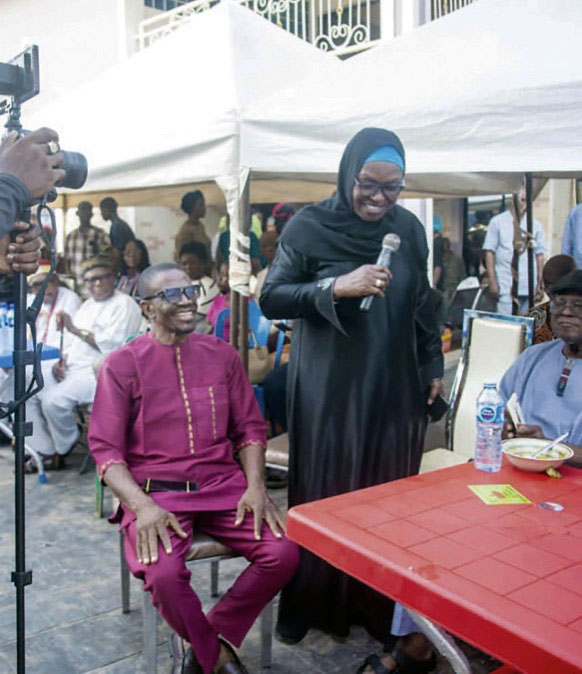
The second day of the celebration began at the Civic Centre, Oror, venue of the All-Aro National Conference — a gathering of Aros from Nigeria and abroad. The intellectual gathering had papers presented by experts on cultural revival, tourism, political engagement, and conflict resolution. The speakers included Mazi Sam Ohuabunwa, Prof. Joseph Nwankwo, and Dr. Kanu Ohuche, who harped on shared heritage, the need for increased political participation, and leveraging Aro tourism and dialect preservation as economic drivers. It climaxed with a dinner, where Dr. Eze Oji inaugurated four Development Committees focused on harnessing human capital and addressing key community challenges.
The peak of the festivities was on July 26 when dignitaries from all over Nigeria, including traditional rulers and public figures, trooped to Arochukwu. Breathtaking cultural displays made it a day to remember. Eze Oji reaffirmed his commitment to progressive leadership. He announced the forthcoming launch of the Aro Kingdom Sovereign Wealth Fund and outlined plans to invest in agriculture, tourism, and economic ventures to position Arochukwu as a South-East regional powerhouse.
Besides, the monarch, through his Royal Care Empowerment Foundation (ROCARE), declared sustained support for the less privileged in healthcare, education, and economic empowerment. Among the highlights of his reign, according to him, had been the reformation of the community’s justice system, the strengthening grassroots conflict resolution and promoting peace.
The celebration was rounded off with a Sunday thanksgiving service at the Redeemed Christian Church of God, Amannagwu Arochukwu, where the monarch doubles as pastor. He expressed gratitude for divine guidance, and reflected on the spiritual and cultural significance of his one-year reign. He said categorically: “Light has come, and peace has returned to Arochukwu.”
The plaudits in the church was an indication that he was stating the obvious. Discussions on the lips of most Aros thereafter was that the anniversary wasn’t a garden variety celebration by a monarch out to fan his ego but a resonance of communal pride, faith in today and hope for a better tomorrow under the leadership of Eze Oji, whose brief leadership credentials spoke volumes of vision, love and enterprise. If the monarch has made unity a singsong in Arochukwu and enlisted its heritage to be among the front burners of cultural and developmental discourse in Nigeria in a year, what do we expect in the next few years?