Follow Us on Google

From Godwin Tsa, Abuja
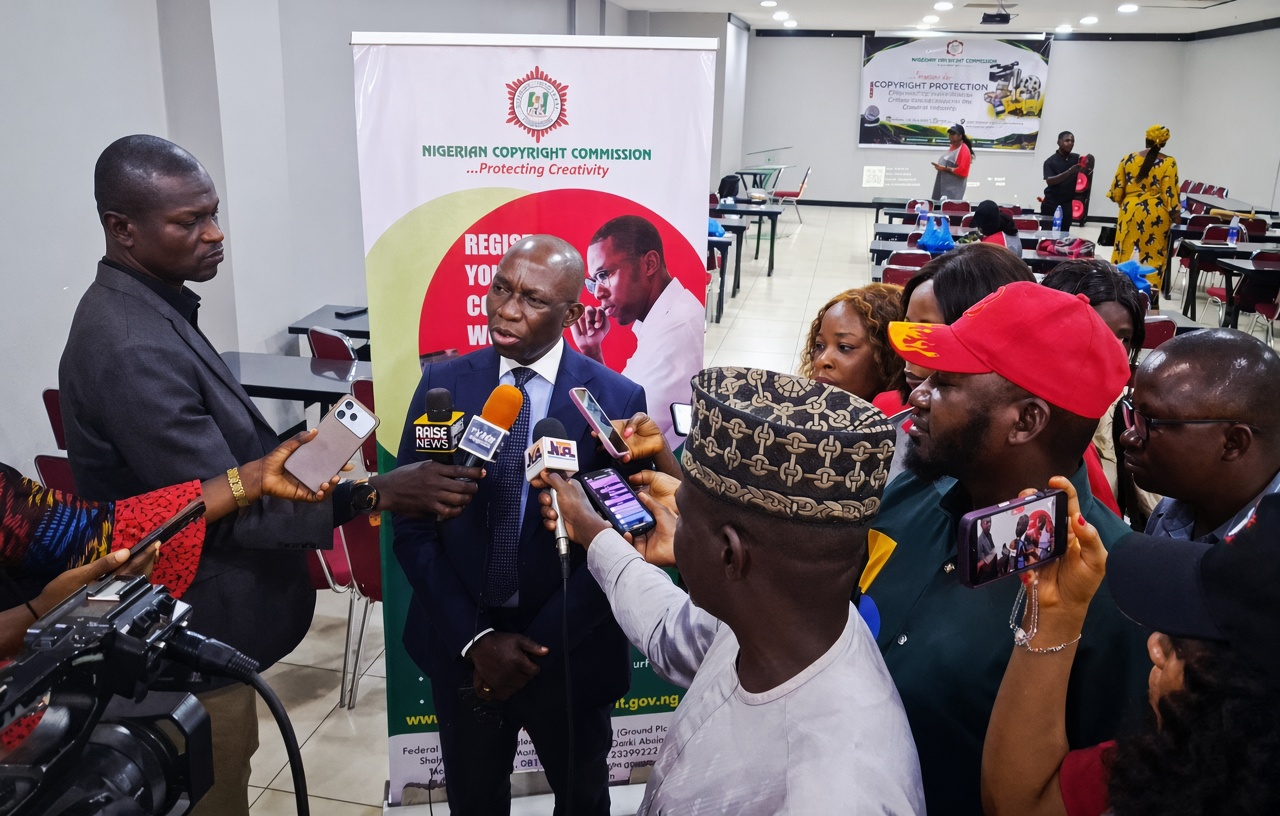
The Director-General of the Nigerian Copyright Commission (NCC), Dr John Asein, has called for a copyright system that puts creators first, warning that a booming creative industry means little if the people behind the works still live and die in poverty.
Asein spoke in Abuja at the second Annual Copyright Seminar for Journalists, themed “Copyright Protection: Empowering Journalists as Critical Stakeholders in the Creative Industry.”
“A successful creative industry is not necessarily the same as a prosperous community of creators,” he said.
“It doesn’t matter how much the creative industry is generating; if the person who is creating goes to bed hungry or dies poor, then the system has not adequately taken care of all the stakeholders.”
The NCC boss said the real cost of piracy to Nigeria was far higher than the figures usually quoted.
“When people say that Nigeria is losing billions, I think we are even underestimating and underrating the loss that is taking place in the creative industry,” he said, citing the example of well-known figures in the movie industry who die in want, and asking what the work of the late Chinua Achebe would be worth.
He urged journalists to look beyond reporting arrests and court proceedings, describing them as creators, copyright owners and users of protected works whose coverage shapes public attitudes toward intellectual property.
On artificial intelligence, Asein acknowledged its potential to boost productivity but said it must operate within a framework that respects human authorship, licensing, attribution and payment.
“Our policy position is clear: Artificial intelligence must serve human creativity, not make human creators economically irrelevant,” he said.
He outlined five priority areas: putting creators first, keeping human creativity at the heart of technology, turning creativity into jobs and wealth, making piracy unprofitable, and strengthening journalism as a force for positive change.
To preserve the value of creative works beyond an author’s lifetime, Asein called for better royalty administration, transparent contracts, effective collective management, proper rights documentation and succession planning.
He also called for frameworks that would let creators use their copyright assets to raise financing without losing their rights.
Other News
He urged media houses to ensure they had proper authorisation, and not merely attribution, when using protected works.
Asein reaffirmed the commission’s commitment to intelligence-led, technology-driven operations against physical and digital piracy.
He pointed to recent action against book piracy, ongoing prosecutions for online infringement, and the work of the commission’s Special Taskforce Against Online Piracy (STOP) Unit.
He also asked the media to support the implementation of the Abuja Copyright Action Plan, which emerged from the September 2026 National Seminar on Copyright, Cybersecurity and Nigeria’s Creative and Digital Economy.
He added that selection was ongoing for the 2026 Moses Ekpo Prize for Innovative Copyright Reporting.
In her presentation at the event, the NCC’s Director of Public Affairs, Mrs Ijeoma Egbunike, described piracy as a “hydra-headed monster that destroys and kills creative works.”
She urged journalists to use their platforms, editorials and special reports to educate the public that copyright infringement, particularly online, was a serious criminal offence.
Three papers were presented at the seminar. Mr Caleb Daniels, Assistant Director at the Nigerian Copyright Academy, spoke on “The Nigerian Copyright Commission: Its Law and Mandates.” Mr Mike O. Akpan, Principal Partner at Alpha Edge Legal, IP and Corporate Consultants, examined copyright challenges arising from social media, online publishing, AI and content sharing in “Copyright in the Digital Age: What Journalists Need to Know.”
Egbunike presented the third paper, a guide to reporting the creative sector and the commission’s activities, stressing accuracy, balance, correct legal terminology and attribution.
Participants commended the NCC for sustaining the seminar since its inception last year and pledged to act as stakeholders and public enlightenment drivers.
Top NCC management staff were at the event, including the Director of Operations, Mr Femi Ajala; the Director of Regulatory and Compliance, Mrs Folashade Sheba; and the Head of Legal, Mrs Gladys Isaac-Ojo.