Follow Us on Google
•Scarcity of product, hike in prices force many households to resort to charcoal, firewood
By Seye Ojo (Ibadan), Tony John, (Port Harcourt), Fred Ezeh (Abuja), Scholastica Hir (Makurdi), Timothy Olanrewaju (Maiduguri), Kehinde Aderemi (Lagos), Aloysius Attah (Onitsha), and Noah Ebije (Kaduna)
Many households across the country have gone through harrowing experiences in the last two weeks as a result of scarcity of cooking gas and hike in the price of the product.
The three-day strike embarked upon by the Petroleum and Natural Gas Senior Staff Association of Nigeria (PENGASSAN), began on September 29, 2025, and was suspended on October 1, 2025, after the Federal Government intervened and brokered an agreement between the trade union and Dangote Refinery.
The strike resulted in a disruption in the supply chain of cooking gas in most parts of the country.
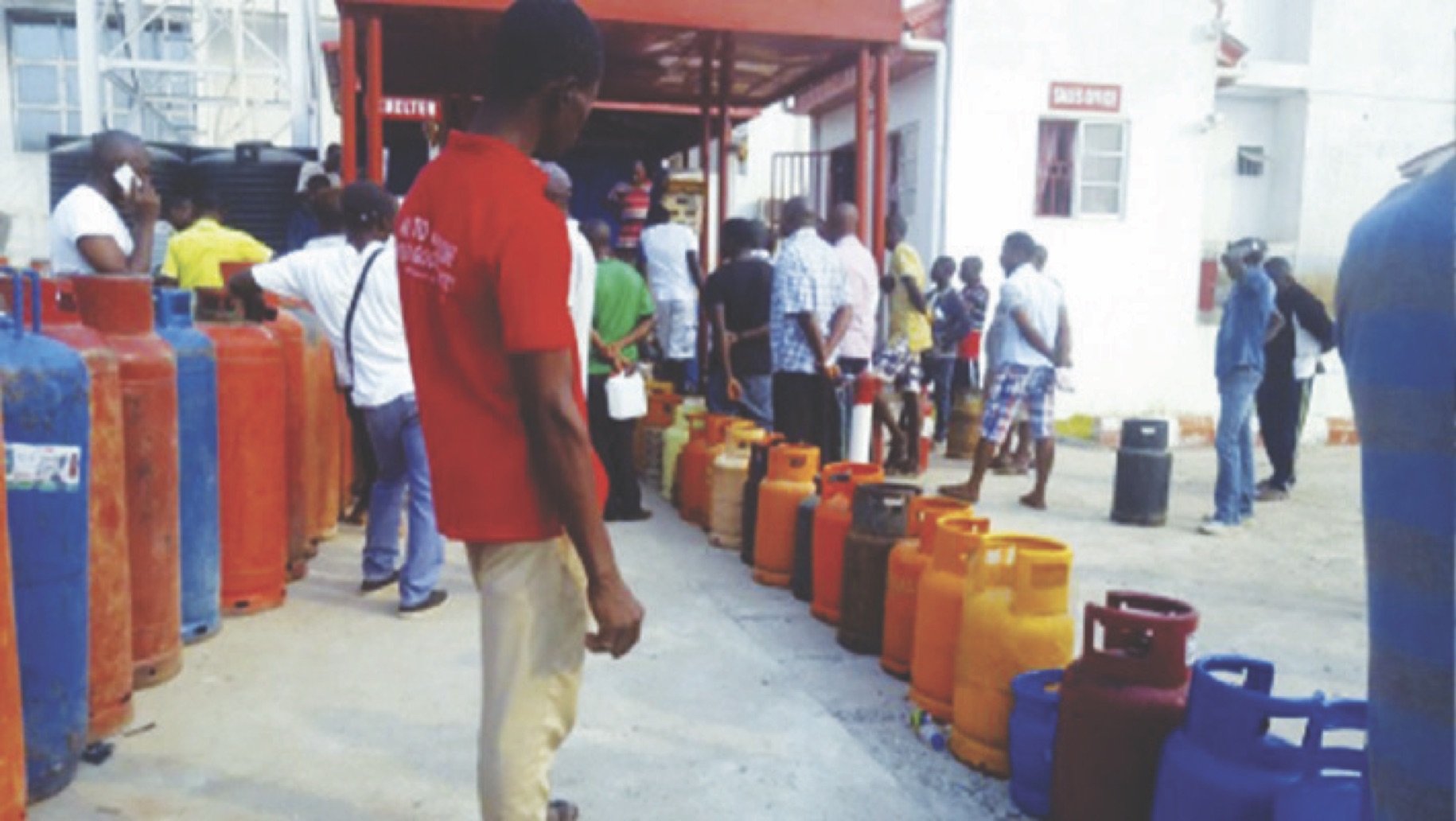
It also resulted in long queues at gas plants and filling stations, with some retailers selling at inflated prices due to artificial scarcity or short supply.
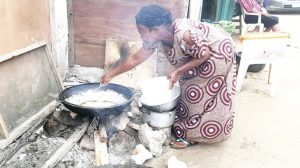
Many Nigerians resorted to using primitive and harmful methods for their cooking.
Lagos
In the Ikorodu part of Lagos and beyond, consumers and retailers expressed concerns over the scarcity and hike in price. Mrs Abosede Olayinka, a resident of Ogijo, a popular community in Sagamu Local Government Area of Ogun State, said the product was not available in many of the filling stations in the area.
According to her, gas sold for N1, 900 per kilo, as against N1, 050 that it was sold previously.
“One of the major distributors in our area where gas was available had a long queue of consumers. It was sold for N1, 900 and it was sold in small portions of 3kg each. That means you cannot buy more than 3kg at a time,” she lamented.
Moshood Olaoluwa, a retailer in Adamo, Ikorodu, told the reporter that the reason for the increase in the prices of gas was the scarcity, which also affected the volume of business he did.
“Our suppliers said the product was scarce and they could not buy it. The prices went up suddenly from N1, 300 to between N2, 000 and N2, 200. That’s how we sell it now per kilo.
“As retailers, we used to fill the 50kg cylinder at N41, 000, but due to this scarcity we now buy it for between N75, 000 and N80, 000. The difference is much, and we don’t know how to sell it to our customers.
“There’s no way we can make profit with that increase. As a small business owner, I have many cylinders that I used to refill, but I was able to fill one 50kg because of the price and it is affecting us. We also feel the pain because our sales have dropped drastically. Even those that used to fill between 3kg and 6kg now buy 1kg, and I understand their pains because it is all about the increase in the prices of gas,” he explained.
Mrs Khadeejat Adeoye, a fashion designer in Adamo, Ikorodu, Lagos expressed worry over the sharp increase. She said the product was not available in her area, which prompted her to travel a long distance to look for the product.
“There was a long queue at a filling station but I had to join the queue to get it. I got it at N1, 300 at the station as against the N2, 000 that it was sold in my area.”
Abuja
Residents of the Federal Capital Territory (FCT) are feeling the effect of the scarcity of cooking gas used by millions of homes in Nigeria. Users of the product now spend several hours on the queue to get the product, and sadly, at a rate far above what it used to be before the PENGASSAN strike.
As of Wednesday morning at NIPCO gas station at Jikwoyi, Abuja, customers had to spend a minimum of 40 minutes to be able to get the product. The situation was worse the previous days.
Sadiya Musa, a resident of the city, said he arrived at the gas station as early as 8 a.m. and met a long line-up of gas cylinders beyond the entrance gate of the station.
“When I came here, I looked at the meter, and it read N1, 080 per kg. The cashier used POS to collect money from us in order to fast track the process.
“Suddenly, he received a call and immediately notified us that he had just been instructed to change the price of the product to N1, 120 per kg and that he should reflect the change immediately.
“That resulted in a disagreement and chaos, leading to the suspension of sales. We were eventually forced to pay the differential before we could buy the product.”
Similarly, at Shore Gas station, Jikwoyi, Abuja, the cost of the product was slightly higher but with less queue and struggle to get it. A customer who gave his name as Gerald stated that he bought the product at N1, 300 per kg, which was a little above what he used to spend while buying the product.
He said: “I came from Kurudu to buy this product. I used to buy from a smaller retailer close to my estate, but he didn’t have the product for days now. As I was going out the previous day, I saw a long queue and customers scrambling at NIPCO gas station, and AA Rano gas station at Nyanya then I knew that something was wrong.”
The manager of the station said: “We have limited supplies of the products for some days now, and that’s why we have this surge. We are lucky to have the product because of our brand and strong connection. Many gas stations within Nyanya, Karu, and Jikwoyi up to Orozo, and Karshi don’t have the products, and that’s why the price keeps going up.
“This morning (Wednesday), we started selling the product at N1, 080, but a few minutes ago, we received a call from our suppliers that the product has increased in price. We had no option but to effect the price change immediately. Otherwise, we would be responsible for the gap.”
Meanwhile, at Shore Gas station, one of the attendants, Jesse, said the outlet had limited supply in the past few weeks, noting that it was the reason for the high cost of the product.
“The price of our product is higher, N1, 300 per kg, and that’s because our product is higher in quality and our regular customers know, and they have been consistent in patronage.”
Rivers
People living in Rivers State are lamenting the rising prices of cooking gas. They said the prices are soaring on a daily basis, making life difficult for the poor.
Some of these people, who this medium has witnessed, buy as low as two kg of gas at depots or selling points along the streets.
The current hike in cooking gas prices across Nigeria has been attributed to temporary supply disruptions and market exploitation by some operators.
According to the Nigerian Association of Liquefied Petroleum Gas Marketers (NALPGAM), the surge in price is as a result of temporary maintenance at Dangote Refinery.
A staff of a popular gas depot in Port Harcourt, who craved to remain anonymous, said the temporary maintenance slowed down truck loading, creating a shortfall in distribution.
The source added that even the recent strike by members of the Petroleum and Natural Gas Senior Staff Association of Nigeria (PENGASSAN), disrupted vessel discharges and inspections, leading to a nationwide shortage.
The source, who claimed to be a member of the association, said some marketers took advantage of the supply gaps to inflate prices artificially.
As a result of these issues, the price of cooking gas in Rivers State now ranges from ₦1,300 to ₦1,500 per kg, with a 12.5kg cylinder costing between ₦13,250 and ₦15,000.
Investigation revealed that the Sungas Depot along Macoba Road in Port Harcourt metropolis is N1, 300 per kg. A fortnight ago, the company sold gas for less than that amount.
Retail outlets in residential areas currently sell for between N1, 500 and N1, 650 per kg depending on the locations.
A pump attendant at the depot told the reporter that with the high demand, the price will further increase in a matter of days.
“It gives us concern to see children with small cylinders coming to buy gas. We can’t tell them to go back, especially if they enter the premises before we close the gate by 6pm.
“All the customers, who are inside here, no matter their number would be attended to before we close for the day. We work tirelessly to attend to all the customers. But, we thank God we’re not experiencing it again.”
According to Mr. Chukwuma Okparaeke, a retail gas dealer, the price hike has affected his business.
Other News
However, some sources indicate that the price can go as high as ₦18,000 for a 12.5kg cylinder.
Anambra
In Anambra State, the strike did not affect the distribution of gas in Onitsha and environs as the price remained stable at N1, 100 per kg at gas stations owned by major dealers. However, checks by our reporter revealed that retailers who buy from them resold at prices ranging from N1, 250 to N1, 300.
In Awka, the state capital, the product sold for N1, 300, but no scarcity was reported and no queues at the filling stations.
A filling station manager in Onitsha, Onyeka Nzewi said an artificial scarcity was created within the initial period of the strike because some marketers were apprehensive that they may run out of stock if the strike persisted. But the situation was brought under control because many depots didn’t exhaust their stock before the strike was called off. Nzewi disclosed that most marketers of the products in Onitsha source their products at various depots in Delta State but sometimes owing to demand and supply issues, they source from Port Harcourt in Rivers State.
Another station manager in Awka, Chidi Ndukwe said the product prices vary in Awka because of logistics issues. He noted that they incur extra costs on transportation of the products.
Borno
As a result of the unprecedented hike in the price of cooking gas across the country, some residents of Borno State opted for charcoal for cooking.
“We can’t afford to refill our gas cylinder because of the high price. Things are not easy, the cost of living is too high and life is becoming difficult every day,” Mohamad Saleh, a middle class worker, told the reporter in Maiduguri.
Checks show that consumers pay between N3,700 and N7,800 to refill 3kg and 6kg cylinders for cooking gas in Maiduguri instead of the initial N3,400 and N6,500 at gas stations.
Khali Mustapha, a retailer, said he currently sells at N1, 350 per kg, as against N1,200 he sold last month. He complained that demand for the product has reduced as many now opted for other sources, including firewood for cooking.
He called on the Federal Government to subsidise the cost of cooking gas and electricity to ease the impact of the economic hardship and high cost of living in the country.
“A bag of charcoal which costs N8,500 can take five weeks for a family of six but 6kg of gas can’t last more than two and half weeks for the same household,” Isaac Abu, a resident and businessman, said. But while the Borno State government has been encouraging citizens to embrace alternative sources of energy supply, it frowns at tree felling, which is the major source of charcoal production.
Kaduna
In Kaduna State, prices of cooking gas vary from one filling station to another.
As at the time of filing this report, the prices ranged from N1, 200 to N1, 400 per kg in various stations visited.
A manager in one of the filing stations, who gave his name as Mallam Abu, told the reporter: “The cooking gas prices have been unstable; low and high because of supply disruptions and market exploitation as of this October 2025, and I believe the PENGASSAN strike is the reason for this. But in my station here, we are selling at N1, 300 per kg as against N1, 100 per kg we sold a few weeks ago.”
Mrs Asabe Johnson expressed her experience in buying the cooking gas. Her words: “My challenge in buying cooking gas in the area I stay is that I have to transport to and from the filling station, which is an additional cost to the new price of N1, 300, and sometimes it is N1, 400 per kg as against N1, 050 per kg. And by the time I add N1, 000 transport fare, I would have spent N1, 500 on cooking gas.
Another resident, Madam Ladi Sarki said, “The cooking gas I bought about two weeks ago at N1, 150 per kg is now N1, 350 per kg. I don’t think I can cope. I have told my husband that we need to substitute it with charcoal from time to time because after almost one month, the gas is finished. But if we can alternate with charcoal, the gas can last us two months. I hope that the government will intervene to bring down this high price.”
Benue
In Makurdi, Benue State capital, the price of cooking gas has remained relatively stable. Some of the gas station operators who spoke to our correspondent said they have not gone to buy gas since the PENGASSAN began their labour dispute with Dangote Refinery and the subsequent strike.
The operators said they were still selling the products they purchased before the strike began.
A gas station operator, who gave his name as Chima Nwankwo said his station had only increased the price by N50.
“We were selling at N1, 150 but now we are selling N1, 200 but there is no scarcity in Benue. We buy gas from Lagos or Delta State but we haven’t gone for purchase since the strike began.”
Another dealer, Frederick Aondohemba, confirmed the claim. He said: “It was just a little addition. We were selling gas at N1, 150 per kg about two weeks ago but we just added N50 and we are now selling at N1, 200 for one kg. Most users say they are not experiencing any challenge buying gas in the state. “We are only worried that generally, the price of gas and other commodities have risen under this government.
“We are no longer bothering too much, what we are doing these days is using gas for small cooking and using charcoal and firewood for heavy and weekend cooking. We have learnt to manage what the Nigerian economy throws at us and we will come out victorious,” Mrs Felicia Iorhemba said.
Another resident, Vande Acka said his wife also does not cook strong food items on gas.
“We have learned to know what we cook on gas and what we shouldn’t. We buy gas, charcoal, and firewood. Most times we only use gas to warm food to enable it to last for some time. But any other serious cooking is done with firewood or charcoal.”
Mrs Diaka Hembadoon told our correspondent that she has a 50kg gas cylinder in her house. “Once I buy it, it takes me for a year because I buy charcoal and firewood for major cooking. Since the prices of goods have learnt to fly without perching, we have also learnt to shoot without missing.”
Meanwhile, some students in the state are lamenting the high price of gas. Vanessa Akor, a student of Benue State University now Rev Fr Moses Orshio Adasu University, Makurdi said even if the addition is one naira, it weighs so much on their pockets.
She said, “My friends and I have been buying gas. The 5k we used to fill for about N3, 500 to N4, 000, we can hardly fill it with N5,000 these days and it also doesn’t last.”
On her part, Mrs Dooshima Terver said she sends her children to buy gas for a certain amount. “These days, if I have N5,000 or N7,000, I will simply send them to buy for that amount based on what she can afford. I have stopped asking questions about how much a kg is. I want to avoid annoyance and the BP that comes with the incessant price increase in this country.”
Oyo
A market survey in Ibadan, the Oyo State capital, on the hike in the price of cooking gas and scarcity of the product showed that there is a slight increase in the selling price of the commodity in some parts of the city.
Enquiries made at Bovas Gas Stations revealed that as at Thursday October 9, a kilo of gas sold for N1, 070 across the company’s outlets in Ibadan. One of the managers of the stations told our reporter that prior to the strike embarked on by PENGASSAN, the company sold the product for N970 per kg.
“We took delivery of gas after the strike, which we sold for N1, 070. The company is the one fixing the price based on distance. But in the whole of Ibadan, we sell at a uniform price. If a gas station sells beyond N1, 070 per kg, the manager of that station can be sacked.”
Mrs Aduke Afolabi, who sells akara and bread by the roadside at Mokola, Ibadan, also narrated her experience.
She said: “I use cooking gas to fry akara. Before the strike, I used to buy one kilo for N950 at the gas plant at Sabo. But during the strike, the price went to N1, 100. In some other big places, it was sold for N1, 200 per kg.
“But many of the people that sell gas from cylinder to cylinder by the roadsides did not have gas for a long time. The few of them that had the product have been selling for N1, 400 per kg.
“I am a trader. I sell akara to people based on the cost of making it so that I can make profits,” she told the newspaper.
A teacher in one of the secondary schools in Ibadan, who did not want her name mentioned, said: “The scarcity and price hike forced me to resort to unsafe cooking alternatives like charcoal and firewood, which can be harmful to the health.
“I returned from school in the evening one day. I was not even aware that PENGASSAN started their strike that day. All the small gas stations in my Yawiri area in Akobo did not open. I tried but I could not get gas that evening.
“So, I remembered that I have a coal pot at home. On my way home, I bought
charcoal, which we used to cook till I was able to get gas. Eventually, I think it was last Thursday, I got 12.5kilos for N12,500”