Follow Us on Google
From Ndubuisi Orji, Abuja
When the National Assembly resumes plenary this week, one of the key issues on its agenda would be the conclusion of the alterations of the 1999 Constitution (amended), which it started two years ago. The National Assembly Joint Panel on Constitution Review, recently approved 44 proposals for consideration in the final stage of the constitution review exercise.
The 44 proposals cover 13 thematic areas, including Electoral Reforms, Judicial Reforms, Legislature, Inclusive Governance, Security and Policing, Devolution of Powers and Strengthening of Institutions. Others are Traditional Institutions, Fiscal Reforms, Citizenship and Indigeneship, Fundamental Human Rights, Local Government Reform and Creation of States and Local Government Areas.
However, a few of the bills stand out because of their significance. The outstanding bills include the state police bill, the local government autonomy bill, the women’s reserved seats bill, as well as the proposals for the termination of governorship election petitions. The proposals, if passed, Daily Sun’s findings show, would substantially alter the governance architecture in the country. Regardless, the question is: how far can the parliament go with the governance reform bills?
State police
The state police bill is seeking a decentralisation of policing through the alteration of the constitution.
For state police, the Joint Committee approved the alteration of Sections 84, 124, 158, 197,201,214,215,216 of the 1999 Constitution (as amended) to create a framework for the establishment of state police. The creation of state police, which shall be headed by a Chief of Police, to be appointed by a state governor, is one of the proposals that enjoys the support of both the Presidency and governors.
Proponents of state police, including President Bola Tinubu, have repeatedly argued that state police has become imperative as a result of the increasing security challenges confronting the country. President Tinubu, while addressing senators at a recent function at the State House, Abuja, noted that state police has become imperative to address evolving security challenges in the country.
According to him, “We are facing terrorism, banditry and insurgency. But we will never fail to make a right response to this cause. What I will ask for tonight is for you (Senators) to start thinking of how best to amend the Constitution to incorporate the state police for us to secure our country, take over our forests from marauders and free our children from fear.”
Nonetheless, there is the fear of abuse of state police by governors. Critics say there is a likelihood of the governors using the state police to intimidate their political opponents. Those who share this sentiment are quick to point to the mismanagement of State Independent Electoral Commissions (SIECs). Since 2002, most of the local government elections conducted by the SIECs have often ended as a coronation exercise for candidates of ruling party in the different states across the country. Therefore, critics fear that the state chief executives may extend their chokehold on the local government system to the state police, if established. This is in addition to fears about funding.
Local government reforms
Also, the House approved for second reading a bill seeking to alter Section 7 of the Constitution so as to grant political autonomy to local government areas and insulate them from the control of states. The proposed legislation is seeking to make the local government a tier government that can only be administered by elected officials, thereby making the use of caretaker committees in the administration of local government areas in the country illegal.
According to the proposal “The system of local government by democratically elected local government councils is under this Constitution guaranteed and caretaker committee is prohibited; and, accordingly, the government of every State shall, subject to section 8 of this Constitution and an Act of the National Assembly, ensure their existence under a Law, which provides for their administrative framework.”
The proposal for local government reforms also included alteration of Section 212 of the 1999 Constitution (as amended) to provide for four-year tenure for local government chairmen, vice chairmen and councillors in the country. Currently, the tenure of elected council officials is determined by the respective state House of Assembly.
Other News
Reserved seats bill
The reserved seats bill is seeking the alteration of Sections 2,3,42,48,49,71,77 and 117 to create a framework for the establishment of special seats for women in the National and state Houses of Assembly. Specifically, the reserved seats bill is seeking the creation of six Senate seats, to be drawn from the six geo-political zones, 37 House of Representatives seats, from the 36 states and the Federal Capital Territory (FCT), as well as three state assembly seats per senatorial zone to be reserved exclusively for women, so as to address the abysmal low number of women in the national and state assemblies.
This is not the first time the reserved seats bill is coming up in the parliament. In the 9th Assembly, the proposed legislation was one the proposals for the alteration of the Constitution. However, it was rejected, leading to protests by women groups.
Ahead of voting in the ongoing review exercise, women’s groups as well as other supporters of the Reserved Seats Bill have stepped up their advocacy for its passage to increase female representation in the legislature at the federal and state levels.
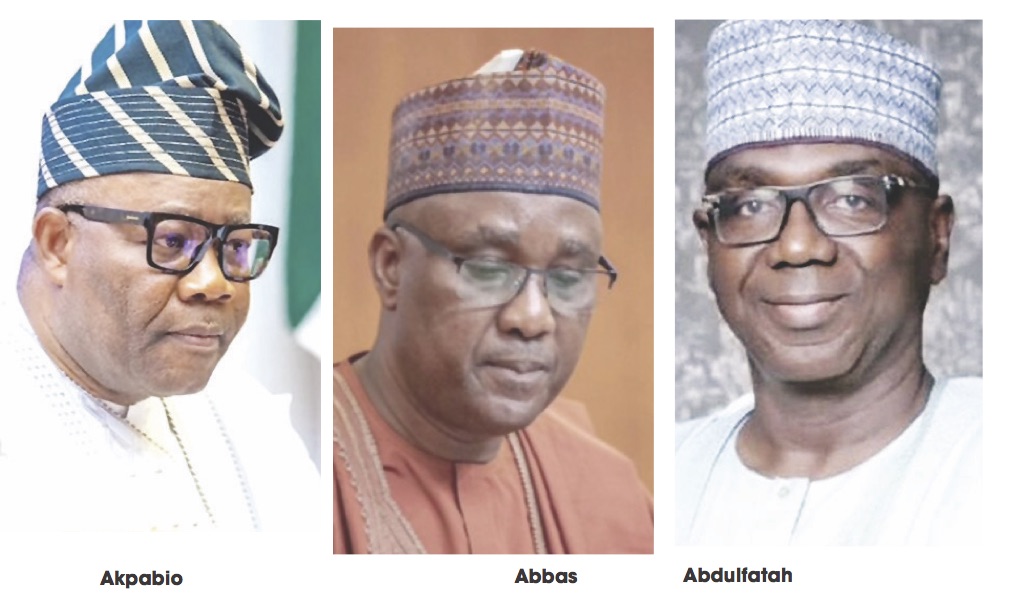
Luckily for the proponents, both the Speaker of the House of Representatives, Tajudeen Abbas and the deputy speaker, Benjamin Kalu, have repeatedly assured all that the proposed legislation will be passed in the current Constitution review exercise.
Termination of gubernatorial disputes at Court of Appeal
Another key proposal is the termination of gubernatorial election disputes at the Court of Appeal. Currently, disputes arising from governorship polls end at the Supreme Court. The proposal, which seeks to alter Section 239 of the 1999 Constitution (as amended) is proposing that the Court of Appeal shall have exclusive jurisdiction over issues relating to the election and tenure of the governor and deputy governor, while exclusive jurisdiction over disputes arising from a presidential election, as well as issues relating to the tenure of the president and vice president shall be vested on the apex court.
The proposed legislation states that “(1) Subject to the provisions of this Constitution, the Court of Appeal shall, to the exclusion of any other court of law in Nigeria, have original jurisdiction to hear and determine any question as to whether a) any person has been validly elected to the office of Governor or Deputy Governor under this constitution; (b) the terms of office of the Governor or Deputy governor has ceased; or (c) the office of Governor or Deputy Governor has become vacant; and (b) by inserting after subsection (2), a new subsection “(2A)” “(2A) In every Governorship election petition, the Court of Appeal shall deliver its judgement in writing within 60 days of filing the suit.
Determination of all election petitions before the assumption of office
The bill also provides for the determination of all pre- and post-election disputes before the winners of the election are sworn in. The proposed legislation, which is seeking the alteration of Section 285 of the 1999 Constitution (as amended) to provide for the determination of all appeals from the decision of an election tribunal or court within 60 days, against 180 days provided for in the extant law.
The proposed amendment also states that “all pre-election and post-election matters shall be heard and determined before the winners of the election take oath of office.”
Last line
The critical question is: how far can the National Assembly go in pushing these proposals through? Pundits say the proposals, as beautiful as they might appear, may not appeal to the states. While there is seemingly a consensus between the legislature and states on the creation of state police, the same cannot be said of the other bills. For instance, the governors may not want to give up total control of the local governments and may equally be opposed to the termination of gubernatorial disputes at the Court of Appeal. And, given the influence of governors on state assemblies and the role of state legislatures in the constitution review process, it is obvious that the National Assembly would need to do more work to get the reform bills to become law.