Follow Us on Google
…Nigeria needs constitution that strengthens democracy – Kalu
From Ndubuisi Orji, Abuja
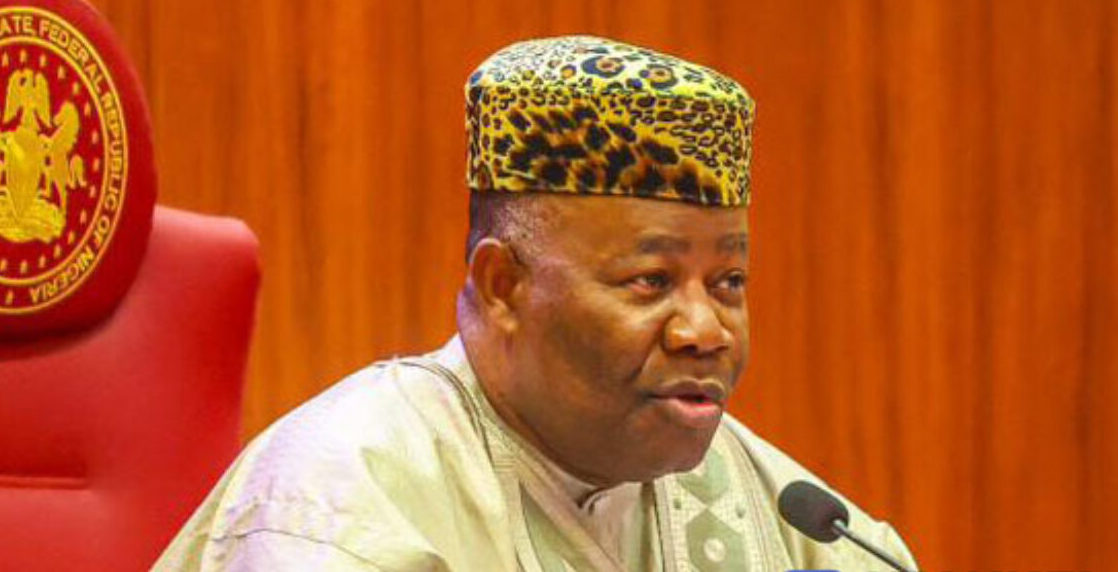
Senate President, Godswill Akpabio, has stressed the need to restore citizens’ confidence in public institutions.
He stated this, yesterday, at a consultative session organised by the House of Representatives Committee on Constitution Review for political parties.
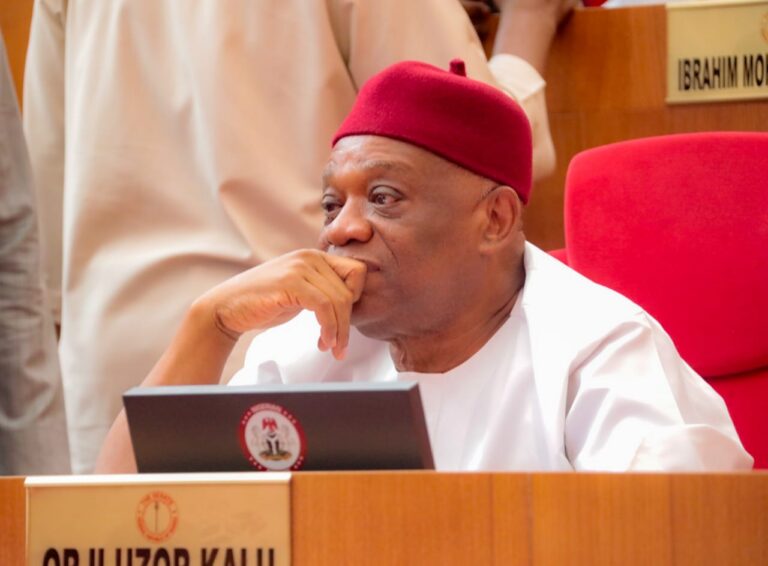
Also, Deputy Speaker, Benjamin Kalu, said the country needs a constitution that would strengthen democracy, noting that the country’s democracy has been surviving on the goodwill of a few committed leaders since 1999.
Akpabio, who was represented by the Senate Chief Whip, Tahir Monguno, said issues before the parliament in the ongoing constitution review exercise, which include judicial and electoral reforms, local government autonomy, special seats for women, state policing, human rights, are very crucial..
“Each one of them speaks to a larger question of how to make democracy not only to endure but also to deliver.
“An election is not a ceremony; it is the soul of democracy. And justice is not a luxury; it is the backbone of peace. When elections fail, trust dies. When justice delays, faith decays. That is why we must renew both our ballots and our benches.
“We must strengthen INEC, shield our courts from corruption and restore the people’s confidence in their institutions. In India, reforms made voting accessible even in the remotest villages. In South Africa, the constitution enshrines judicial independence as sacred. We can do the same not by copying others, but by perfecting ourselves.
“True federalism begins at the grassroots. If the government does not work in the village, it has failed in the capital. We must free our local governments from the chains of dependency. Development must have a human face and that face must be visible in every ward, street and home.
“And what of the women of Nigeria, the pillars of every family, the architects of every community? A democracy that sidelines its women weakens itself. Across the world, the evidence is clear: in Rwanda, women lead more than 60 percent of parliament; in Finland, women shape policy and governance with distinction. Where women rise, nations thrive. It is time for Nigeria to move from the language of sympathy to the policy of inclusion.
“Security too, must evolve. It must be local before it can be national. A nation as vast as ours cannot be protected from a single command post. The call for state policing is not rebellion; it is realism.
Other News
“In the United States, India, and even Brazil, local policing works side by side with national forces, coordinated and not conflicting. But, in seeking safety, we must not sacrifice freedom. The hand that guards must not gag. The shield of the state must never become a sword against its citizens.”
While stating that the country needs strong institutions, Kalu posited that the Nigerian democracy cannot continue to survive on goodwill.
He added that 26 years after the inception of the current democratic dispensation, democracy has been deepened in the country. Nonetheless, he explained that many Nigerians, especially women are still under-represented, just as local government administration remains with electoral disputes lingering for too long.
“The cooperative democracy we imagined 26 years ago has not fully materialised. Instead, we find ourselves in a moment of reckoning. A moment where we must ask: is our constitution still fit for purpose? Does it reflect the Nigeria we are today, or is it anchored on the Nigeria of a bygone era?
“As leaders of Nigeria’s political parties, you face this question every day. You see the gaps. You feel the frustrations. You hear the voices of ordinary Nigerians demanding more from their democracy. And that is precisely why you are here today.
“In the last 26 years, Nigeria’s democracy has relied on the good will of a few committed leaders to survive. But, goodwill alone is not enough. We need strong institutions. We need clear rules. We need a constitution that does not just permit democracy, but actively enables it. This is our moment to get it right.”
Consequently, the deputy speaker explained that the parliament was considering proposed legislation seeking to alter the 1999 Constitution (as amended) to create special legislative seats for women, reduce endless post-election litigations and grant autonomy to local government among others.
“Nigeria will remain a democracy. But, to sustain our democracy in a changing world, we must change the way it operates. We must give women their rightful place in governance. We must empower local governments to serve their people. We must make our elections credible and our courts efficient. This is the work before us. And it is work we cannot do without you,” he stated.
President, National Women’s Group of Political Parties in Nigeria, Ms. Darisma Ibrahim, described the dialogue as more than a meeting but a call to action.
He urged all to use the opportunity to build consensus for a just society, where women are well represented.