Follow Us on Google
From Adesuwa Tsan, Abuja
As the National Assembly moves closer to concluding its latest constitution review exercise, it has announced plans to transmit the final report of proposed amendments to the 36 state Houses of Assembly before December 2025. This timeline aligns with the legislature’s internal schedule for concluding public hearings, collating recommendations, and securing state-level approval required for constitutional alterations.
The Senate Committee on the Review of the 1999 Constitution made this announcement at the end of its South -West Zonal Public Hearing, which was held from July 5 to 6 at Water Crest Hotel in Ikeja, Lagos. The Committee simultaneously held public hearings to deliberate on 59 bills and 31 proposals in each of the geopolitical zones in the country. Only the North- West zone was exempted due to a postponement of the event date.
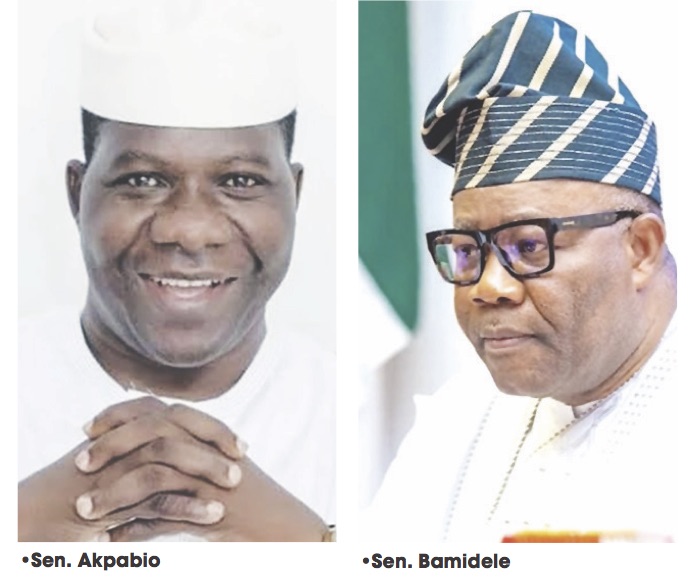
For South-South, it held at Ikot Ekpene, Akwa Ibom State under the chairmanship of the president of the Senate, Senator Godswill Akpabio, and Lagos, was the venue for South -West geo – political zone under the Chairmanship of the Senate Leader, Opeyemi Bamidele.
Speaking on behalf of the committee at the South-West zone, its chairman, Senator Bamidele, emphasised that the National Assembly had completed regional consultations and was now focused on compiling a report to be presented to state legislatures before year-end.
The Committee admitted that previous attempts to amend the constitution failed to resolve critical governance questions in Nigeria, despite five rounds of alterations since the advent of the Fourth Republic.
According to him, Section 9 of the 1999 Constitution (as amended), states that any alteration to the constitution requires a two-thirds majority in both the National Assembly and at least 24 of the 36 state Houses of Assembly. Aware of this hurdle, Bamidele urged all stakeholders including civil society, political actors, and interest groups to engage with their state legislators to ensure that proposals generated from public hearings gain the support needed to become law.
“There is nothing the National Assembly can do without a two-thirds approval of all proposals by the state legislatures,” Bamidele said during the closing session of the hearing.
“All stakeholders must work with their lawmakers at the state level. We must appreciate the role of state assemblies to ensure the passage of the proposals into laws,” he added.
The South- West public hearing, like others held across Nigeria’s six geopolitical zones, was dominated by familiar constitutional reform themes. Among the unresolved governance issues identified by the Senate Committee for constitutional reform include state police and security architecture.
With increasing insecurity and the overstretched federal police, demand for state-controlled police forces has grown. Previous attempts to constitutionalise state police were rejected by some state legislatures. Proponents argue that decentralising policing powers will allow states to respond more effectively to local security challenges, particularly in areas affected by banditry, terrorism, or communal violence.
Secondly, stakeholders want formal roles for traditional rulers, especially in security and local governance, arguing that this would foster trust and local legitimacy.
Thirdly, the demand for Local Government Autonomy also featured prominently. Many local governments remain under the control of state governors, often with no elected leadership. The push for financial and administrative autonomy is yet to be realised. Advocates argue that the third tier of government has been weakened by state-level interference, especially in the allocation of federal funds. Critics of the current arrangement contend that many local governments are unable to perform basic administrative functions due to financial constraints imposed by state governments.
Previous attempts to grant financial and administrative autonomy to local governments have failed at the state assembly level. Many observers expect this issue to face similar resistance in 2025, unless state lawmakers and governors show a shift in posture.
Then there is the push for gender equity. Despite sustained advocacy, gender-related amendments such as 35 percent affirmative action for women in appointive offices have failed to pass in past review rounds.
Judicial reforms also dominate constitution review requests. The proposed reforms aim to improve case management, expedite court processes, and ensure independence of the judiciary.
Stakeholders are clamouring for electoral reforms to enhance the credibility of the electoral system, including independent candidacy and diaspora voting.
Another area of focus is devolution of Powers. States continue to push for more responsibilities over key economic sectors such as mining and other resource management, electricity and other areas currently under federal control. Advocates believe this will enhance the economic autonomy of states and reduce overdependence on the federal government.
Same Demands, Different Results?
Since the return to democratic rule in 1999, the National Assembly has embarked on several constitution review exercises, each marked by public consultations and legislative deliberations. The 2025 effort continues in this tradition, but lawmakers have acknowledged that real progress depends on securing political consensus across federal and state levels.
Deputy President of the Senate, Senator Barau Jibrin reiterated this when he declared that “these amendments tackle various issues related to good governance, institutional strengthening, and national aspirations. However, several fundamental issues of national importance remain unresolved, requiring more than just routine law-making by the National Assembly and State Houses of Assembly.”
This point was reiterated by the Senate Leader, who stressed that the current review process was not ceremonial and would yield different outcomes.
“It is not a jamboree, contrary to some dissenting views across the federation. Rather, it is designed to make consequential reforms that can guarantee our collective prosperity, more efficient governance structure, and sustainable development,” Senator Bamidele said.
Daily Sun gathered that while the National Assembly plays a central role in initiating constitutional amendments, it cannot unilaterally alter the constitution without state-level concurrence. This structure was designed to preserve the federal character of Nigeria’s governance system, ensuring that reforms reflect broad national consensus rather than centralised decision-making. The implication is that even when amendments pass in the National Assembly, they can be blocked if 13 or more state assemblies withhold their support. This reality has stalled previous reform attempts. For instance, in 2018 under the leadership of Sen. Bukola Saraki, a constitutional amendment granting local governments financial autonomy failed to receive enough support from state assemblies.
This precedent has made the current leadership of the National Assembly more proactive in urging stakeholders to engage state legislators early and frequently.
“The state assemblies are not just waiting for the report alone. They are also part of the constitution review process. I do not envisage any problem from the state assemblies, but stakeholders must take advocacy to the state level to ensure that their proposals are adopted,” Bamidele said.
Position of Conference of Speakers on Amendments
At the Lagos hearing, the Chairman of the Conference of Speakers of State Legislatures of Nigeria and Speaker of the Oyo State House of Assembly, Rt. Hon. Debo Ogundoyin, offered broad support for the reform proposals under consideration.
Represented by his deputy, Rt. Hon. Abiodun Fadeyi, Ogundoyin called for more powers to be devolved to states, particularly in sectors such as mining, labour, and communications. He also expressed support for state police, noting that many state governments had already demonstrated capacity through local security initiatives.
“Devolution of powers is key to this ongoing constitutional amendment by devolving key items from the Exclusive Legislative List to the Concurrent Legislative List in the interest of all. For instance, the removal of the electricity matter from the Exclusive Legislative List has significantly transformed many states’ power sectors through independent power supply initiatives,” he added.
Ogundoyin acknowledged concerns around potential abuse of state policing powers but argued that proper legal frameworks and oversight mechanisms could address such risks, adding that “the powers, responsibilities and limits of the state police should be clearly defined, with oversight mechanisms to prevent abuse. We must design a comprehensive framework for federal and state police to work in harmony and balance power through effective coordination mechanisms.”
The position of the Conference of Speakers, observers say, could prove pivotal, especially if it translates into coordinated advocacy for reform across multiple state legislatures.
Legislative Momentum Meets Historical Scepticism
Despite the National Assembly’s renewed momentum and the formal expressions of support from the Conference of Speakers, public scepticism remains. This stems from the country’s track record of incomplete or unsuccessful constitution amendments and reforms.
The 2014 National Conference convened under President Goodluck Jonathan, for instance, produced extensive reform recommendations, including restructuring the federation, but none were adopted before the end of that administration. Similarly, constitutional amendment bills passed in 2018 and 2022 saw some progress, such as financial autonomy for state legislatures and judiciary, but several proposals failed due to insufficient support at the state level.
A recurring theme in public discourse is whether the 2025 constitution review process will result in real change or follow the path of earlier attempts which were marked by elaborate hearings, robust proposals, and ultimately, limited implementation.
Power Sector Reform: A Ray of Hope and Gradual Success
Daily Sun recalls that one area where constitutional amendment has produced measurable results is the power sector. In 2023, the National Assembly passed a bill removing electricity generation, transmission, and distribution from the Exclusive List. This allowed states to regulate their electricity markets, subject to guidelines by the Nigerian Electricity Regulatory Commission (NERC).
Lagos and Edo states were among the first to implement independent power projects under this framework. Experts say the new legal latitude had enabled players in the sector to attract investment, improve grid reliability, and serve previously underserved communities.
The current review seeks to go further by consolidating this progress through expansion of states’ rights to legislate on electricity and other sectors previously restricted to the federal government.
A Roadmap to December
According to Bamidele, the National Assembly will now return to Abuja to collate all submissions and finalise its report. The goal is to transmit the proposals to state assemblies before December, giving lawmakers time to deliberate and vote on the amendments ahead of the 2026 legislative calendar.
Several senators and representatives have echoed the chairman’s call for advocacy, stressing that the constitution review is a shared responsibility. They argue that beyond parliamentary processes, the success of the exercise will depend on sustained engagement by the public and organised interest groups.
Observers say the remaining months of 2025 will test both the political will of Nigeria’s legislative institutions and the capacity of citizens to influence the reform process. One thing is sure; the 2025 Constitution Review represents another opportunity for Nigeria to address long-standing governance challenges and adjust its federal structure to better reflect contemporary realities. With rising insecurity, economic disparities among regions, and public demand for greater accountability, many see the review as timely and necessary. Yet the structure of Nigeria’s amendment process, requiring both federal initiative and state-level endorsement, means that even the most well-designed reforms could stall without political alignment across all tiers of government.