Follow Us on Google

From Isaac Anumihe, Abuja
The National Park Service (NPS) has warned that the continued loss of over 300 hectares of forest reserves on a daily basis will lead to desertification, environmental degradation and increased national vulnerability to climate change.
Speaking when he hosted a team of environment journalists in Abuja, the Conservator-General of the NPS, Ibrahim Goni, called for stronger media collaboration to expose illegal logging, wildlife trafficking, illegal mining and other activities threatening the nation’s forests and protected areas.
Goni also urged journalists to raise public awareness about pollution, flooding, erosion and other ecological challenges confronting the country, adding that the Federal Ministry of Environment had introduced flood-warning equipment in several parts of Nigeria to alert communities.
According to Goni, more than 4,000 illegal miners have been forced out of Gashaka-Gumti National Park following security operations, noting that illegal mining, logging, wildlife trafficking and insecurity were undermining conservation efforts across the country.
He disclosed that the service, in collaboration with the Nigerian Army, had shut down two illegal mining sites within Gashaka-Gumti National Park, which straddles Taraba and Adamawa states.
The operation led to the closure of extensive mining pits and the displacement of more than 4,000 illegal miners from the protected area.
However, the Conservator-General stressed that security operations alone would not eliminate illegal mining, arguing that affected communities needed alternative livelihoods to reduce their dependence on activities that degrade protected areas.
He also raised concerns about illegal mining in Oyo State, disclosing that the service was working with the Ministry of Solid Minerals to tackle the problem. In Rivers State, he said, about 17 miners had been arrested as part of ongoing enforcement efforts.
Goni explained that criminal activities in forests surrounding national parks often undermined security operations, as individuals driven out of protected areas could relocate to neighbouring forests and continue their activities.
He called for sustained co-operation among security agencies and relevant government institutions to address the problem, while commending the Nigerian Armed Forces and other security operatives for their contributions to the protection of vulnerable areas.
On wildlife trafficking, Goni said Nigeria was frequently implicated in international smuggling networks because the country was used as a transit corridor for wildlife specimens destined for overseas markets.
According to him, traffickers move wildlife products from neighbouring countries, including Chad, Niger and Cameroon, through Nigeria before transporting them to other destinations, particularly through seaports.
To strengthen enforcement, he disclosed that the Nigeria Customs Service, the NPS, the National Environmental Standards and Regulations Enforcement Agency (NESREA) and the Nigeria Police Force had established an inter-agency committee to combat the illegal trade.
He said the committee had carried out raids that resulted in the seizure of live animals, carcasses and other wildlife specimens.
In her remarks, the Chairman of the Environment Media Correspondents Association of Nigeria (EMCAN), Joycelyn Ellakeche Adah, called for stronger partnerships between the association and environment agencies to improve access to information and strengthen reporting on environmental issues.
Adah said the association had more than 35 members but lamented that only three or four media organisations regularly covered the National Park Service’s activities.
She noted that inadequate media coverage limited public understanding of the agency’s responsibilities, conservation programmes and the challenges confronting protected areas.
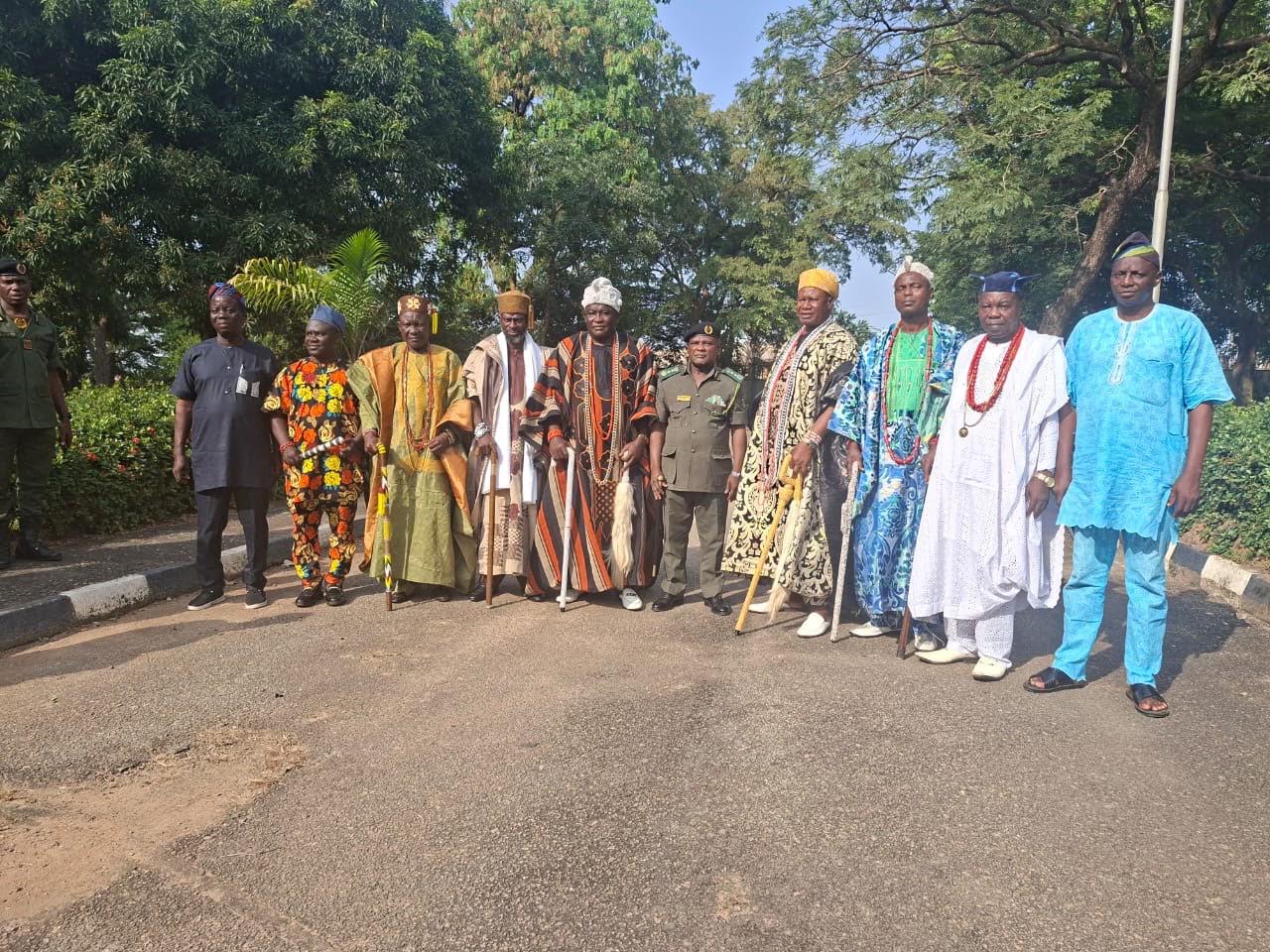
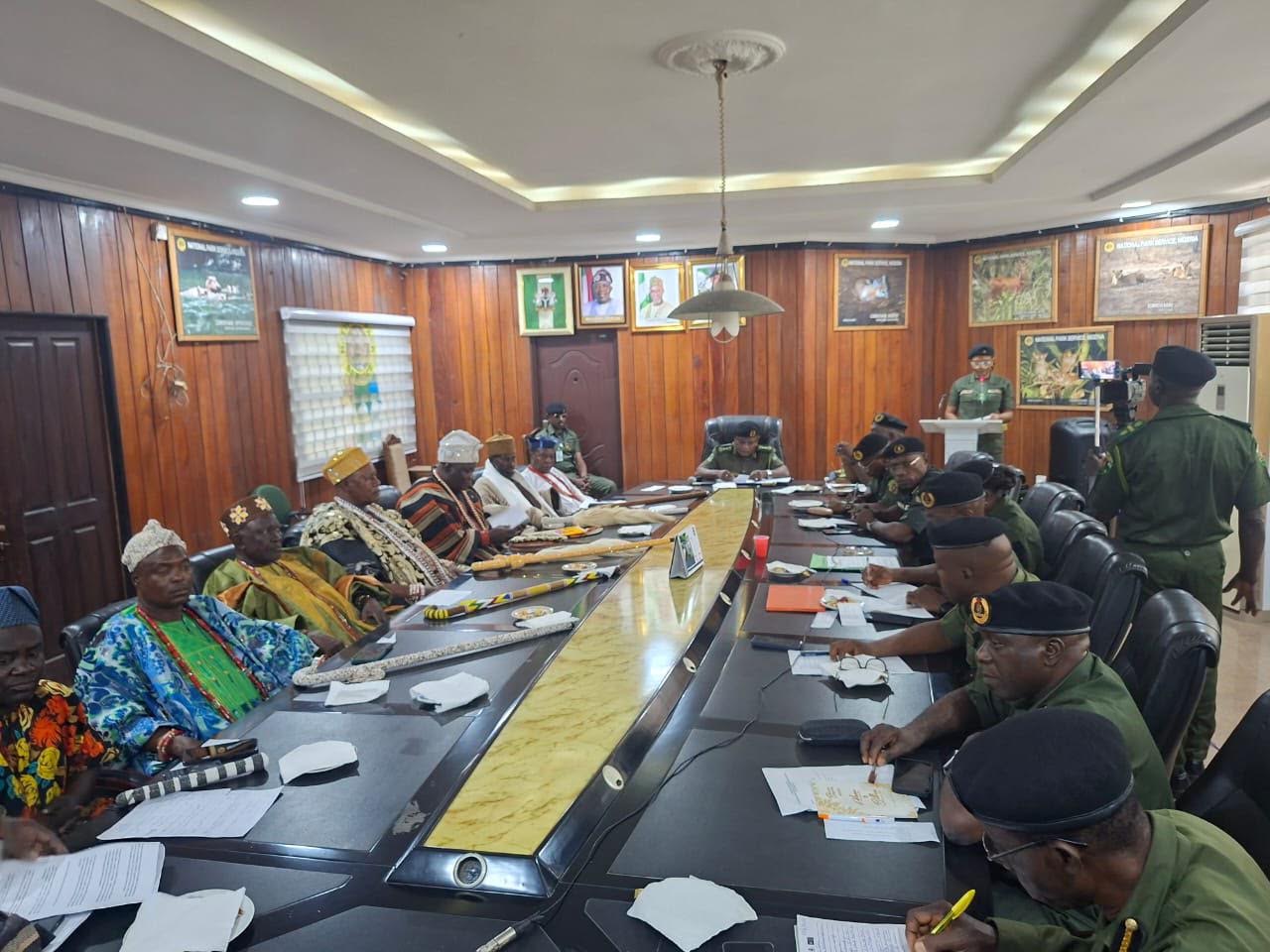
Meanwhile, the Secretary of the Oba Hill Traditional Council, Osun State, Mr Shedrack Adebayo Adelakun, who led a team of traditional rulers on a courtesy call, pleaded for 70 per cent employment in favour of the host communities.
He also pleaded for transparent boundary identification, community sensitisation and constructive engagement with affected land users, as well as the encouragement of public awareness of the ecological and economic importance of the National Park.
“We want the government to make the employment opportunity 70 per cent in favour of the host communities. We would like to advise the government to make the physical development of the host communities a priority,” he said.
The Osun traditional rulers also requested the government to make budgetary provision for the traditional rulers within the host communities.
“We will love that the government demarcates the real boundaries of the park and also indicate where possible the limit of internal boundaries because some miners are showing interest in mining around Akinleve Town and there is need to demarcate the boundaries of the park with required urgency,” the traditional rulers pleaded.