Follow Us on Google

From Aniekan Aniekan, Calabar
Community donations and self-help efforts are sustaining selected Primary Health facilities in Cross River State, helping to fill gaps in HIV, tuberculosis and malaria services and reducing out-of-pocket spending for poor households.
The interventions were documented under the Global Fund GC7 Integrated Community-Led Monitoring (I-CLM) Project, implemented in Odukpani, Ikom and Obudu local governments by the ATM Network.
The network comprises the Civil Society for the Eradication of Tuberculosis in Nigeria (TB Network), the Network of People Living with HIV/AIDS in Nigeria (NEPWHAN), and the Association of Civil Society Organisations (CSO) on Malaria, Immunisation and Nutrition (ACOMIN), in partnership with the Institute of Human Virology Nigeria (IHVN).
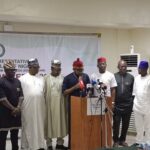
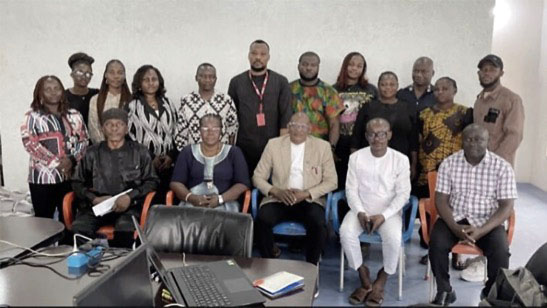
Presenting the findings during a media brief, Effiong Udobong of ACOMIN said between January and October 2026, the project recorded several community-led supports that kept facilities functional despite inadequate funding, poor infrastructure and shortage of essential commodities.
According to him, in Ikom LGA, residents donated mattresses and medical consumables to Adijinkpo primary health centre (PHC), while a philanthropist supported the Comprehensive Health Centre, Ikom 1, with waste baskets, hand gloves and HIV test kits.
Other News
In Odukpani, he said residents of Ibonda community refurbished the faded signpost of PHC Efut Ibonda to improve visibility, and contributed N200,000 for the procurement of essential drugs following a prolonged stock-out.
In Okirikang Okoyong, also in Odukpani, a philanthropist donated a clinical thermometer to aid vital signs checks, while another community member supported the facility with test kits, restoring HIV and malaria testing after two years of stock-out.
In Obudu, Utugwan Central PHC received non-consumable items from a community member to improve working conditions, while at the state level, advocacy by the State Advocacy Team led the State Agency for the Control of AIDS to supply HIV test kits to PHCs across the state.
State Programme Officer of the project, Victor Ogwuche, said the interventions have improved access to care and boosted health workers’ morale.
The state Deputy Coordinator, TB Network, Solomon Agbor, said the I-CLM approach empowers communities to identify barriers to care, including stigma, discrimination and poor infrastructure, and advocate for solutions.
Sunday Eminue of NEPWHAN called for stronger health systems, increased funding and scale-up of community-based service delivery models.