Follow Us on Google
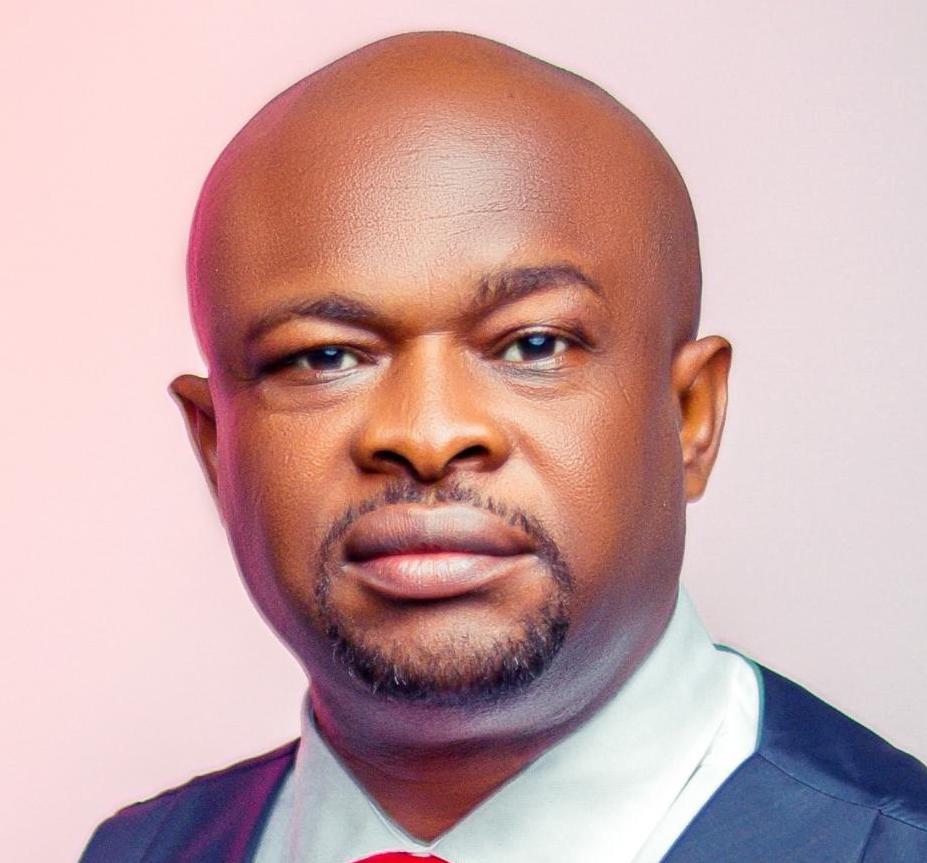
Founder of Learn To Live Business School (LLBSUK), Prof. Nelson Kingsley, has predicted that the global business landscape will witness the full emergence of a new economic order known as the Cognitive Economy by the year 2030, warning that it will favour people who can think deeply over those who merely consume information.
Speaking during the unveiling of LLBSUK Future Global Consortium Forum in Enugu, Enugu State, with the theme “Future of Work and Value Creation”, Kingsley said the world was quietly moving away from economies driven mainly by old resources in the form of land, machines, labour or even technology, toward one powered by human thinking capacity.
Kingsley, who has been an ardent advocate of transforming Nigerian universities from centres of learning to production centres, in collaboration with organised private sector, said technological innovations have made the world more fast-paced and ever dynamic.
According to him, “the most valuable asset of the next decade will not be money or data, but the ability to reason, judge and interpret complexity”.
He explained that, while information is now everywhere and easily accessible through the internet and artificial intelligence, genuine insight has become scarce.
“Information is abundant, attention is fragmented, but deep reasoning is rare,” the don noted, adding that “this imbalance will create a new class divide between deep thinkers and surface processors”.
Kingsley argued that organisations, governments and businesses are already shifting their focus from data possession to decision intelligence. He said future competition will not be about who has the most information but who can convert information into strategy, clarity and economic advantage.
Tracing economic history, the scholar said humanity has moved from the Agricultural Economy to the Industrial Economy, then to the Information Economy, and is now approaching the Cognitive Economy.
“In this new phase, wealth creation will depend largely on intelligence, judgment, creativity, systems thinking and problem-solving ability”, he said.
Other News
He stressed that artificial intelligence and automation will accelerate this shift, as routine tasks will be increasingly taken over by machines.
“AI will not eliminate human value,” he said, “but it will expose who can think independently and who cannot.”
According to him, high-value roles in the coming era will include strategists, analysts, innovation leaders, policy designers and decision-makers whose primary contribution is thinking, not manual execution. Those unable to move beyond routine work, he warned, may find themselves economically vulnerable.
He said, by 2030, professional relevance and business success will increasingly depend on cognitive depth.
“The future will not belong to the fastest or the loudest but to those who can think clearly, reason deeply and turn complexity into opportunity.”
In a related development, the don raised the alarm over what he described as a silent cognitive crisis confronting Africa: “The continent is experiencing a gradual decline in deep thinking and critical reasoning due to digital dependency, weakened educational depth and cognitive overload”.
He warned that global research now suggests a reversal of the long-celebrated Flynn Effect: a situation where cognitive ability has been depleting with each passing generation in Africa.
Speaking further, he said that the crisis is not a collapse of intelligence but an erosion of reflective thinking, with serious implications for leadership, governance and development. He pointed to the declining analytical reasoning among young graduates, reduced attention spans and over-reliance on digital tools as indicators of a dangerous cognitive shift.
Kingsley concluded that, for countries like Nigeria, where a large youth population faces economic and political pressure, deliberate investment in cognitive depth has become urgent, adding that Africa’s future would not be secured by access to information alone, but by the ability to think deeply, reason strategically and turn complexity into opportunity in an increasingly competitive global order.