Follow Us on Google
• Abuja commercial drivers sleep in queues, watch earnings vanish
From Charity Nwakaudu, Abuja
They came for cleaner, cheaper fuel. Now they sleep in their vehicles and watch customers leave.
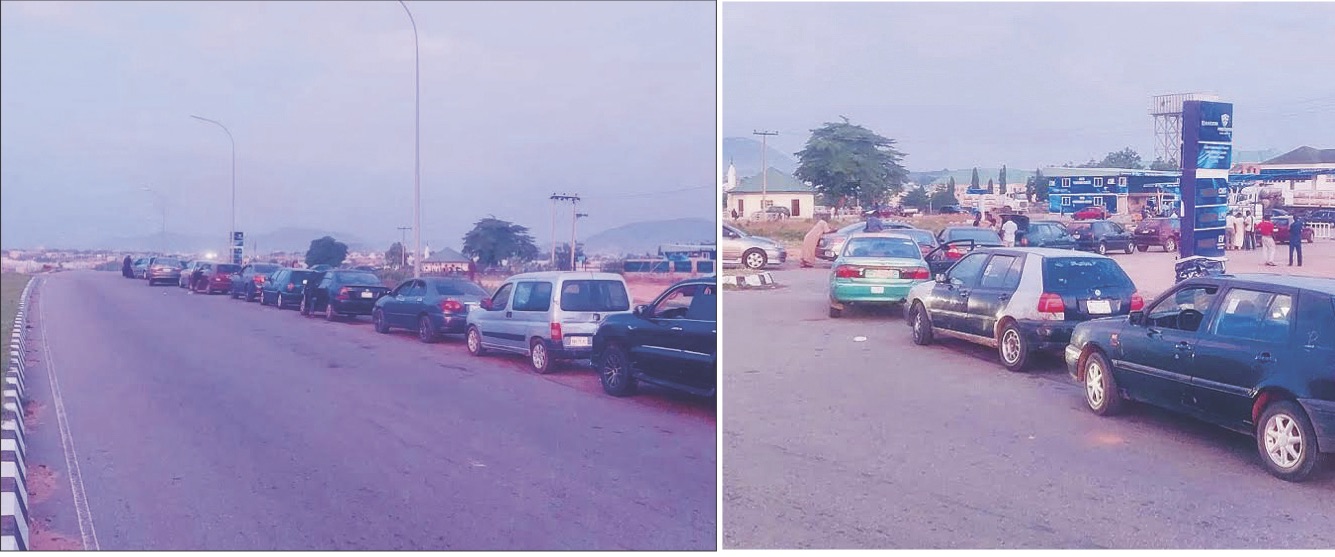
At Ushafa, Dei-Dei and NNPC Zone 1 filling stations across the Federal Capital Territory, commercial drivers who switched to Compressed Natural Gas (CNG) for promised savings say the policy has left them poorer, exhausted and trapped in daily queues that eat into — or wipe out — their incomes.
“I regret converting my tricycle because the suffering is too much,” says Abdullah Musa, a tricycle operator. “When CNG came, we were happy because gas was cheap and those who converted were making good money. But today, before you can buy gas, you must spend hours in a queue. While we are stranded at filling stations, drivers using petrol are already carrying passengers and making money.”
Musa’s eyes scan the station as he speaks. Where other drivers see an opportunity to cut costs, he sees nights spent on hard seats and daylight hours without fares: “The hours we spend waiting for gas mean we lose our daily income. Instead of making more profit, we are now struggling to survive. There is nothing good about CNG anymore.”
Scenes of hardship have become a daily spectacle. Men curled up in the driver’s seat, tricycles parked for days and drivers who borrowed to convert now wondering whether they traded higher bills for longer queues.
“Come to the filling stations and see drivers sleeping inside their vehicles just to buy gas,” Musa adds. “Some park their tricycles for days because there is no gas, while others are already thinking of returning to petrol. The government encouraged us to convert, we borrowed money and invested in it, but today we are trapped.”
For many, the promise of a better business model has flipped into a cycle of anxiety. “This CNG matter is no longer funny,” says Sunny Ike, a commercial taxi driver from Dutse. “I converted my vehicle because the government encouraged us to. At first, it was cheaper and business improved. Today, we spend more time chasing gas than chasing passengers because the infrastructure is simply not there.”
Ike describes how his family’s livelihood has been hollowed out by uncertainty at pump sites: “Any day you join a CNG queue, forget about work. I stopped going to the Ushafa station because they no longer sell to us. Now even the Dei-Dei station gives priority to bigger vehicles, leaving small commercial drivers stranded once it is 6pm.”
Some nights, he waits from late evening until the small hours to get a refill: “There are nights I arrive by 9 p.m. and don’t get gas until 2:30 a.m. or even 3 a.m. After staying awake all night, how do I safely carry passengers? I cannot risk people’s lives because I didn’t sleep.”
Waiting times are not trivial anecdotes but lost wages. At the NNPC Zone 1 retail outlet, motorist Chiijoke Edu said: “I joined the queue around 9 a.m. and got my refill around 3 p.m. Something should be done urgently; otherwise, this initiative will be dead before the end of the year.”
Some drivers accept that CNG is still a cleaner, cheaper fuel in principle, but say scarcity and rising price are eroding the benefit. Innocent Audu says: “Government should encourage more investors by granting waivers for marketers to come into the sector. It should also monitor sales and prices to prevent exploitation and ensure proper regulation.”
Others point to a gap between price policy and supply on the ground. A motorist who identified himself as Big Joe said: “Initially, we bought at N230 per standard cubic metre (SCM), but it was increased to N550. If the price has gone up, why is it still difficult to get? Why must we spend hours in queues?” He urged government and marketers to use the increased revenue to expand refilling infrastructure across the country.
For drivers who could have avoided conversion, the crisis reads like vindication. “I thank God every day for not converting my vehicle to CNG,” says Okereke Matthew, who plies the Wuse–Lugbe route. “Many of my colleagues who embraced the scheme have returned to petrol because of the hardship involved in accessing the fuel.
“Most of these CNG vehicles cannot even work for a full day without the drivers worrying about where to refill. You work one day and lose another day waiting in queues, or you work half a day and spend the remaining half struggling to buy gas. What is the benefit of that? Life as a commercial driver is already difficult enough.”
Bola Yemi: “The scarcity of refilling points in Abuja and other parts of the country has made the alternative fuel more stressful than beneficial.”
A marketer who asked not to be named blamed the slow roll-out on commercial realities. He said many investors pulled back after discovering the earlier regulated price of N230 per SCM was not commercially sustainable. That retreat has reduced capacity and left small commercial operators competing for limited supply.
The situation presents a policy dilemma: How to square a public-good objective, cleaner transport and lower fuel costs, with market incentives that currently make investment in refilling infrastructure unattractive. Drivers are calling for immediate fixes: More refilling points, clearer prioritisation for small commercial operators, transparent monitoring of supply and pricing, and incentives for private investors to expand capacity.
For now, the human cost is visible at each station. A line of tired faces, yawning engines and vehicles idling while livelihoods drift away. One Matthew says: “When everyone was rushing to convert, I almost joined them. I nearly converted my car to CNG, but thank God I didn’t. Now I see what people are passing through. Some drivers even sleep at filling stations just to buy gas.”
The CNG dream that began as a promise of cheaper, cleaner motoring risks is collapsing into a daily nightmare for the very people it was meant to help. Unless the gap between policy, price and supply is closed quickly. What that is required, drivers say, is not slogans but stations, investment and a system that lets them work by day instead of wait by night.