Follow Us on Google
By Christy Anyanwu

To mitigate the impact of climate change on lives and livelihoods, the United States Consulate General, in collaboration with stakeholders, initiated practical strategies, with women and technology as the driving force, at an event in Lagos, last week.
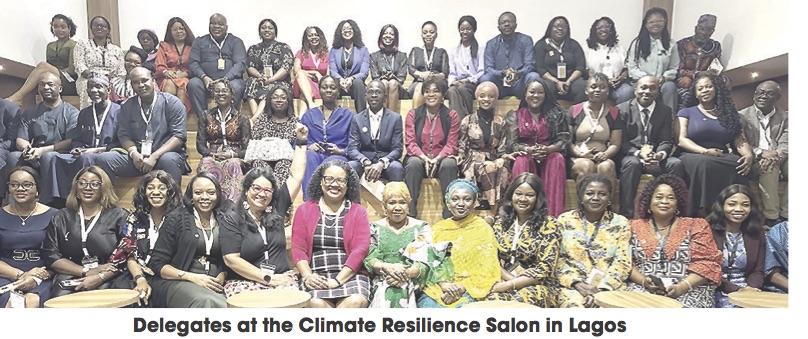
Delegates from women-led organisations, climate-tech entrepreneurs, government officials, private sector players and non-governmental organisations convened at the maiden edition of the Lagos Climate Resilience Salon on Wednesday, July 26, 2023, at 21st Century Technologies, Lekki Phase 1, Lagos, to discuss climate change issues, climate technology and cultivated solutions to critical and potential climate problems.
The salon attracted an impressive group of attendees, including the Acting Political and Economic Section Chief of the United States Consulate General, Kenise Hill; Omotunde Adeola, the Deputy Director of the Federal Ministry of the Environment; the Director General of NEMA, Mustapha Habib Ahmed; Ini Umoh, Lagos State Ministry of the Environment and Water Resources, among others.
Convener of the Climate Resilience Salons, Shelley Taylor, Silicon Valley technology veteran, during her welcome address, spoke on the need for Lagos Climate Salon as women are often the most negatively impacted by the climate crisis and are also most often the first in their community to respond to the crisis.
“One of the goals of the Climate Resilience Salons is to help some of the women working in nonprofits to transform their work into businesses where they can generate profits from climate solutions, increasing their family wealth and influence in society. Climate tech founders need help scaling their solutions into other regions and across borders too,” she said.
Kenise Hill emphasised that the climate change crisis was a challenge leading to loss of lives and properties. She spoke on the need to develop sustainable strategies to curb the menace.
Speaking on behalf of the Director-General of NEMA, the Deputy Director, Research and
Forecasting, Mr. Abdullahi Adamu Usur, thanked the organisers and noted that the Lagos Climate Resilience Salon came at a critical time in Nigeria’s history when its people were faced with climate-related hazards causing serious threats. He guaranteed that more strategies such as effective disaster management and building of skills would be adopted to promote climate resilience.
Adeola, from the Federal Ministry of the Environment, emphasised the need to bridge the awareness gap, advocated for other means of power generation to reduce anthropogenic emission sources and pledged that the government would do more in ensuring the sustainability of the environment.
Blessing Irabor, president of Organization of Women in Trade (OWIT), thanked Shelley Taylor for the initiative and spoke on the need for the government to collaborate more with private organisations and NGOs, and policy reforms to help women navigate through disasters caused by climate change.
The women-led organisations in attendance at the salon included founders of climate tech companies in Nigeria like Doyinsola Ogunye, founder of Kids Beach Garden, founder of Shoreline Euphoria, and Joy Egbe, co-founder of Newdigit Technology. They shared experiences with other women like Baliqees Salaudeen-Ibrahim, Green Republic Farms, a farmer and climate activist, and Olasimbo Sojinrin, the founding country director, Nigeria, of Solar Sister, and Folawemi Umunna, founder of Climate and Ecological Protection Initiative.
Glory Oguegbu, founder of Renewable Energy Technology Training Institute (RETTI), highlighted the need for collaboration to address climate change. She said: “Climate change has gone beyond what any one person can do. Galvanising female climate leaders from diverse industries to proffer solutions for the changing climate is a sure way to speed up a sustainable Africa, beginning from Nigeria.”
Some of the interventions suggested by the participants were better waste management, more temporary displaced facilities, use of food banks to counter food waste, green entrepreneurship, timely intervention systems to fix problems of climate change, use of organic fertiliser, more climate change education, proactive climate policy implementation, encouraging individuals to grow food at home, implementation of strict laws guiding factory and industrial building to reduce air pollution and proper drainage systems to tackle flooding.
The Lagos Climate Resilience Salon was an initiative of trellyz Ref|Aid in partnership with Women Radio 91.7, OWIT Nigeria, Environmax, CCEPI, Clean Technology Hub and ACCREC. It was supported by the U.S. Consulate General.