Follow Us on Google

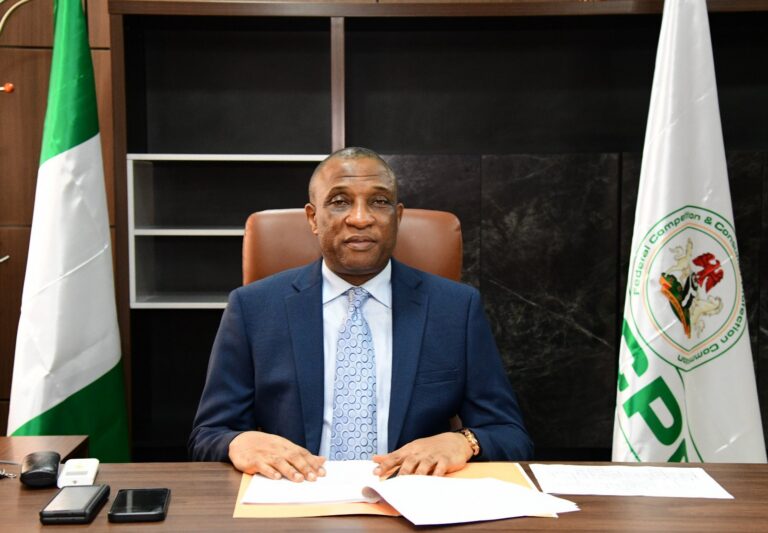
Minister of Innovation Science and Technology, Chief Uche Nnaji has declared that climate change threatens the foundation of food systems.
He made the statement at the Commonwealth Roundtable on Climate Finance & Food Security held at Marlborough house, London, United Kingdom.
He said: “In Nigeria, rising temperatures and erratic weather patterns reduce agricultural yields and disrupt food supply chains. Nigeria loses about 351,000 hectares of land to desertification annually, with eleven northern states severely affected.
“Annual floods in Nigeria destroy over 100,000 hectares of farmland, displacing millions and reducing food availability. Over 40% of Nigeria’s inland water bodies are at risk due to pollution and climate change, leading to declining fish stocks and affecting the livelihoods of millions of artisanal fishers. The Lake Chad Basin has shrunk by over 90% since the 1960s, drastically affecting water supply for irrigation and livestock in the Northeast of Nigeria.
“More than 95% of Nigerian farmers rely on unpredictable rainfall, making them highly vulnerable to droughts and erratic weather patterns.
“Nigeria spends over $10 billion annually on food imports, despite having the potential to be a net exporter of agricultural products. Over 70 percent of Nigerians rely on agriculture for their livelihoods, yet only 15% of rural communities have access to electricity, making post-harvest processing infrastructure and storage a major challenge, contributing to more than 50% in food losses.”
The minister also stated that the Federal Ministry of Innovation, Science and Technology was committed to deploying science, technology, and innovation as the backbone of Nigeria’s climate resilience strategy.
“Our National Science, Technology, and Innovation Policy (2022) serves as the blueprint for leveraging technology to secure food production, energy access, and environmental sustainability.
Other News
“In Climate-Smart Agriculture, Nigeria has enhanced Food Security through Innovation by championing Tela Maize and climate-adaptive cotton, which resist drought, pests, and extreme weather conditions, ensuring higher productivity with lower environmental impact.
“In Digital Agriculture & Smart Farming, Nigeria has adopted the use of AI-driven precision farming, automated irrigation, and remote sensing technologies from our Space Agency. These strategies are helping smallholder farmers predict weather patterns, optimize inputs, and minimise losses.
“In Clean Cooking Initiative Nigeria is adopting a cutting-edge Low Pressurized Compressed Natural Gas (LPCNG) cylinders Technology…”
This strategy will make clean cooking energy affordable, reducing dependence on deforestation-driven biomass fuels.
“While innovation is critical, no solution is viable without sustainable financing mechanisms. Nigeria is committed to unlocking climate finance to scale up these solutions through Green Bonds and Climate Resilience Funds, Commonwealth Climate Finance Access Hub and Public-Private Partnerships.
Nnaji urged the Commonwealth partners to join hands to establishing a Commonwealth Center for Climate-Smart Agriculture, which he said will serve as a platform to exchange knowledge, transfer technology, and scale innovation-driven food security initiatives.
He also appealed to them to help in simplifying access to climate finance, adding, “We must advocate for equitable, simplified climate finance mechanisms that enable developing nations to secure the funding needed for large-scale adaptation projects.”