Follow Us on Google


The Raw Materials Research and Development Council (RMRDC) has identified a $2.65 trillion global market opportunity for Nigeria, urging increased investment in local processing and manufacturing to drive industrialisation.
Its Director-General, Prof. Nnanyelugo Ike-Muonso, said strategic partnerships, diaspora investment and a skilled workforce were critical to transforming Nigeria’s abundant natural resources into wealth, jobs and economic growth.
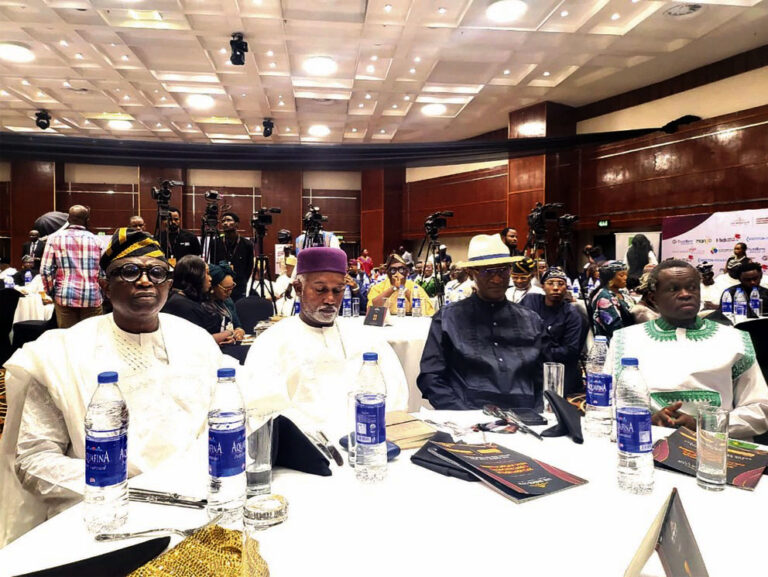
Ike-Muonso spoke while delivering a lecture titled, Unlocking Nigeria’s Raw Material Value Chain for Industrialisation, Manufacturing and Competitiveness.
He said the market opportunity covered 30 major value chains, comprising 12 agricultural value chains worth $932 billion, 11 mineral value chains valued at $1.352 trillion and seven circular-economy value chains estimated at $366 billion.
The RMRDC boss lamented that Nigeria continued to lose enormous economic opportunities through the exportation of unprocessed commodities.
He disclosed that manufacturing’s contribution to real Gross Domestic Product (GDP) declined from 9.64 per cent in 2014 to 8.05 per cent in 2025, representing a 16.5 per cent drop.
He also revealed that raw material imports rose to $20.5 billion in 2025, about six times the 2020 figure.
According to him, dependence on imported industrial inputs exposes local manufacturers to foreign exchange volatility, increases production costs and weakens the competitiveness of Nigerian products.
Ike-Muonso identified agriculture, solid minerals and industrial waste as major drivers of the country’s industrial transformation.
He said Nigeria produces over 63 million metric tonnes of cassava annually but allows more than 80 per cent of agricultural produce to leave farms without adequate processing.
He identified cocoa, cashew, sesame, palm oil and cotton as commodities with huge potential for local manufacturing.
In the mining sector, he identified over 44 commercially viable minerals across more than 500 locations, including lithium, gold, barite, bitumen, iron ore and limestone.
He said the resources could support steel production, battery manufacturing, electrification and advanced industries if the country prioritised beneficiation and refining.
The RMRDC chief also disclosed that Nigeria generates over 32 million tonnes of solid waste annually, noting that agricultural residues, scrap metals, plastics and electronic waste could serve as valuable industrial feedstock.
He urged investors to explore opportunities in industrial starch, textiles, rubber products, petrochemicals, lithium processing, steel production, battery recycling and waste conversion.
To address the challenges confronting the sector, Ike-Muonso highlighted the council’s proposed 30 per cent Value Addition Bill and the Nigeria Integrated Information Statistical System for Raw Materials and Products (NISSRAMP).
He explained that the proposed legislation would encourage local processing before export, while NISSRAMP would provide reliable information on the availability, location and quality of raw materials.
He called for stronger collaboration among government, academia and industry to attract investments, develop bankable projects and establish processing facilities.
The RMRDC boss particularly urged Nigerians in the diaspora, as well as local and international investors, to take advantage of opportunities in the country’s raw material value chains.
He said diaspora investors could contribute not only capital but also technology, technical expertise, international business networks and access to global markets.
Ike-Muonso further stressed the importance of workforce development, merit and improved working conditions in achieving sustainable industrial growth.
He disclosed that his administration had established a training school for staff and introduced rewards for winners of the RMRDC Innovation Challenge to promote innovation, excellence and dedication.
He said his commitment to institutional development had earned him national and international recognition, including the Al-Jazirah double honour awards as Public Servant and Government Agency of the Year for 2024 and 2025.
He was also recently elected Sub-Saharan Africa Regional Representative on the Board of the World Association of Industrial and Technological Research Organisations (WAITRO).
He charged staff, researchers, manufacturers and investors to see themselves as nation builders, stressing that Nigeria’s industrial future depended on its ability to transform raw materials into competitive finished products rather than continue exporting them unprocessed