Follow Us on Google
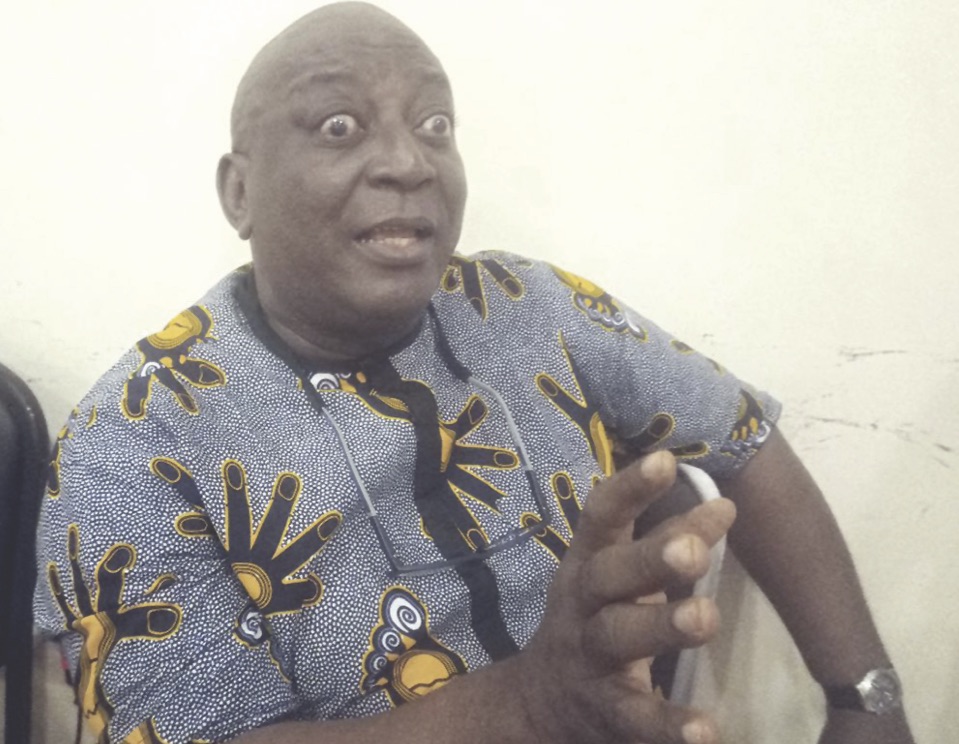
From Sola Ojo, Abuja
Civil Society Organisations (CSOs) in Nigeria must urgently adopt self-regulation frameworks if they are to protect civic space, resist restrictive state control, and retain the moral authority to hold government accountable, Dr. Harry Udoh, Team Lead of the Ethics and Good Leadership Awareness Initiative (EGLAI), has said.
Speaking in an exclusive interview with Daily Sun on the nationwide training course his organisation is leading, Dr. Udoh said that self-regulation is critical not only for ensuring credibility, transparency, and operational efficiency within civil society organisations, but also for strengthening democracy by enabling CSOs to engage government constructively, influence policy, and hold public and private institutions accountable without fear of arbitrary restrictions or political interference.
Excerpts:
Your organisation, EGLAI, is leading a civil society self-regulation course across the country. Why is this important now, after all, civil society has been around for decades?
Yes, it is very important for civil society organisations to self-regulate, to adopt and implement the self-regulation modalities and mechanisms that we collectively developed together. The reason is simple: if you look across the history of the National Assembly, this is now the 10th National Assembly, and every Assembly has sought ways to regulate civil society organisations in the country. They keep coming up with laws which, fortunately, have been shut down time and again. But they are not stopping. They are still looking for ways to impose regulations that could potentially stifle civic space in Nigeria.
So, as a form of pushback, we believe the best approach is to look inwards and come up with minimum standards of operation, codes of ethics and codes of conduct, precepts and principles that guide our conduct, our actions, and how we run our organisations.
This will help us to build and sustain the trust of critical stakeholders including state governments, the donor community, development partners, and, of course, the right-holders we serve.
More importantly, self-regulation guarantees sustainability for our organisations. It is about internal governance, putting in place principles and systems that ensure smooth internal operations, improve efficiency, and ultimately guarantee organisational sustainability. It enables us to operate creditably, professionally, and with integrity. That is why we are driving this process of getting civil society organisations to adopt and implement self-regulation mechanisms.
Now, if we link this to politics and democracy in Nigeria, the question is how does civil society help the country achieve better outcomes?
And, the answer is straightforward. If we are calling for accountability, good governance, and a political system where the dividends of democracy truly reach the people, then we must speak from a clean slate. As the saying goes, ‘he who comes to equity must come with clean hands’.
If we want to hold politicians accountable, we ourselves must be accountable. We must be above board in how we conduct our affairs, how we operate, how we relate with one another, and how we engage ethically within and across organisations. We must ensure that our internal policies, operations, and relationships with governments, donors, development partners, and stakeholders are guided by strong ethical standards. When we get these things right, we gain the moral authority to hold government accountable and to strengthen democracy by contributing to improved governance in Nigeria. It allows us to do our work better, engaging government more effectively, proposing solutions, and advocating more credibly, as we have done over the years.
Nigeria has quite a handful of CSOs, and the constitution guarantees freedom of association. So, what strategy are you employing to bring these groups together when it comes to self-regulation?
On the question of how-to bring people on board, especially those who are not members of EGLAI or part of the process, self-regulation is voluntary. We are not compelling anyone to adopt it. However, the reality is that organisations that adopt and implement self-regulation standards will enjoy greater credibility, stronger public trust, better relationships with donors and government, and increased sustainability. Those who choose not to participate may not necessarily lose anything formally, but they risk being left out of a growing culture of professionalism, legitimacy, and ethical practice within the civil society space.
What would set organisations that are implementing self-regulation apart from those that are not?
What sets them apart is effectiveness and social impact. Organisations that self-regulate are usually better organised. Their internal governance decisions are taken strategically. They have a clear sense of purpose, they know where they are going, what they are doing, and what they want to achieve in the next three years for example because they operate with strategic plans.
Other News
They also have the right policies guiding decision-making within their organisations. This guarantees efficiency, effective use of resources, and attention to staff or members’ well-being. Where there are staff, their welfare is protected; where there are members, their interests are safeguarded. That is because there are clear policies, precepts, and principles guiding every action and decision. As a result, these organisations become more attractive to governments, development partners, and donors. The communities they serve, the right-holders, also have greater trust in them. There is confidence that such organisations can actually deliver.
On the other hand, organisations that do not self-regulate tend to be seen as unstructured and unprofessional organisations that act anyhow and operate without clear standards of conduct. They often fail to comply with existing regulations. Self-regulating organisations, by contrast, comply with statutory requirements from the Corporate Affairs Commission (CAC) to the Federal Revenue Service (FRS), and other regulatory frameworks guiding civil society operations, including reporting standards under bodies like the Financial Reporting Council.
In essence, self-regulation helps to ‘clear the market’ to sift the wheat from the chaff. Over time, it becomes clear which organisations are credible and which are not.
You talked about separating the wheat from the chaff. How do you deal with political civil society organisations, especially those usually involved in counter-protests? Secondly, how do you manage conflicts of interest that may arise, especially around the National Assembly?
The Constitution of Nigeria guarantees freedom of association, so we cannot stop political civil society organisations from existing. They will always be there. In fact, many of them get more visibility because they are sponsored by politicians. They appear frequently on television and radio because they have the resources and backing to do so. Meanwhile, organisations that are doing serious developmental work, solving real problems and in some cases acting as alternative governments in communities where government has not reached for years, are often not heard. But our focus is not on political CSOs. Our concentration is on credible organisations, those that seek professionalism, transparency, accountability, and strong internal governance. These are the organisations that want to self-regulate, and those are the ones we are working with.
We are not claiming to speak for all CSOs in Nigeria. They are numerous and diverse. We only speak for those who have chosen to adopt the EGLAI self-regulation mechanisms developed by civil society itself. These are the organisations we support technically and otherwise. These are the ones we will project and showcase as credible. People are looking for trustworthy organisations to work with. Donors, governments, and even other CSOs are seeking partnerships and collaborations. So, what we are trying to foster is a culture of credibility, networking, and collaboration among serious organisations. Over time, it will become very clear who the political CSOs are and what they represent, and who the self-regulating CSOs are, simply by their actions, their conduct, and their adherence to minimum ethical and professional standards.
Some people still think of CSOs as those organisations that picket offices, block roads, and carry out protests. Is that still what civil society is about today?
I think things have evolved. Civil society has evolved. In the past, it was largely about protests. I remember the Olisa Agbakoba era, and even Adams Oshiomhole. I was in Lagos then, and they led protests fighting for democracy and the return to civilian rule. We would go to places like Yaba, block roads, and organise demonstrations. But that phase has evolved. Today, civil society is more about engagement, especially because of the policy development work we now do. Advocacy is about influencing, and you cannot effectively influence people you are constantly antagonistic towards. So, what you find today is less aggression and more strategic engagement. We now engage the government to influence perceptions, decisions, and actions. We work to ensure that policies are developed in ways that promote good governance. That does not mean protests are no longer relevant. When it is necessary to picket, we do. When it is necessary to protest, we protest. When it is necessary to run media campaigns, we do that too. It all depends on strategy and what we are trying to achieve.
If the goal is policy change, then engagement is usually the most effective approach. We achieve this not by fighting government, but by having dialogues, tête-à-têtes, roundtables, and consultations where we explain our positions, understand their perspectives, and reach a consensus that leads to change. So, it is not that civil society has become weak or less assertive. The question is: what does aggression really achieve if it does not deliver results? Our strategies remain open. We will keep engaging. When it is time to protest, we will protest. When it is time to engage the media, we have the capacity to do so. We simply choose the strategy that works best for Nigerians and for the outcomes we want to achieve.
The EU-CSO Bridge project is supporting you to train people from different states, who will in turn go back and train others. What is the EU’s interest in this?
The EU-CSO Bridge is not just supporting a training programme; it is supporting EGLAI to drive civil society self-regulation in Nigeria. And the core interest of the European Union is Nigeria’s development. The EU works with government agencies on policy development and reforms. They also engage in bilateral partnerships with the government. But they are supporting this civil society work because they believe that a vibrant civil society is essential for democracy to thrive and for social and economic development to take place.
They believe that a strengthened civil society becomes a reliable and credible partner of the government in development whether in the social sector or the economic sector. That is why they are investing in building the capacity of CSOs. Globally today, governance is about co-creation government and civil society working together. As I said earlier, what makes a society strong is the interaction of three sectors: the public sector, the private sector, and the social sector, which is civil society. When these three sectors work together, society functions better.
If the civil society sector is weak, it cannot play its role effectively. It cannot hold the government and the private sector accountable. It cannot ensure that the private sector does not pursue profit at the expense of citizens, or that the government does not introduce policies that impoverish people instead of improving their welfare. That balancing role is the essence of civil society. And without a strong, credible, and well-governed civil society sector, that role cannot be effectively performed.
Your final call on the civil society organisations on the importance of self-regulation to them and to Nigeria?
I would just add that if Nigeria truly takes its rightful place among the comity of nations in Africa, the entire continent will be better for it. I think that is what our partners see, and that is why they are supporting this work. And I also believe that if the government fully understands this, it will do more to support civil society in the important work it is doing. Civil society is not an enemy of government; it is a partner in development and in strengthening democracy.
To CSOs, I want them to seize this opportunity and strengthen their institutions by putting in place the right policies, systems, and principles that will enable them to thrive. And to the champions, I want to say this: a huge responsibility has been entrusted to you. The world is watching and waiting for you to deliver on the mandate you have accepted. You have taken on the responsibility to become advocates and crusaders for self-regulation in your respective states. It is an enormous responsibility, and it must be discharged with commitment, integrity, and purpose.