Follow Us on Google
From Juliana Taiwo-Obalonye, Abuja
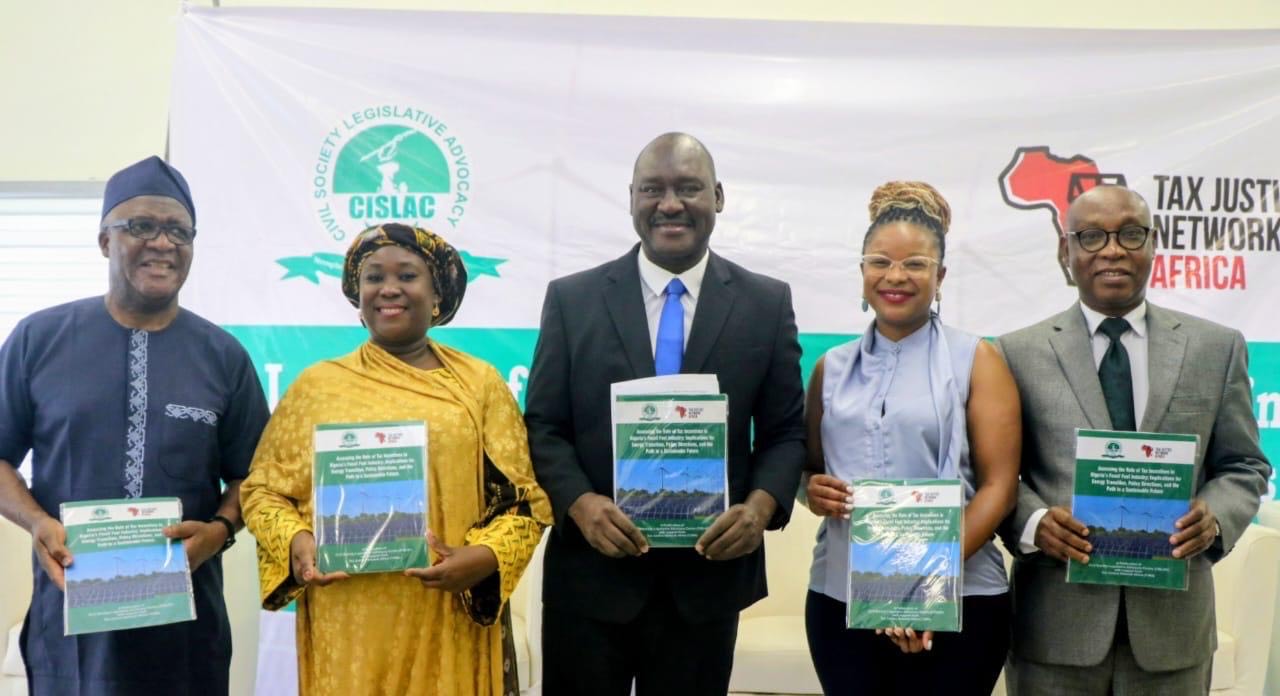
Civil Society Legislative Advocacy Centre (CISLAC) on Tuesday launched a comprehensive report titled “Assessing the Role of Tax Incentives in Nigeria’s Fossil Fuel Industry: Implications for Energy Transition, Policy Direction and the Path to a Sustainable Future.” The report critically examines Nigeria’s tax incentive regime for fossil fuels and advocates for its alignment with the country’s ambitious energy transition and climate goals.
Executive Director of CISLAC, Auwal Musa (
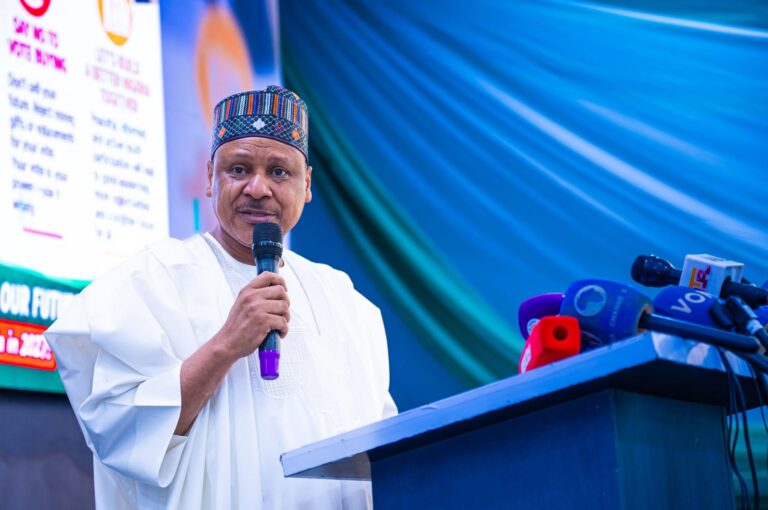
Rafsanjani, in his welcome remarks emphasised the context of Nigeria’s commitment to combat climate change, noting, “Nigeria has rightly joined the rest of the world in committing to taking steps to reverse the devastating impacts of climate change.” He highlighted the establishment of the Nigerian Council for Climate Change, the Energy Transition Office under the Presidency, and Nigeria’s Energy Transition Plan as critical frameworks for the country’s shift to renewable energy. However, he pointedly observed the contradiction embedded in continuing to incentivise fossil fuel investments while pursuing a net-zero emission target by 2060.
“Incentivizing the fossil fuel industry on the one hand and pursuing a net-zero emission target on the other hand appears to be a contradiction of government strategy,” said Rafsanjani. He warned that fiscal incentives for fossil fuels risk entrenching dependence and urged fiscal regimes to be recalibrated to promote renewable energy investments. He stated, “Government’s fiscal regimes remain an essential mechanism for shaping and fast-tracking the country’s goal of net-zero emission by 2060”.
The report, Musa explained, draws from extensive desk reviews of legislative frameworks, fiscal mechanisms, and international best practices and emphasizes transparency and accountability.
He commended stakeholders, including government officials, members of the diplomatic corps, development partners, private sector representatives, academia, civil society, and the media, expressing particular gratitude to the TJNA for their partnership and to the lead researcher, Professor Sabiu Sani of the University of Abuja, for producing a rigorous study. He urged participants to engage actively in the ensuing discussions, hoping they “stimulate critical policy questions and recommendations for just energy transition in Nigeria”.
Adding weight to the report’s findings, Executive Secretary of the Nigeria Extractive Industries Transparency Initiative (NEITI), Orji Ogbonnaya Orji, delivered a goodwill message stressing the complex fiscal landscape Nigeria faces as it balances energy transition with economic realities.
He remarked, “Nigeria, like many resource-dependent economies, stands at a delicate crossroads—between the urgent imperative to decarbonize and the economic necessity of sustaining revenues from fossil fuels that still account for the bulk of public financing.” The NEITI ES flagged the risks of declining hydrocarbon revenues coupled with underinvestment in cleaner energy unless the fiscal transition is well managed. He cited NEITI’s ongoing study on energy transition’s economic impact, stating, “The path to a low-carbon future must be fiscally smart, socially just, and economically inclusive.”
On tax incentives, Orji emphasised that while they have traditionally stimulated investment, many in the fossil fuel sector lack transparency and do not align with national development. “Many of these incentives…require urgent removal wherever they exist in the search for the one trillion economy that the present administration is targeting,” he urged. He advocated for fiscal reforms grounded in transparency and accountability, emphasizing, “The real cost of tax incentives, subsidies, and exemptions should be disclosed, debated, and justified within a public finance framework that serves long-term sustainability, not short-term sectoral comfort.”
Orji also stressed the social dimension, noting that “energy transition must be just and inclusive…communities, workers, and women whose livelihoods depend on extractives must not be left behind”.
Representing the Tax Justice Network Africa, Policy Office, Tax, Natural Resources and Climate Financing, Gloria Majiga connected tax justice with broader climate governance and sustainable development imperatives. “The way that we do our tax justice, it sits at the intersection of fiscal justice, climate governance, and sustainable development,” she stated.
Other News
Majiga explained that transparent and fair tax systems are foundational for financing national energy transitions. She noted, “Every Naira that we forego in incentives is a Naira foregone revenues that could have gone towards education or health and see the energy transition .” She highlighted that many Nigerian tax exemptions stem from outdated frameworks favouring fossil fuels and called for comprehensive reviews of these incentives to better align with renewable energy goals and social equity. “The transition is unique and often misunderstood. It’s not simply a shift from social skills, but it’s also a shift towards access first,” Majiga said, stressing inclusive energy access for millions still lacking it as a critical aspect of transition in Nigeria. She underlined the role of fiscal incentives beyond oil and gas to include transitional mineral mining and urged regional cooperation to maximize benefits from Africa’s natural resources.
The timing of the report is notable given recent federal initiatives. In 2025, Nigeria enacted the Upstream Petroleum Operations (Cost Efficiency Incentives) Order, which introduced performance-based tax incentives linked to cost reduction among petroleum operators to improve fiscal sustainability and competitiveness in the upstream sector. While this reflects a government effort to enhance operational efficiency in oil and gas, the CISLAC report signals the need for broader fiscal reforms that balance such incentives with climate commitments.
The CISLAC report advocates a phased removal of fossil fuel incentives, increased transparency in tax incentive administration, enhanced domestic resource mobilisation, and stronger tax expenditure accountability mechanisms. It also calls for international cooperation to mobilize climate finance and technical assistance for fossil fuel-dependent economies transitioning to low carbon pathways.
The report outlined key energy transition policy recommendations for Nigeria, emphasizing both short- and long-term reforms.
In the short term (1–3 years), the report calls for full implementation of the Energy Transition Plan (ETP) with adequate budget support, removal of fossil fuel subsidies alongside targeted support for vulnerable groups, and strengthened state-level energy governance. It also recommended mandating green budgeting and setting clear milestones in power sector reform, rural electrification, and renewable energy projects.
For the long term (4–20 years), the report stressed the need to reinforce climate accountability through legislative alignment, including a Climate Change Financing Law with sector-specific carbon budgets. Decarbonisation targets should focus on high-emission industries, aiming for 30% electric vehicle use by 2030 and a 25% reduction in industrial emissions by 2035. He also advocates for a National Hydrogen and Bioenergy Strategy to position Nigeria as a clean energy exporter.
The report further recommended tax reforms, such as auditing energy tax incentives to phase out fossil fuel subsidies, introducing climate performance-based tax credits, and establishing transparent digital registries of fiscal incentives. Institutional strengthening measures include building capacity at regulatory bodies and creating a National Energy Transition Monitoring Unit under the Presidency.
Lastly, the emphasised a just and inclusive transition, calling for social protection frameworks for affected workers, gender-responsive policies, community participation in energy planning, support for local clean energy manufacturing, and ensuring affordable energy access to reduce poverty.
On the policy calls, CISLAC said, “Nigeria must balance urgent climate goals with social equity, ensuring that vulnerable populations are cushioned while transitioning to a low-carbon economy.”