Follow Us on Google

By Chinwendu Obienyi
The commodities ecosystem holds significant potential to drive GDP growth, and the Chartered Institute of Stockbrokers (CIS) yesterday, urged the Federal Government (FG) to exploit these opportunities if it wants to achieve its proposed $1 trillion economy.
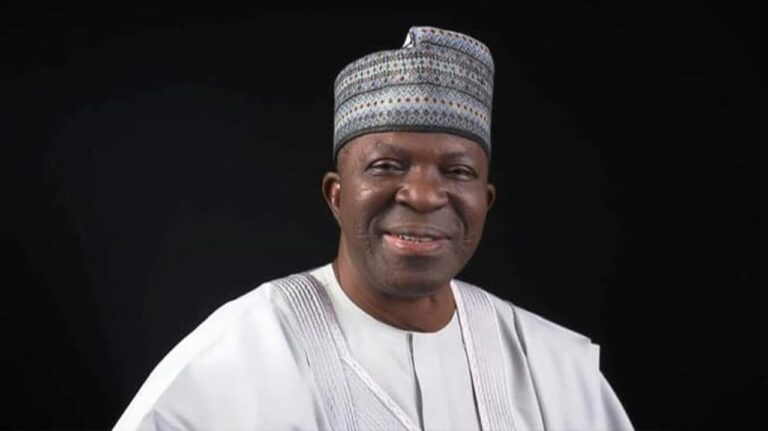
In a communique signed by the 13th President and Chairman of Council of Chartered Institute of Stockbrokers (CIS), Mr Oluropo Dada and the Registrar and Chief Executive, Dr Josiah Akerewusi, seen by Daily Sun, the institute listing a 13-point agenda, noted that the commodities ecosystem remains a niche market but needs efficient policies to enhance favourable trade agreements and improve access to power for industries linked to commodities.
“The government should exploit opportunities in the commodities ecosystem to grow the GDP because the commodities ecosystem remains a niche market in Nigeria. Thus, there should be a policy geared towards strengthening commodity trading and commodity exchanges to enhance export trades, generate forex, boost external reserve and strengthen the Naira”, the communique stated.
The stockbrokers also called for the listing of Nigerian National Petroleum Company Limited (NNPCL) and other moribund state enterprises on the secondary markets, stating that this will deepen the markets, enhance the companies’ ability to make profit and generate revenue for the government through tax.
They added, “Government should implement structural reforms, including deregulation, debt management, and public awareness campaigns by collaborating with the market stakeholders to unlock Nigeria’s economic potentials.
Policies should be put in place to attract private equity, venture capitalists and angel investors. Also, government at all tiers should leverage tariff policies to support local industries, similar to strategies employed by China and the USA to pave the way for participation of private equity, venture capitalists and Angel investors to support the growth of SMEs in Nigeria”.
It would be recalled that Stockbrokers had last month converged at Ibadan, Oyo State for their 28th Annual Conference themed: Capital Market as Catalyst for the $1.0 Trillion Economy, which brought together, top decision makers and leading Chief Executive Officers in various sectors of the economy.
Participants while canvassing the need to rebase the Nigerian GDP to reclaim the country’s status as Africa’s largest economy to create opportunities, noted that the informal economy constitute a significant portion of Nigeria’s GDP but remains largely untapped by the capital market.
They emphasized that policies should entail incentivizing indigenous and privatized companies, as well as SMEs, to list on the Nigerian capital market.
Other News
According to them, this can be achieved through tax holiday and patronage of products and services of quoted companies.
“Government should conclude the ongoing review of Investment and Securities Act (ISA) while the capital market regulators should review relevant rules and laws in line with the global best practices to boost investor confidence, create a favourable business environment for listed companies and remove restrictions hindering liquidity access for stockbrokers.
The Nigerian capital market should be integrated into Fintech solutions, blockchain technology, and other digital innovations to enhance accessibility, efficiency, transparency and attraction of Millennials, Gen Z, Gen Alpha etc while market operators should develop products that attract investment appetite of the technological savvy youths”, they had stated.
Amongst the agenda include calls to address foreign exchange challenges and other inhibitions to participation of foreign investors in Nigeria as a means to enhance Foreign Direct Investments (FDIs), financial literacy, debt restructuring and inflation control.
“There is a huge knowledge gap among investors, hence, financial literacy
programmes should be pursued with renewed vigour to expose existing and potential investors to the concept of trade-off of risk and reward in investment decision-making.
The Nigerian capital market should reflect the key sectors like agriculture, oil, and gas to better align with GDP composition and provide opportunities for capital formation and mobilization.
Government at all tiers in Nigeria should leverage more on the capital
market to raise long-term funds for infrastructural development by issuing project tied bonds with irrevocable standing payment order (ISPO) which removes the risk of default.
In order to relief itself of perennial debt overhang, Nigeria should opt for debt restructuring and extension of maturity period to enable it to manage its resources for the overall development of the economy.
On the monetary side, the Central Bank of Nigeria (CBN) should intensify tight monetary policy to control inflation which has been attributed to the current regime of stagflation”, the communique read.