Follow Us on Google

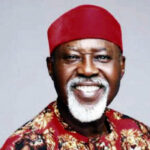
For Chuks Iloegbunam, journalism and publishing are intertwined. He has made the best of both worlds right from 1977 when he cut his teeth as a journalist in Punch Newspapers and 1980 when he was recruited by Longman Publishers, Lagos, as an editor. Iloegbunam has also served former Anambra State Governor, Peter Obi, as Chief of Staff, and worked with the media team of former Nigerian President, Goodluck Jonathan. Besides, he has published quality biographies of eminent Nigerians, including Odumegwu Ojukwu, General Aguiyi Ironsi and Admiral Alison Madueke. Iloegbunam, the publisher of Eminent Biographies, chatted with HENRY AKUBUIRO in Owerri at the recent Ahiajoku Lecture.
You started out as a journalist. At what time did you consider it imperative to go into book publishing?
The fact is that I was a journalist and a publisher at the same time. First of all, I worked for The Punch Newspapers 1977-79. Those were vacation jobs. Then I did my national youth service there 1980-81. So I was already into journalism. Once I finished my youth service in The Punch, I went to Longman Nigeria on Oba Akran Road, Ikeja, Lagos, as the Humanities Editor. I was in charge of the Drumbeat series. I also edited other works like Sunny Olalumese’s novel, No Second Chance, and Femi Osofisan’s play, Morountodun. So you can see I was into both journalism and publishing simultaneously.
So when you did eventually decide to go solo as a publisher?
That was something that happened when I was living in London. Between 1990 and 1999, I was living in the UK. That was when I published a number of books. For instance, my company, Press Alliance, published Ironside (the first edition) in London. It also published The Tale of June 12 by Professor Omo Omoruyi. It also published Exploitation and Instability in Nigeria: The Orka Coup written by Captain Tolo Fari. It also published Shadow of Masquerade, the autobiography of late Professor Nkem Nwankwo.
But it [publishing] was truncated, because I went into political appointments. I became Chief of Staff to Governor Peter Obi at the inception of his administration in 2006. I was with him for five years and went over to the Jonathan Presidency. I was there until Jonathan left power. When I came back, I went into the administration of Governor Willie Obiano as Chairman of the Governor’s media Team. After that, I returned to what I always did –publishing. Eminent Biographies Ltd is a new thing that I instituted to be doing now.
Why the choice of Eminent Biographies as name of your publishing company?
The choice was informed by the basics of life. If you have a story behind you, you already attained eminence, that’s one level. At another level, we have very important, eminent personalities in this country whose stories are unknown. So I said, “This is an avenue for publishing them.” As you can see now, Aguiyi Ironsi’s eminence is not in doubt. We have already done his biography. The second book I published in the series is that of Admiral Alison Madueke (Riding the Storm with God on My Sails), which was launched recently, a book of 500 pages. He has eminence: he was the Chief of Naval Staff, Military Governor of old Anambra and Imo states. He was a member of the Provisional Ruling Council in Abacha’s regime, and his story is fantastic; it is a good read for all Nigerians. We are going to continue to work on other important Nigerians.
The latest biography of Aguiyi Ironsi now on sale –Ironsi: Nigeria, the Army, Power & Politics –was initially published as Ironside. What set your curiosity apace and why did you change the title?
I was in secondary school when Ironsi was killed. I knew at that time British officers called him Ironside, which, by the way, is an English name. They called him Ironside, because it was a matter of putting “de” to the name. As I grew up, I was following politics. I thought at that time that the assassination of General Aguiyi Ironsi was wrong. So I conducted a research and interviewed people. I was living in London then. I went to where they kept records, and unearthed facts, which I used in writing the first edition 20 years ago.
In this new edition, 20 years have elapsed. So it called for new perspectives in producing a new edition. I thought that Ironsi, which was his name, is now better put as the title of the book than Ironside, which was a nickname, and I expanded it because I thought I should look not just as Ironsi alone but at Nigeria, his country; the army, his constituency; and at power and politics. So I looked at these things and examined the military in Nigeria’s politics. I examined the interplay of power and politics in the entity and, then, produced this new book.
What kind of man was Ironsi from your research? Are there some things we didn’t know about him that you have included in the book?
What people didn’t obviously know is his origin. I exhumed that, so to say, and wrote about it. I wrote about his childhood, how he entered the army, and how he rose through the ranks to become the most senior of Nigerian army officers and the General Officer Commanding Nigerian Army. I also found he was basically a good man. Even General Obasanjo, former Nigerian president, mentioned it –and it was on the blurb of the book –that Ironsi wasn’t the kind of man to plan a conspiracy.
He was a good man and a great man, but sometimes you see that the ingredient of political administration are not necessarily tied to sainthood. He wasn’t tribalised. He was completely detribalised. That was why his personal secretary was a Fulani man. That was why he had balance and equity in his political appointments. Those ones are explained in the book. He didn’t misappropriate 1 naira. He dipped his hands in the security vote only once, according to the secretary of his own government, Mr Simeon Olabode Wey, with which they used to buy a present for the Sultan of Sokoto at that time, Sa’ad Abubakar III, who visited State House Marina, Lagos. He was present at the launch of the book 20 years ago. He didn’t misappropriate anything. If you read his address to soldiers, you will see the kind of person he was: considerate.
Part of the justifications for killing Ironsi was his promulgation of Decree 34 and also imposing unitary system of government on Nigeria. From your research, how genuine was those allegations?
I will answer it in many ways. To start with, if you read the introduction to this volume, you see General Ibrahim Babangida, the former military Head of State, exonerating him in respect of that Decree 34. He said, among others, that Ironsi meant well: …in fact, the decree was promulgated for the preservation of Nigeria as an entity. Unfortunately, some northerners interpreted it to be a means for Ndigbo after January 15 1966 revolution to further take over the entire affairs of nation. General Aguiyi Ironsi was a man who saw tomorrow….
That tells you that, if a former head of state, a man who was an officer in 1966, who was among those who overthrew his government, could now turn back and say this after 50 years, it tells you that the man [Ironsi] was okay.
There is something you need to know about this Unification Decree. If it was such a bad idea, why did General Yakubu Gowon retain it for all the nine years of his military administration? Why did subsequent military government retain it? Why is it that it is still what we are practicing today, because the Unification Decree was anti-federalism. That was why Ironsi became the head of state of the National Military Government after the decree, not Federal Military Government again. So they went back to the Federal Military Government in name [after he was killed], but the unitary system remained.
That is why, today, we have democracy in the Fourth Republic, but it is not real democracy, because you don’t have state police; you don’t have state autonomy, because power devolves just from Abuja. The centre controls everything, which is not supposed to be the case in a true federal establishment. For instance, when Dr. M.I. Okpara was the Premier of Eastern Nigeria, he had an Agent-General in London representing Eastern Nigeria. He negotiated loans with foreign countries without clearance from anybody. He had his own police, and everything was run on that basis. No state depended on appropriation from the Federal Government. But, today, the federal government comes to your place, takes your oil product, gives you 13 percent out of it, and the rest is kept in Abuja. So, if Ironsi was wrong to promulgate Decree 34, why is it still active till today?
What are the compelling strands of this offering?
The book has expanded. You really have to take a very good look at the Nigerian Armed Forces to fully and really appreciate the reasons why Nigeria is where it is today, and I must say it took a lot of ideas from General M.C. Ali, who wrote a book entitled The Federal Republic of Nigerian Army. I have never seen a more forthright Nigerian Army officer than General Mohammed Chris Ali. That was why I told Admiral Alison Madueke that, at the launch of his book, if General Ali, was there, I would go and trade handshakes with him. He elucidated in his book the mess soldiers made of Nigeria. I used it as a foundation to extrapolate on that mess. Unless the army is playing its professional roles, Nigeria will never move forward. Once the army’s influence is beyond its mandated roles, Nigeria is not moving anywhere.
Let’s go back to Eminent Biographies. What’s cooking at the moment?
Currently, I am working on the autobiography of Onyeka Onwenu, the multitalented artist, singer, songwriter, actress and activist. She has completed the work. She wrote it herself. Don’t forget she went to one of the best universities in the US. We are going to launch it before Easter of 2020. It is going to be a resounding book. Apart from that, Eminent Biographies is also working on a biography of Sir Louis Philip Odumegwu Ojukwu, the father of General Emeka Odumegwu Ojukwu. There is one written by a niece of his called Onye Eze.
What new thing are you bringing to it?
I am bringing on the table aspects that I see as salient but are not in the first book. What the niece wrote was a very good thing, but we are working on that to bring it to the table of every Nigerian. There is another one on late Ichie Joseph Onwubuya from Abagana, a commissioned biography from his family. There is nothing to suggest that these books won’t be out in 2020. There is also one that I am writing –the biography of late Senator Uche Chukwumerije. He commissioned it when he was alive, and I was midway into it when he died.
No doubt, you have carved a niche writing and publishing biographies, and, your latest works are a big endorsement. Do you have the capacity to handle a deluge?
That’s why I said “Eminent Biographies will produce”, not myself alone. Am I a superman? What I did was to go to universities and get scholars, as well as journalists and people I know who are talented writers –about 25 of them –and aggregated them. I am consulting people who I think their biographies need to be written. Once I get their go-ahead, we fan them out to this group of writers and teachers on contractual basis, and the books will bear their names as the authors. If I want to produce good books, I can’t over flog myself. Biographies are very serious things to write. There are other people to be writing for the company.